Social Media Dumbed Down

Common Craft is a two person, husband and wife company that makes videos that are short, simple and focused on making complex ideas easy to understand.  One of those ideas/videos that I absolutely love is about social media. It’s “dumbed down” to levels that even the most stubborn, stodgy, old school, CEO can understand. They use a whiteboard-and-paper format that is designed to cut out the noise and stick to what matters. See what you think and share with others!


Social Media marketing, is there room for the small players? 23 talking points

I was driving home yesterday going past hundreds of small companies that are all in the same economic boat right now. They need to drive traffic, sales, and business. And you can best believe that they are willing to try any and all things that can possibly do that. And that includes utilizing social media.  I mean we can find plenty of blog posts and articles about whether large companies can succeed using social media, and my answer would be “uhhh… yea!” 

So one of the questions I would have as a small business owner and even a medium sized in some cases would be:

1) How can I drive sales, traffic and business to my click and mortar site using any online means available?  Wow that’s a broad question. But wouldn’t you ask the same thing? Tell me what’s out there and I will use it, if it helps.

Let’s assume that you have a website and you use email. If you don’t, you can stop here because the rest won’t matter. But unless you’re reading this post at the library or you’re over at your Aunt Evelyn’s, I’m going to assume that you at least have a computer. And since you are a small to medium size business owner, you damn well better have a website! NO MATTER WHAT KIND OF BUSINESS YOU HAVE, YOU BETTER HAVE A WEBSITE.

Lets get to it, Lets go over this checklist and see if there is room in the social media marketing space for the small players.

2) Do customers use your website? If they don’t maybe it’s because they don’t know you have one. What efforts have you employed to market or optiimize your current site?

3) Do you give them any reason to go to your website? If you are not letting people know your site is out there and what it has to offer, then you can answer that question pretty easily. But is your site a marketing tool. Can customers get a better deal on a service or a product if they go there?

4) What do they do when they are there? Whats the bounce? What do your analytics tell you? You do use some type of stats package right? If you don’t what your customer does on your website, it’s the same as if you stayed in your office all day and never came out to see what was going on in your business or store. In order to understand the customer you have to see their tendencies. You have to know where they are coming from and how they found you.

5) How well do you utilize your URL on other marketing materials? You have signage, billboards, print ads, business cards, letterhead, email, Is your web address there?

6) What is your presence like locally? How well are you branded locally? Do they know you, who knows where you are locally? What efforts do you make to brand you and your company locally? The “if you build it, they will come business model”, doesn’t work too often.

7) What are your current marketing initatives like? Do you support them online? Do you have a budget? What do you use it on? Is it a print ad? Do you do anything that can drive business on a consistent basis?

8) With a limited marketing budget, what would you do with it? What DO you do with it? Is that something that even is on your mind or lips? Are the economics of what is happening right now preclude you from even thinking about budgeting for marketing? Wouldn’t this be the most opportune time to be spending?

9) Do you do any type of digital marketing now? i.e. email, seo, sem? If you don’t then that will explain your lack of any traffic on your website, along with the design you have to let people know you have a web presence.

10)  Do you know what social media is?

11)  Do you understand it? Do you know what the essential elements are of social media?

Before I go any further, lets throw something out there right now and that’s lets assume that you have answered all of these questions the “right” way. Let’s assume that you are ready to do this, you are ready to “try” some element of social media marketing. And lets hope that you’re not fighting or resisitng to try social media You’re next set of questions are going to be:

1) Is there a company or someone out there who can help me?

2) Do they have experience working with my type of company, my type of customer?

3) What guarantees do I have that this will work?

4) What will it cost? What can I expect?

5) Will it fail? What is the downside?

6) What is the upside? What, after all is said and done, will be the net result?

7) How long will it take?

8) Is it a process?

9) Is it measurable?

10) What do I look for in my results?

11) How do I pay for something like this?

12) What if it backfires?

13) Now what do we do?


Ok so we now have 23 talking points to get the conversation going. There are questions that small to medium sized business owners need to ask of themselves in regards to their current marketing efforts and the general state of of their advertisng efforts and there is the next set of questions that these same owners need to ask of any individual or company that comes knocking that is going to pitch them on social media marketing.

The point is this, there are so many “conversations” going on right now in regards to how corporations are wrestling with implementing social media into their marketing efforts. In fact Jeremiah Owyang recently wrote a post about the 5 questions that companies ask about social media, but it concerns large outfits and not the little guys. I think the small players are being ignored. It’s not that it can’t be done, it just needs to be very focused. Why can’t everyone participate in the conversation?


Social networking is hard work!

Or is it? Does it make my life more fun? Is it eventful?  I’m not as bad as Tom Foremski who had 37, 240 unread emails in his account when he wrote an article about it. all I can say is wtf? Tom… Slacker! But actually Tom’s dilemna probablly mirrors others.

Maybe this is me? Courtesy of Geek and Poke titled “I have no time, I have to be social.”

Sometimes I feel like it. Actually I feel guilt if I haven’t posted anything on the blog.  But seriously, don’t you sometimes feel like you have to hit all of these social sites to a) check in and b) see whats up and c) to be dissapointed when nothing is happening? I’ve often blogged about social media saturation and in fact, asked it of my Linkedin brethren, but I had phrased the question a bit differently. It went something like this:

What do you think the formula should be for social media saturation? Have we reached it yet?

The question is really more about saturation levels in regards to how much more we can take, but the answers were more of a, has social media reached critical mass bent. In fact Jon Udell had a post titled, “Critical mass and social network fatigue” in which he wrote,

Increasingly I’ve begun to feel the same way about the various social networks. How many networks can one person join? How many different identities can one person sanely manage? How many different tagging or photo-uploading or friending protocols can one person deal with?

He wrote that over a year ago, I wonder what he feels now. The social networking stratosphere has grown exponentially since then and the problem is…

There are wayyyy too many cool apps and  new social networks out there to ignore and NOT join in the conversation! Right?

Andrew Chen writes about his view on social networking and going from zero to critical mass in which he says that there are quite a few variable involved in getting to the top, the most important being, users. So another question I would offer up is, What do new developers and entrepreneurs feel about joining such a crowded space where critical mass is imperative, cash is usually dependant on advertisers and their users are already inundated with other social nets that they are a part of????

I’m going to botrrow one more time from Andrew Chen in which he writes the following:

Does everyone remember Metcalfe’s Law? It was formulated by Bob Metcalfe, the inventor of Ethernet and co-founder of 3Com, who stated: The value of a network is proportional to the square of the number of users of the system (n²).

I’m cool with that. My only problem is, I want to spread myself thin. Yes sometimes I exhale as I run through logins and pw’s, and I’m always on the lookout for something new and cool but… I’m actually not sure what I’m looking for, I’m constantly looking for IT, but it has not been developed yet. Most Social Net’s are for the most part a lot alike. And maybe thats why we are members of more than one, because the one is not the ONE.  Maybe we’ll know when we get there, but for now it seems like most of us are willing to maintain out memberships in multiple social nets, even if it means working a bit to keep them updated and current.


Viral Message. When marketers hope we get it. Did you?

Here is a) a great message b) a video that has the potential to be viral and c) Is well done. .When you get to the end of the video, is it what you thought the message would be?

10 reasons why you have no business launching a widget, yet.

“Whip up some numbers that make it look like we have, like, I don’t know, a thousand HD channels.” – Cable Corp, Inc. VP

You know those DirectTV spots that have been running as of late? A bunch of suits sitting around trying to guess what the customer might want. That’s happening a lot lately. What’s funny is that in a lot of situations, these groups have some really talented people sitting at these tables and yet they blamestorm or better yet, come up with really shitty ideas that are fast-tracked. I don’t get that. How can good smart people come up with such bad stuff? That’s probablyy a whole ‘nuther blog post in and of itself but for today we’re going to talk about something that I guarantee you is on the lips of some of these aformentioned people. Widgets.

I got a great idea, lets make a widget, that should drive some major traffic!


You don’t have a clue do you?

Reason #1 You probablly have heard of a widget but in actuality you don’t have a clue as to what they are. Widgets are essentially cute little applications that you can run on your desktop that will entertain you, provide informtaion, keep you in the loop etc. All in little snippets.  Here’s an example.
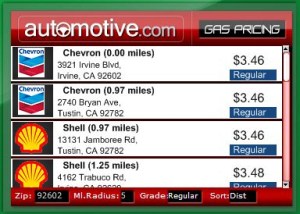
This widget helps you find cheap gas in your area. Good luck with that.


So anyways, you’re a marketer or an executive and you’ve now heard of these and sorta seen them in action and you think, we need widgets. Which leads to:

Facebook, what’s Facebook?

Reason #2 You probably don’t even know where to put your “company created” widget. Do you even know where to put it? “ok it’s built, now what”? If you’re group created it, does your company have a Facebook presence to support it since that’s generally where they thrive? How about a blog?

My audience is…

Reason #3 To build and distribute your widget, that would mean that you know exactly who are your target audience is and know that they would benefit from a widget. How well do you know your customer?

Let’s sell something and cut to the chase!

Reason #4 You will probabally bust out the sales speak on your widget and the pitch will be oozing all over your widget because you think it’s a way to sell more product. Wrong. Widgets are about branding, are about fun and are about entertainment. Though utility driven widgets are useful, they do not have the same impact as one that needs to be shared with others.

Yea we have a website, my son built it at school..

Reason #5 If your internet presence is not where it needs to be then you really don’t need to be jumping into the mix with a widget. To begin with, how do you rank organically in the search engines. What about any type of online presence? Does it exist? It’s one thing to brand a new product, but how about establishing some branding objectives for an existing product or company? What if your outfit has some negative stuff out there in cyberspace? What’s a widget going to do?

Customer service 101 and our monthly email blast

Reason #6 If you’re not talking to your customers, then you have no idea what your customers would want from a widget. If your marketing efforts are intrusion based, then chances are your widget would be the same.  If you’re talking at them, then chances are, your widget is going to miss the mark. If your marketing efforts consist of a monthly email blast with hundreds of bounce backs, then you got it going on.

If we build it, they’ll come

Reason #7 If you think your widget is going to drive traffic and sales, then you’re missing the point. Widgets are about building brand loyalty. Successful widgets encourage, promote, gather, share, and provide ways to communicate with…ta da… your customer. And ultimately a successful widget is viral.

I heard it works, isn’t that enough?

Reason #8 You don’t know what you want, and you don’t even use them, nor do you have any familiarity about them. Ahh that makes sense, let’s do it! Doesn’t it make sense to test drive something before you adopt it? Before you launch something, shouldn’t you see if its something that you are comfortable with? Do some research, knucklehead, don’t just listen to me! Here’s a nice snippet on What is a good widget from Phil Butler.

Just do it, we’ll worry about the little stuff later

Reason #9 You can’t build it on the notion or the premise that you hope it will work. You need to have a clear idea of why you’re doing it and what your expectations are. Is your message clear or will it be? Do you know what you want the deliverables to be? How you are going to measure the results?  If building a widget is something that came up in a meeting, move onto something more tangible.

The competition is doing it and thats good enough for me

Reason #10  Widgets can be and are a logical extension of your brand, but only if you’re knee deep in the online world.  You can’t just have a brochure ware type of site and expect that to be enough to push your brand over the top with a widget supporting it. The customer, the user, that you are trying to reach, is doing more now with the tools provided, than ever before.  Widgets, blogs, pod-casts, online video, pr, and microsites/landing pages are all ways to extend the reach of your brand online. But first things first. Make sure your offline house is in order and then do the requisite online things necessary before you even think about having the conversation about launching a widget. 

Have you had success building and launching a widget? have a horror story? Know of a clueless boss? What Sayeth you?

Web 2.0 start ups: Dead man walking

A couple of days ago at the Under The Radar Conference,  one Ad person’s opinion on an elite panel, became the sentiment of everyone on the panel. The sentiment being that half of the start-ups that presented at the event, will not be around in a year.

Why the dour prediction? Because the revenue model is still screwed up and the success of many if not all social media companies is tied to online advertising spending. In fact I cringe when I ask someone what their revenue model is and they tell me that it is going to be ad driven…

Here is a great and short piece on just exactly what was said at the conference. Social Media’s Uphill Advertising Climb

11 things that Social Media is not

I was ready to tell Geoff Livingston what social media wasn’t and then I had an acid flashback and I started ranting about something else completely unrelated. he was still waiting as of this post. Well. it’s not the first time, I left someone hanging or wandered off track. I’ll be lucky if I can keep this on point.

Thanks in part to Scoble we know that Social Media is not:

  • Newspapers.
  • Magazines.
  • Television.
  • Radio.
  • Books.
  • CDs.
  • DVDs.
  • A box of photos.
  • Physical, paper mail and catalogs.
  • Yellow Pages.

But we all spend so much time explaining to each other and anyone willing to listen, what social media is, perhaps if we turn it around and tell people what it is not, then maybe that will help define it better. If anything, it will be a fun excersise in twisting everyone’s interpretation of what it is. So here are 11 more.

1-Social media is not about the above mentioned entities now being able to talk with us. It’s not about mass media. It’s more about the audience finding it’s voice.  Hell, those guys, the old school, they are some of the most resistant adopters of anything that remotely resembles social media. They are stuck in their one to many, cul-de-sac marketing ways.

Brainstorm: Cul-de-sac marketing-The marketing efforts go in the same way as they come out with exhaust fumes in their vapor trail, and within that trail are the buyers of their  marketing elixir. Their schtick.

2-Social media is not up to them, it is up to you and your voice

3-Social media depends on but is not predicated on many to many, and 4-is not one to one, but it can be. But it certainly is better than one to one and wait. It’s one to one, realtime. 5-Social media is not closed to anyone. It’s blind to race, creed and color, social status etc. All it cares about is your ability to communicate. The rest, the particulars, have a way of sorting themselves out.  6-Social media is not calm, sedate, unresponsive, or static. It disprupts. It’s in your face. 7-Social media is not passive. 8-Social media is not laryngitis. 9-Social media is not just for kids. It’s for Gen X, Gen Y, Gen C, and the Boomers. 10-Social media is not mainstream, yet. And finally, thanks Brian Solis 11-Social media is not the final frontier of marketing

Please feel free to add to the list of what social media is not. I could only come up with 11 thus far. Hook me up.


Social media: A cocktail party

So Im on Linkedin and someone I should reask a question about social media tools. the question was: What are the best practices and available tools in the social media marketing space?” and what are the methods to measure them ?

One of the first responses I received was from Rosemary Reilman in which she said:

This is the $64 Million question. And whoever has all the answers could probably make themselves very rich.
As far as the best available tools – I’d say the ones that your audience are going to. There are so many sites it really depends on who you’re trying to reach. If you’re trying to reach high school kids or college, probably Facebook or MySpace. If you’re looking to reach Tech-Savvy Professionals, then something like Twitter or LinkedIn might be the route to go. I think it just involves some research on who is where.

As far as best practices, I went to a really good workshop with the AMA and a speaker Jim Tobin of Ignite Social Media gave some common mistakes (which I guess is the opposite of best practices but still helpful) I had a link to his blog below. Also my thoughts on the presentation as well.

I think the most important thing to remember with SM is that it’s not the same as regular marketing campaigns. It requires not just pushing out a message but allows for your audience to talk back.

Those are some of my thoughts on your question!

Great answer, so I went to her site and actually one of the links on her site referring to social media as an online cocktail party in which she provides great insight into a workshop she attended  called the Social Media Marketing workshop. her synopsis of what went down was cool, but I had to give my 2 cents of what I thought marketers thought of social media marketing, since there seemed to be some lively discussion of what exactly it was that we, them, they do and think. Here is essentially what I wrote:


I’m not sure where to begin Rosie, well first thanks to the response on Linkedin which led me here. Your post was great, it brings up a lot of things and I’m not sure which one should be addressed first. Well, let me start by saying that I think marketers stick with what has worked for them in the past regardless of the medium. Be it, email, tv, radio, print, event, whichever worked, they have taken it and honed into their craft.
Now we are all abuzz and all are talking about this phenomenon. This new way of doing it. Talking to the customer… And surprisingly it’s not necessarily a new way, it’s a new means. Marketers have wanted to talk to their customers for years, and for some they knew if they did, it would give them more insight and sales etc. But they always relied on older mechanisms for reaching out, i.e feedback forms, but what social media has done has allowed them more ways of connecting. Its not like all of a sudden we’re cavemen and we discovered fire, its that we’re cavemen and someone gave us a lighter. and the word has spread from cave to cave that someone has dicovered, not the mystical and powerful properties of fire-we get that, it’s that someone has something that can grow, sustain and spread something virally that we all need, want and desire. In this case, customer interaction on steroids…


What do you think? Am I right? Partially right, sorta right? or am I missing the point?

Chasing the dragon that is social media

Social media…….social media…. I was reading Geoff Livingston’s latest post and he had a clip on there from Tech Cocktail in which he, David Armano, Frank Gruber and Danielle Wiley opened with a “what is social media” intro.. Which got me wondering, ranting, or just pondering first a) am I too close to the subject and b) c) d) e) and f) and g) are below…

This is what I wrote to Geoff..

Let’s talk about what social media is not. In fact, what if the term social media was banned from our lexicon, what would we call it then? Is it an accurate term to use? Have we trounced on it too much? Or is it still this mystical nirvana like state that marketers, advertisers, agencies, and corporations are all chasing? Are they chasing the dragon? Are we forcing them to chase the dragon? Is it elusive? Are we making it that way? Can we dumb it down? Does it need to be?


It’s not really a rant per se, more of just “lots more questions” from maybe a different point of view. Some might say that social media is merely the flavor of the moment for marketers and PR people. Uhh no, it’s where we are headed, and we can choose to integrate and embolden and implement or we can get steamrolled by the ones who decided to embrace it from the get-go.  Who is the person that said “a computer in every home will never happen, it just doesn’t make sense…” Who would like to step up and say, social media is nothing but another internet phase…a fancy web based app…go ahead and throw the first stone.

 Here’s a link to the Vid

What is our personal saturation level for social media?

Could there be a point down the road where we all just get burned out on whichever social network we are a part of? Doing a search on any posts that point to or mention social media saturation brings up very little, with the exception of the aformentioned link by Illuminea. With that being said, Jeff Nolan in his blog noted that We now log an average of 9.7 hours each day consuming media. Some experts say we’re at the saturation point. Interestingly enough, he mentioned that in August of 2007! One year removed almost, I would have to say that that number has definitely increased. There are close to 2000 social networks, its growing by the day, microblogging is coming on hard and our mobile devices are now like an extra appendage!

So 9.7 hous per day covers media in general, not neccessarily social media but all media.  Because there are so many forms of media that we as a public devour, I don’t think we’ll ever get to the point where we all sit around and toss in the towel and say, That’s it, I’m saturated. I’m done with my Ipod, my laptop, my cell phone and the television and movies. Hell,  we could get finite and include, newspapers, magazines, kindles, and tin cans with strings, but I digress.

You see, here’s the thing. Jude Yew talked about how managing 13,000 friends might get difficult, but when does it just become a pain in the ass to manage x amount of SNS’s (social networking sites) and x amount of profiles and x amount of friends. When does it cease to be fun? When does it cease to be about Networking for the benefit of your business?  Case in point, there’s a guy on LinkedIn and Ning for instance whom I won’t name who links and networks with whatever is moving. It smells like an MLM but my point is it’s no longer networking it’s something else. Perhaps its his way to build a database with the guise of “Linking” I don’t know. But if thats what happens or is happening then networking and linking to people all of a sudden become water downed.  As Yew further writes:

I think that this brings up an interesting issue with how poorly the PR/Marketing/advertising industry understands how Social Networking sites work. We’ve seen the large migration of teen users from sites like friendster and myspace to facebook in the past year. One of the oft cited reasons was that the teens were tired of being hounded, not just by fake profiles (which is also a PR/marketing type issue), but by advertisers.

At one point in time I used to have a MySpace account but after being hit up by every hooker like name that ever existed,i.e. Domino, Ashley, Sindy, and Nicole, I decided that I didn’t need “that” type of friend. So I bailed.  But, what if every SNS begins to buckle under the pressure of letting advertisers trying to link and network and make friends with its database of actual users?

2 things happen. Real actual users are going to leave in droves and real actual users are going to be wary of any subsequent social network they join. Amazingly enough, isn’t that what is occuring now? Everyone is a member of anywhere from 2 to 5 social networks? Why? Because one is bullshit or turned into just a jive network, whereas another delivers x but not Y. So we use them until more come along and we use them and we may or may not discard the old ones and before you know it, we’re saturated.

So now what? How do we manage our profiles and our memberships and keep it at a palatable level? Or even better, how many of you just abandon that profile or membership without deleting the information? I’d bet, depending on your age, that most of you don’t bother. The worlds advertisers thank you.

So what will happen to all things social network related when we do reach our saturation level? What is everyone’s personal saturation level? Let’s see if we can come up with some type of formula shall we? I’ve posed the question to some members of the Linkedin community, I will follow up with another post on those answers.