What’s wrong with social media?

baseball

If I told you I was going to offer you a job where you failed 70% of the time would you take it?  Probably not. What if I told you that I know of just that type of position where anyone worth there salt would kill to be a part of that organization.  Any clue yet? Its Major League Baseball. They pay their players millions of dollars per year to hit a baseball three out of 10 times.  That’s it just 3. The expectations of hitting it 4 out of 10 times are so unrealistic that it is barely mentioned in conversations. It’s rarified air.

If you close 3 out of 10 deals or you are supposed to sell 10 cars and you only sell 3, should you keep your job?

Anthony Bradley from Gartner has spent the past year collecting  social media cases. he’s collected 200 solid social media cases out of over 350 cases, in which he’s tossed out those that either were not really social collaboration, or were clear failures.

His findings?

  1. Cases with good ROI metrics are rare.
  2. Cases with well articulated business results are few.
  3. Cases with activity metrics are more common.

Ok that’s worrisome.

While his research indicates that if you measure success by business results, the failure rate is very high, If you were to measure success by adoption rates (social activity metrics), which is what a lot of social media folk seem to be zeroing in on these days, the failure rate is still high. So regardless of whether you are measuring business results or adoption rates- the failure rate is still high.

What the hell are these people doing?

Interestingly enough, one of his sources for cases was the social software technology vendors, and by a large margin this group could not articulate the specific business value their clients gained by using their products. I find this odd since this would mean that they essentially did not have a) a business plan or b) were never in it to make money or c) just didn’t really focus on that measurement thing.

Again, what the hell are these people doing? Better yet, maybe we should ask, what are we doing? We’re the ones using this stuff. Are we fricken freemium zombies?

Paying baseball players millions of dollars to hit a curve ball 3 times out of 10 I get. There’s a business plan in there. But are we as a group collectively just following the masses down the path not really knowing where we are going but content to just go with the flow? Developers and users alike? Why would they build social tools or nets that failed the majority of the time?

Are we ignoring the fact that failure might be the most common trait in social media?

I still cringe at the thought of the business plan that’s wrapped around ad revenues, but apparently Web 2.0 still seems to be pretty comfortable with that, and not much more. I would think that one would do everything in there power to reduce the odds of failing, but this data right now or what Bradley is asserting, just doesn’t support that hope.

I hope the data is flawed. because if it’s not, I guess we will continue to invest in and support failure. In an open and transparent fashion of course.

Share this Post

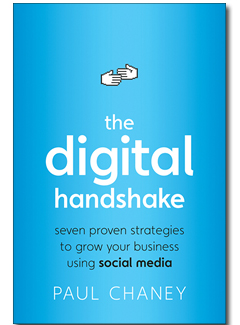
The Digital Handshake by Paul Chaney

digi

Today marks the launch of my good friend Paul Chaney’s new book, The Digital Handshake.  Paul is what we call good people, in the business. The Digital Handshake explains why advertising and marketing are losing their effectiveness and how to solve the problem using social media to corral elusive consumers.

If anyone is capable of simplifying what’s going on out there in the social media world, Paul is certainly that person. Here is a quick Video of Paul explaining the book.

Share this Post

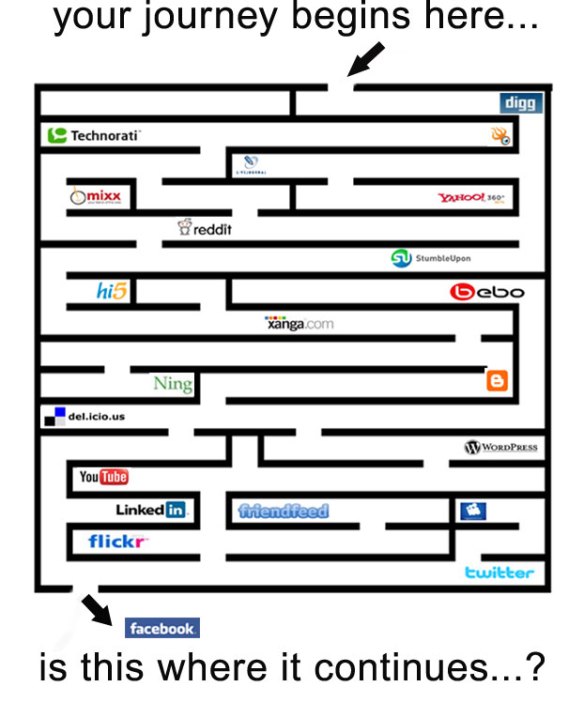
The Social Media Maze

Did you ever read the book, “Who moved my cheese?”

It is the story of four characters living in a “Maze” who face unexpected change when they discover their “Cheese” has disappeared. Now think about your journey of discovery with social media. Doesn’t it somewhat work in the same way? You keep looking and searching for the right fit for your needs regardless of whether you are a business or individual?

At some point, the social network, tool, or service ends up either not delivering what you want, or what you need, so you embark on the journey of finding the next best thing out there. Lots of dead ends, but you keep going.

the-journey2

Share this Post

Social media is free…but I’m not

free

It’s been one of those days… so I’m going to allow myself just a wee bit of time before I snap out of it.  I’m going to vent. It started this morning when I heard back from a prospective client who liked the 5 page social media strategy overview document but…

The “but” was they wanted more specific details on what I was going to do. I told them that I would give them the specifics in time. but that I thought that it was important that they understand the how and the why before we got into the how to and the what for. I did this because we’re talking about a client that knows virtually nothing about social media.

If I would have given them the latter, 2 things would have happened. 1)  It would have been so over their head that they would have not understood and probably bailed and or 2) Believe it or not, they could take the document and either try and implement it themselves, or use it as a blueprint with another company and leverage their new found knowledge. You might not think that happens, but it does, as well as some other things  Why?

The ease of entry into social media is less than zero. I can sign up for a majority of social networks in less than a minute. I can create social profiles in less time. So the assumption with a lot of companies and people is, “What is so hard about being social”? or creating a Facebook page, or a Twitter profile?and you know what? They are right. It’s easy.

Boom.

The thinking is really as simple as the majority of social interfaces that you see. Just create a profile and now you’re part of the social media revolution. You don’t need a consultant or a company to tell you how to do this. It’s easy. Plus there’s all of these killer blogs and sites with free information on social media, all these free tools, you can just figure all of it out on your own.

Sure. You can figure it out until it falls flat and you have one comment on your blog post. You have 19 registered members in your community, or you have 5,000 followers and you’re  following 5,000 but you have 111 tweets and zero conversations. Or maybe that Facebook page of yours has 56 fans but is doing nothing else. Or the YouTube video you made, has driven approximately 24 views.  When stuff is free, you get what you paid for.

There are some seriously smart people in this space. I value what they do and say and we value what we do and say, and we value what we create. But we also are working for a living. As much as we would like to give it away, we can’t. As it stands, the majority of people in this space, give away a lot. In fact, the amount of time that a lot of the social media marketing people that I know, give away, is extreme.  In terms of amounts of their time and resources-there is not a more giving  bunch. That’s the essence of social media.

But… at the end of the day, bills have to be paid and you’re going to have to take that leap of faith.

I’m done venting.

Share this Post

How are you driving people to your social media presence?

cattle

What are you planning to do to drive people to your social media presence? And do you have the money to do it? I read this question this morning and thought, boom, dude you nailed it. It was a post in Clickz by Sean Carton. Though he didn’t really answer it.

So lets talk about that. What are your plans? You have gotten the gig, but now you are tasked with driving traffic to all of the social media properties that you have set up for the client.

Quick question though. Is that really a function of social media managers? To drive traffic? Or is that a pure marketing function? A search function? Something you pay for? Something you outsource?

I digress. So what are you going to do get these communities/social media personas jammin?

I think first and foremost, as Jason Falls has so aptly put it,

To be effective in social media, whether as a marketer or just an ordinary participant, you must, first and foremost, communicate well.

Ok so you have that down, you can communicate with the best of them, now what?

Well if we’re to look at social media as a messaging and communications type of activity, wouldn’t that responsibility ultimately sit on the shoulders of PR? Should PR pros be responsible for driving traffic to social media networks?

Or is it something a marketing department should do? Does a community manager do that?

Wait, I’m blurring the message here. Let’s go back.

What are you going to do to drive traffic? I don’t care if you’re in marketing, PR, or IT, you have been tasked with making this social media thing work, so wutcha got? And don’t go telling me we need to define our objectives and align them with our strategies. We get that. Yea I know numbers don’t truly define success but they certainly are going to determine a lot of things going forward. So pick your poison.

  • We have blogs-what’s your plan to drive readers?
  • You’ve created a Facebook fan page or group page, how many friends are you going to get and then what will you do with them?
  • You’ve create a social network on Ning now what?
  • What is your plan to grow your Ning group or your community?
  • You’ve got that Twitter profile rolling, what’s your goal? Do numbers even mean anything anymore? How many conversations are you looking for?
  • Now that you have that podcast where are you going to find that audience? What is going to compel them to tune in every week?
  • Wikis are a cool collaborative tool if people know about them and feel compelled to contribute. So why should they do anything with yours? Out of some benevolent stroke of contributing for contribution’s sake?
  • Is a big budget going to make it easier for you to create these communities? You know once your PPC campaign ends, your traffic might leave to..
  • What if you do suck at communicating? Then what?
  • Who should be responsible for the success or failure?

What I keep coming back to, is that with each bullet point, it still helps to define the purpose of why you are doing it in the first place. Here’s the problem though. There are a lot of hours involved in any of these activities, and if any company or person is going to work on these, then we or you need to see something on the back end that is justifiable. Is that ROI? Could be. Is it return on engagement? Well…

Try selling the story that because of social media, you had one killer conversation or engagement per blog post. Or you have 30 really awesome friends on that Facebook fan page. Or you helped 1 customer out who found you through Twitter…

I’m not sure those type of numbers can justify the time suck and investment of resources.

So I ask you again, what is your plan of action for driving traffic to your social sites and communities.

Social Media Conundrum #13…The tools

tools

Practical, useful, functional, sensible…

Those are all synonyms of a word that best fits social media. I’ll let you in on that word at the end of this.

I think sometimes we like to have things that look pretty, but don’t really perform that well, and yet we have tendency to accept it. We shrug our shoulders and we incorporate the time suck and the inconvenience into our daily routine.  I’m sure we can all think of products or services in social media that we bought or downloaded that had a lot of slick features, but at the end of the day, just didn’t work. But we stayed with it. Why? Because we were told it was the thing to do or have.

At the end of the day, we just needed it to do X instead of A through X. Even though K throught X doesn’t even work anyway without an upgrade.

Initially, we suffer for beauty, until we learn that practicality can go a long way in  online marketing and social media success.

Social media tools and sites are, at their core, about creating and enhancing the way we communicate with friends and strangers. The essence isn’t so much about how I say it and where I say it, as it is about what I say and to whom. It’s usefulness is only useful if you’re using it. We use the tools of social media to enhance and simplify and extend our communication and marketing efforts to customers, clients and friends and relatives. It’s a utility, and we use it as such. Whether we know it or not.

What’s my point?

Practical, useful, functional, and sensible can go a long way in social media. They also can a long way in enhancing the relationships with your customers and your clients. They don’t and you don’t for that matter, need the snake oil, the spam and the bullshit pitch. They need a social media solution or tool that is practical, useful, functional and makes sense for their employees, their company and their customers. So give it to them. and give it to yourself. Use what works.

The word?

Its Utilitarian.

Social media is utilitarian.

Do you agree?

Context is a 4 letter word…

Actually it’s a seven letter word… but maybe the context was lost in the title.  Simply put. We need more context in social media conversations. Specifically in Twitter but certainly not immune to all other social networks, context can elude us quite easily.  Either we abuse it, we don’t use it, we misuse it, or we lose it. Alot!

context

Just as the earth revolves around the sun and rotates on it’s access, context continues to toss, turn and tumble around the foundations of conversations. Word has it that the phone works pretty well at restoring context. TBD. What do you think?

Share this Post

Social media postulate #32

David Armano has a deck out right now titled social business by design in slide #6 he states that facilitation leads to engagement, and engagement leads to participation. I’m down with that.

But…

According to Wikipedia,The term facilitation is broadly used to describe any activity which makes tasks for others easy but what if we substitute the word facilitation for fascination?

According to Merriam Webster, Fascination is the state of feeling an intense interest in something

So what if…

Fascination leads to engagement

curiosity

and engagement leads to interaction?

kidscircle

and  interaction led to demand?

waiting

Would that work?