Social Media and Web Metrics Dinner Party Conversation

Ok class it’s time to throw out bits and pieces of useless information to astound the people you’re talking to this weekend at the dinner party that you have to go to. Usually when you go to these things, you try to seek out the tech-y guy or person. But ultimately what happens is they try to impress you with what they know and think YOU don’t know nothing. It’s at this point you drop of this on them.


Social Media

So some how, things shift to talking about social networks, you went to get a drink and bam, somehow they’re talking about how America’s youth is effed up because of Myspace and Facebook and is populated by amped up testosterone laced males. At which point you chime in and say:

Actually Facebook has more female users than male. In fact, of the 57 million users on Facebook, 56% of them are female.  It’s at this point that you now have their attention and they all start looking at you. Which is when I silently thank Marty Fahncke for throwing that tidbit of his up on an article in Electronic Retailer

So now they are wanting more.  So thanks to Marty I throw this one out: DID YOU KNOW…that Linkedin has 17 million members with every Fortune 500 company represented? Or that the average age of the LInkedin user is 41?   Hopefully none of them ask what Linkedin is, but invariably there WILL be someone within the group who asks.

So while they’re chewing on that someone will of course ask, How many members use MySpace? And with total confidence you answer 200 million members, 110 million of which are “active”. Whew. You have them eating out of your hand right now.

Time to drop some good stuff on them now.

Web Metrics

Did they know that the average American spends 30 hours per month online with October being the heaviest month for usage? Thanks comScore Or that Ann Arbor had the highest internet penetration in the U.S.? According to The Media Audit

Think the majority of users are the 18-31 user? Think again. Leading the way for tops in internet usage are the 44-62 year olds. In 3rd place are the 32-43 year olds and behind them are the 63+ demo followed by the 12-17 year olds according to emarketer

The audience around you will grow and the questions will now vary. But they will all have a tech feel and flavor. Someone will no doubt ask, what site they should go to in order to get a good feel for the pulse of say the blogosphere. I’ll mention that shel israel has a really interesting and observant blog that should at least warrant a stop by as does Seth Godin who always has some great points about all things marketing related.

But maybe that’s too deep for you and you need  some sites that are light on the copy and heavy on engagaing you for awhile. Where can you go you ask? Go here and check out what streams from Kevin Kelly’s consciousness.

I grab another drink while I see some grabbing napkins to write on. I blurt out that I always enjoyed this blog just because it’s put together well, and its always got something that helps me learn and understand and yet is not so technical. Jaffe Juice fills that need.

From the Jaffe Juice site: How many social media experts does it take to change a lightbulb?

Uh oh, I think you’re starting to glaze over, too much info. It happens to everyone who doesn’t live and breath and digest this stuff on a daily basis. Thats cool though. For that I will throw Matt Creamer at you, he always has some interesting links to pass on as does Nathan Gilliatt but it may be a little to techy for you. But then again, when this conversation started you thought you knew your stuff anyways. You do Twitter don’t you?


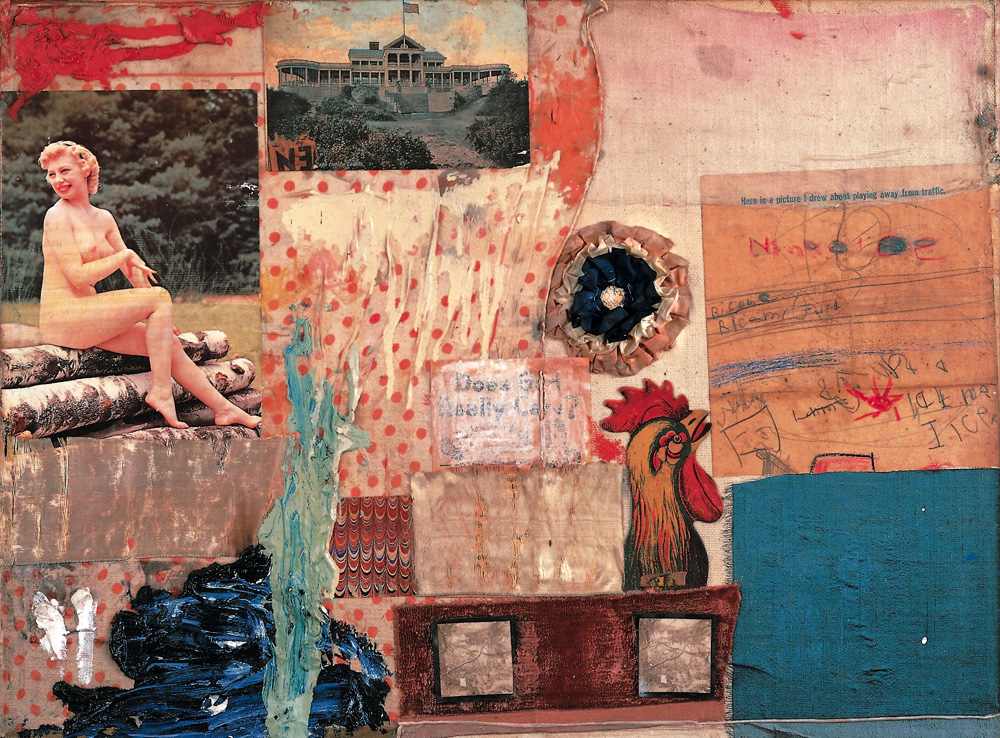
Robert Rauschenberg died yesterday

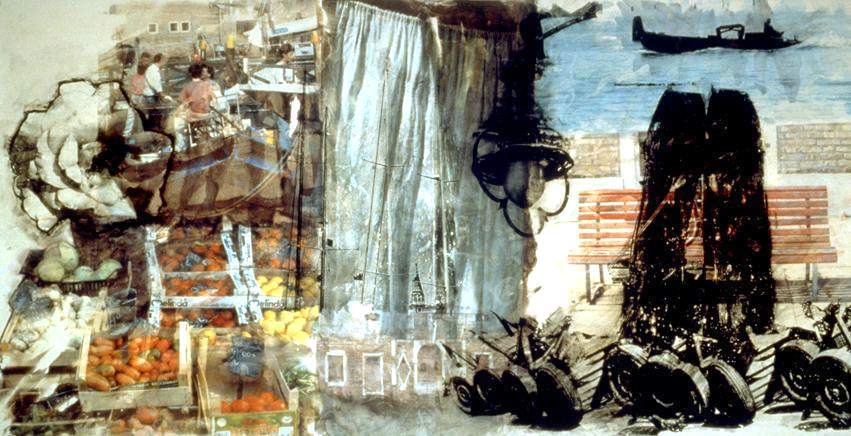
I know this has zero to do with the internet, social networks, or marketing, but…Robert Rauschenberg died yesterday at the age of 82. For those of you who don’t know who he was, he was an artist. His stuff was pretty different and certainly wasn’t what you would call traditional art.  He essentially would use whatever he could find and incorporate that into his works. He brought new meaning to the term “starving artist” as well since whatever was laying around might end up in one of his “Combines”.

Below is a quote that when I read it, is both revealing and honest and to a certain degree, something we all may feel from time to time about dying.

“I don’t ever want to go,” he told Harper’s when asked about dying. “I don’t have a sense of great reality about the next world; my feet are too ugly to wear those golden slippers. But I’m working on my fear of it. And my fear is that something interesting will happen, and I’ll miss it.”

What made Rauschenberg so different from other artists can be found in the following links: The life of Robert Rauschenberg The Guggenheim Bio on Robert Rauschenberg Robert Rauschenberg in Vanity Fair

Here are some of Rauschenbergs works as well as a fascinating  YouTube video about him:

Robert Rauschenberg painting

robert-rauschenberg-the-artist

rauschenberg-the-artist

Here is a great excerpt about Mr. Rauschenberg and a site that all should check out from time to time appropriately called Caffeine Headache. Robert Rauschenberg left behind a legacy that has been etched in the consciousness of the new world, the old world and the world in which he now occupies.

The dumbing down of America

Last week on HBO, they reran  CostasNow, a “sort of” sports oriented talk show hosted by Bob Costas, one of this nations most gifted sports authorities, scribes, oracle and overall mouth pieces for all things related to sport.  One of the segments featured  concerned the Internet and the impact of bloggers, as it pertains to sports. The guests were, Deadspin.com editor Will Leitch,  Pulitzer Prize-winning author Buzz Bissinger, and Cleveland Browns wide receiver Braylon Edwards.

First, let me say that Buzz Bizzinger was so caustic, so adamant, and frankly so foul mouthed in his opinion that the current state of blogging, Deadspin in particular, was taking writing, sports writing in particular, in a direction that demeans everything that he ever stood for, that I had a hard time really agreeing with anything he said regardless of his pulitzer prize winning credentials.

At least I think that’s what he was saying, when he wasn’t yelling and cursing. I was ready for him to blame the demise of sports writing on that “damn rock and roll”! But alas, he didn’t. I’m guessing he’s just a completely jaded sports writer that’s mad that athletes make more than him.

So I sat and watched this exchange and started to think about what has the blogging community, and social media, and really the internet, created? Or what has it taken away? It’s pretty simple to see what is has created. It has created this:

Lots of talking, lots of conversations and lot’s of communication.

But what has happened is that the users expectations are starting to be raised. The user wants to be engaged, entertained and dazzled by the latest technological advance when it comes to communications and media. The days of relying on a newspaper and Time magazine are slowly being replaced by the rise of the blogosphere, the kindle and podcasts.

So are the users expectations rising? Or better yet, are we raising expectations while lowering the barrier to understand and comprehend? Or, dare I say it, are we simplifying the way we want users to get their info? Are we compartmentalizing their intake of information in such a way that it now can be treated as fast food. Information that is gathered at the take-out window. To be digested before you get home.

Funny thing though, the more we as technologists try to simplify things, the more time we demand of others to use the things that will “simplify” our lives. Email streamlines our lives so that we can communicate with our frinds and family. Text messaging so that we can give or receive an immediate response. Our phone allows us to not only call or text but also allows us to go online and do research and or check email! If you’re worn out already and wondering how one folds this time into one’s busy schedule, keep in mind that currently the average American spends 30 hours per month onliine according to emarketer.

If you take into account all of the current activities that a U.S. adult uses the internet for: Email, Local search, IM, blog reading, watching video, and podcasting to name a few-The average internet user needs their info quick and dirty (pun intended), easy to read, to digest and ultimately easy to discard. It can’t be complicated, they don’t have the time nor the patience to wait. If it is any of the former, expect the bounce.

The internet is taking away our patience. We expect our results, our information, to be delivered to us now. What this breeds are expectations in other social settings that might not necessarily be realistic. We wait longer at traffic lights or so it seems, so we run lights that are more red than they are yellow, and for what? Because we don’t want to be late. We grow impatient in a line when trying to check out at a store because the sales person is having trouble with the RFID scanner. We want product now and are unwilling to wait. We expect service now because it’s the way it’s delivered to us online. Fast with no bullshit. If any exists, we are OUT OF THERE.

OUR EXPECTATIONS OFFLINE ARE NOW IN LINE WITH OUR EXPECTATIONS ONLINE

THEY’RE UNREALISTIC!

When they do not meet those expectations, we complain. Why are our experiences online so unrealistic? Because the online world has eliminated the human element. It delivers what we need and want instantly. That is not reality.  Online, the old adage “Good things come to those who wait”, never meant less that ever before.

In turn, if we can get what we want without having to deal with a human, that suits some of us just fine. Some desire as little human interaction as possible. Coupled with our desire to speed up things, is the desire to simplify. These 2 elements have prompted companies and developers to try and speed things up by over simplifying the processes involved in creating the speed. In essence THEY ARE DUMBING THINGS DOWN

Thus the more a developer can dumb down the learning curve by not sacrificing the performance of the app, the higher the chance that it will be embraced by not only the casual user, but also the development comunity as well as investors. Investors love something that is sexy and easy to understand or can be pitched in the elevator. If it can, and it’s fast and solves a problem, and speeds up a process, it’s a winner.

Tim Ferris comes right out and states that he receives 500 to 1000 emails a day…

To contend with this, I have virtual assistants in Canada and sub-assistants in Bangalore who filter my inboxes using processing rules in Google Docs. Connected via Skype and compensated via PayPal, this team translates a 10-hour task into a 20-minute phone call.

Simplification? Hardly. E-mail has dramatically increased the number of coping mechanisms required to handle communication, the net complexity as compared with previous alternatives.

“If the promise of technology is to simplify our lives, it is failing.” The wording of this proposition is tricky. To quote Bill Clinton: “It all depends on what the definition of is is.”

Ironically,  Tim is the author of the 4 hour work week and thus may or may not be a good proponent of encouraging more humanistic encounters with a hint of challenging the intellect of the masses. With that being said, Seth Godin puts it pretty bluntly when he says, “When you dumb stuff down, you get dumb customers.”


Myanmar disaster relief sites

Join the recovery efforts mobilizing around the world to assist cyclone victims in Myanmar

The following aid agencies are accepting contributions to help those affected by the cyclone in Myanmar. The list is from InterAction, a coalition of aid agencies, which can be contacted at InterAction at (202) 667-8227 or http://www.interaction.org.

ADRA International

Myanmar Cyclone Fund

12501 Old Columbia Pike

Silver Spring, MD 20904

(800) 424-ADRA ext. 2372

http://www.adra.org

Action Against Hunger

247 W. 37th St., 10th Floor

New York, NY 10018

(877) 777-1420

http://support.actionagainsthunger.org/donate

American Jewish Joint Distribution Committee

JDC: Myanmar Cyclone Relief

P.O. Box 530

132 East 43rd St.

New York, NY 10017

(212) 687-6200

http://www.jdc.org

American Jewish World Service

45 W. 36th St., 11th Floor

New York, NY 10016

(800) 889-7146

http://www.ajws.org

American Red Cross

International Response Fund

P.O. Box 37243

Washington, DC 20013

(800) HELP-NOW

http://www.redcross.org

American Refugee Committee

430 Oak Grove St., Suite 204

Minneapolis, MN 55403

(612) 872-7602

http://www.arcrelief.org

AmeriCares

88 Hamilton Ave.

Stamford, CT 06902

(800) 486-4357

http://www.americares.org

Ananda Marga Universal Relief Team

6810 Tilden Lane

Rockville, MD 20852

(301) 984-0217

http://www.amurt.net

Baptist World Aid

Myanmar (or Burma) Relief

405 North Washington St.

Falls Church, VA 22046

(703) 790-8980

http://www.bwanet.org

CARE

151 Ellis Street N.E.

Atlanta, GA 30303

(800) 521-2273

http://www.care.org

CHF International

8601 Georgia Ave., #800

Silver Spring, MD 20910

(866) 779-2CHF

http://www.chfinternational.org

Christian Reformed World Relief Committee (CRWRC)

2850 Kalamazoo Ave., S.E.

Grand Rapids, MI 49560-0600

(800) 55-CRWRC

http://www.crwrc.org

Church World Service

28606 Phillips St., P.O. Box 968

Elkhart, IN 46515

(800) 297-1516

http://www.churchworldservice.org

Concern Worldwide U.S.

104 East 40th St., Suite 903

New York, NY 10016

(212) 557-8000

http://www.concernusa.org

Direct Relief International

27 South La Patera Lane

Santa Barbara, CA 93117

(805) 964-4767

http://www.directrelief.org

Episcopal Relief and Development

815 Second Ave., 7th Floor

New York, NY 10017

(800) 334-7626

http://www.er-d.org

Food for the Hungry

1224 East Washington St.

Phoenix, AZ 85034

(800) 248-6437

http://www.fh.org

Habitat for Humanity International

Cyclone Nargis

121 Habitat St.

Americus, GA 31709-3498

(800) HABITAT

http://www.habitat.org

International Medical Corps

1919 Santa Monica Blvd.

Suite 400

Santa Monica, CA 90404

(800) 481-4462

http://www.imcworldwide.org

International Relief Teams

Attn: Myanmar Cyclone

4560 Alvarado Canyon Road, Suite 2G

San Diego, CA 92120

(619) 284-7979

http://www.irteams.org

International Rescue Committee

(Note on checks: Myanmar)

P.O. Box 96651

Washington, DC 20090-6651

(877) REFUGEE

http://www.theIRC.org

Latter-day Saint Charities

50 East North Temple, 7th Floor

Salt Lake City, UT 84150

(800) 453-3860, ext. 23544

http://www.lds.org

Lutheran World Relief

P.O. Box 17061

Baltimore, MD 21298-9832

(800) 597-5972

http://www.lwr.org

MAP International

Donor Member Services

Myanmar Assistance

P.O. Box 7020

Albert Lea, MN 56007-9931

(800) 225-8550

http://www.map.org

Operation USA

Memo “Myanmar Cyclone”

3617 Hayden Ave., Suite A

Culver City, CA 90232

(800) 678-7255

http://www.opusa.org

Project HOPE

255 Carter Hall Lane

Millwood, VA 22646

(800) 544-4673

http://www.projecthope.org

Relief International

1575 Westwood Blvd., Suite 200

Los Angeles, CA 90024

(310) 478-1200

http://www.ri.org

Save the Children USA

54 Wilton Road

Westport, CT 06880

(800) 728-3843

http://www.savethechildren.org

United Methodist Committee on Relief (UMCOR)

#3019674 Myanmar Emergency

P.O. Box 9068

New York, NY 10087

(800) 554-8583

http://www.umcor.org

Unitarian Universalist Service Committee

UUSC-UUA Burma Cyclone Relief Fund

P.O. Box 845259

Boston, MA 02284-5259

(800) 388-3920

http://www.uusc.org

U.S. Fund for UNICEF

125 Maiden Lane, 11th Floor

New York, NY 10038

(800) 4UNICEF

http://www.unicefusa.org

World Concern

19303 Fremont Ave. North

Seattle, WA 98133

(800) 755-5022, ext.7706

http://www.worldconcern.org

World Emergency Relief

P.O. Box 131570

Carlsbad, CA 92013

(888) 484-4543

http://www.worldemergencyrelief.org

World Vision

P.O. Box 9716

Federal Way, WA 98063

(888) 56-CHILD

http://www.worldvision.org

John Challis, A tale of courage.

I read this story, and was brought to tears half a dozen times. This story was first posted in the Pittsburgh Post Gazette by Mike White

The 18-year-old kid dying of cancer gets his wish, a chance to swing a bat maybe one last time in a real baseball game.

He hasn’t played in a few years, but he’s called on to pinch-hit. His eyes light up at the first pitch and he puts all of his 5-foot-5, 93-pound frame into one mighty swing, making contact and sending a line drive into right field for a single — if he can reach first base. The cancer he’s been battling for almost two years has spread to his pelvis, making running nearly impossible.

The kid worries about falling as he hustles down the first-base line. When he gets to the base, he lets out with a yell. “I did it! I did it!”

Safe at first with a hit and an RBI, the kid is hugged by a crying first-base coach. The opposing pitcher takes off his glove, starts applauding and his teammates follow suit. The kid’s teammates run onto the field to celebrate.

It sounds like the climax to a heart-tugger movie. But there was no producer or film crew at the game between Freedom and Aliquippa high schools two weeks ago. The scene was as real as the tumors in John Challis’ liver and lungs.

John is a kid with cancer, a senior at Freedom in Beaver County who was told a few weeks ago by doctors that cancer was winning and it was close to the end. The disease that started in his liver was now taking over his lungs.

“They said it could be only two months,” he said, fighting back tears.

He paused before his seemingly never-ending optimism came through again.

“I told my mom I still think I can get two more years.”

But his story isn’t about dying. It’s about inspiring.

His story, words, actions, beliefs and courage have become known around Freedom and surrounding areas in Beaver County, bringing people together from other communities and other schools.

Three weeks ago, Freedom baseball coach Steve Wetzel organized “Walk For A Champion” on Freedom High’s school grounds. The purpose of the walk-a-thon was to raise money for one of John’s wishes — a last vacation with his mom, dad and 14-year-old sister, Alexis.

More than 500 people took part, including baseball teams from eight Beaver County high schools and members of Center High School’s football team. John also used to play football at Freedom.

Mr. Wetzel, who calls the teen his hero, hoped to raise $6,000. That total was easily surpassed “and people are still calling with donations,” he said.

The family has booked a cruise for June.

The Challis effect
A Beaver County church had planned a fundraiser, but John and his family asked the church instead to conduct the event and give the money to a fifth-grade boy in Beaver County who has a brain tumor.

“His family can use it more than we can,” John said. “That’s just common sense. Someone does something good for you, then you help someone else.”

Actions and statements like those are what has inspired so many others. All of Aliquippa’s baseball players wear John’s jersey number “11” on their hats. At the walk-a-thon, Aliquippa star athlete Jonathan Baldwin, a Pitt football recruit, presented him with a ball signed by Pitt players.

After the walk, John addressed the crowd.

“He spoke from his heart,” Mr. Wetzel, the coach, said. “He said, ‘I’ve got two options. I know I’m going to die, so I can either sit at home and feel sorry, or I could spread my message to everybody to live life to the fullest and help those in need.’ After hearing that, I don’t know if there were many people not crying.”

Last Thursday, Beaver pitcher Manny Cutlip tossed a three-hitter against Freedom as John watched in street clothes. After the game, every Beaver player came up to him and shook his hand. Some hugged him and some said they were praying for him. Manny Cutlip asked Mr. Wetzel if he could go to lunch some time with John. It happened the next day.

“I don’t know what to say. I just wanted to get to know him better and see if I could learn anything from him to help me in my life,” said the young pitcher, an imposing 6-foot-3, 225-pound standout athlete who will play football at IUP.

At lunch, he gave John a new football with a handwritten personal message on it. Part of the message read, “You have touched my heart and I will always look up to you as my role model.”

Talk to John and you’ll laugh at his sense of humor when he says things such as, “You can’t let girls know that you know how to text message because they won’t leave you alone.”

But listen to his mature views on life and his philosophies … and you might cry.

“I used to be afraid, but I’m not afraid of dying now, if that’s what you want to know,” he said. “Because life ain’t about how many breaths you take. It’s what you do with those breaths.”

Figuring it out
It’s been almost two years since John found out about his cancer. He knows the date like a birthday. June 23, 2006.

He discovered only recently that doctors didn’t expect him to last through that first summer. “To me, that’s already an accomplishment,” he said.

In the first few months after the cancer discovery, John’s father, Scott, would get up in the middle of the night, peek into his son’s bedroom and see him wide awake, staring at the ceiling.

“He would just be thinking,” the elder Challis said. “He’s always been one who had to try and find an answer for everything. He wants to figure things out.”

Through his own thoughts and through his deep Catholic beliefs, John believes he has “figured it out.” He answers questions with maturity, courage and dignity, traits that have become his trademarks.

John requested that his mother, Regina, not be interviewed for this story because it will be too hard for her. He talks to his father about what to do after he dies.

“I sit up with him at night until 1 or 2 in the morning,” Scott Challis said. “He’ll tell me, ‘Dad, when I’m gone, you have to do this or that. You have to watch your weight.’ He’s worried about my weight. He tells me I have to take care of mom.

“When the doctors told him a few weeks ago about how the cancer was winning, he had a lot of questions about what it was going to be like and about being comfortable. Later on, he broke down with me and you know what he did? He apologized. He was upset because he felt like he was letting everyone down who had been praying for him.”

Scott Challis has found talking about his son makes the situation easier to deal with. But many people like to talk about John. Shawn Lehocky is a senior and one of Freedom’s top athletes. For every football and baseball game, he wears a red wrist band with John’s No. 11 on it.

“It seems like everyone in this community knows who he is now and he really has brought so many people together,” Shawn said. “He’s always on my mind. To see him and what he’s going through, I don’t know if I could act like that. He said some pretty strong words at that walk-a-thon that you don’t hear 17- or 18-year-olds say every day.”

John fought back tears a few times during last week’s interview.

“Sometimes I cry, but people cry for all different kinds of reasons,” he said. “Sometimes I just want to know why, but I think I figured that out. God wanted me to get sick because he knew I was strong enough to handle it. I’m spreading His word and my message. By doing that, I’m doing what God put me here to do.

“It took me about a half year to figure all that out. Now, when I’m able to truly believe it, it makes it easier on me. And when you know other people support what you’re thinking, it makes it easier.”

When asked where he gained his wisdom, he answered, “Through cancer.”

“They say it takes a special person to realize this kind of stuff,” he said. “I don’t know if I’m special, but it wasn’t hard for me. It’s just my mind-set. A situation is what you make of it. Not what it makes of you.”

He regularly wears his Freedom baseball hat. Under the bill of the cap is his name, plus this line: “COURAGE + BELIEVE = LIFE.”

“I guess I can see why people see me as an inspiration,” he said. “But why do people think it’s so hard to see things the way I do? All I’m doing is making the best of a situation.”

John then raises his voice.

“Why can’t people just see the best in things? It gets you so much further in life. It’s always negative this and negative that. That’s all you see and hear.”

John tries to keep complaining to a minimum, but he acknowledges his moments of crying.

“If I’m mad at anything in this, it’s that I’m not going to be able to have a son, I’m not going to be able to get married and have my own house,” he said, fighting back tears again. “Those are the things I’m mad about. But not dying.”

The role of sports
John loves sports. He is an avid hunter — “got three buck and two doe in the last year,” he said.

He played baseball through Pony League and always loved football, despite his small stature. As a sophomore, he started on Freedom’s junior varsity team as a slotback and cornerback.

“I was 108 pounds. I had to be the smallest player in the WPIAL,” he said with a laugh.

The cancer forced him to stop playing football as a junior.

“But I will never forget,” his father said, “when he first got sick he told me, ‘Dad, I have to dress for a football game one more time.’ ”

He got his wish in the final game of his senior season, against Hickory. Coaches let him kick off once. He was supposed to kick and immediately run off the field to avoid danger. Instead, he stayed on the field and got a little excited when the kick returner started heading his way before being tackled.

Later in the game, the coaches put him in for two plays at receiver. Mr. Wetzel and others who saw the game proudly tell how, on one play, John tried to block a defender, fell down, but got up and pushed another defender.

Mr. Wetzel said seeing John play in that last football game, doesn’t compare to seeing his hit against Aliquippa in that April 14 baseball game. John vividly remembers the details leading up to the hit. When he walked into the batter’s box, he saw Aliquippa’s catcher wearing a protective mask with the initials “J.C.” and the number “11.”

“I just looked at him and said, ‘Nice mask.’ ”

He then noticed an Aliquippa coach saying something to the pitcher.

“I’m thinking, ‘If they’re going to walk me or throw easy to me, I don’t want it handed to me,’ ” he said. “But sure enough, he threw me a fastball. That’s what made it so good. … There were only about 20 people there watching, but everyone was cheering.”

Mr. Wetzel said: “We made it to the state [PIAA] playoffs two years ago and I thought that was the best feeling. I got to play in WPIAL championships at Blackhawk as a player. But that day, that hit, that moment … That was the best feeling I’ve ever had in sports.”

Six days later, Freedom played a game at PNC Park. John attended the game, but had an IV line in his arm for a treatment he was getting. He took out the IV line and asked Mr. Wetzel if he could pinch-hit again.

“Unbelievable. He told me the doctor said he could take it out for up to seven hours,” Mr. Wetzel said. “He told me he just wanted to be a normal kid one more time.”

So Mr. Wetzel let him pinch-hit. This time he struck out.

They have a unique coach-player relationship. Mr. Wetzel invited John to be part of the team a year ago and John calls the coach one of his best friends. They talk every day, at least on a cell phone, and go to lunch together once a week.

“The kid has changed my life,” Mr. Wetzel said. “I cry for him just about every day. I’m 32 and I’m getting married in September. You know what he told me the other day? He told me to save him a seat in the front row of the church, because even if he’s not there, he’ll be there in spirit.

“He just keeps doing things and saying things that are just unbelievable. I know our team will never forget this season because of Johnny.”

The two want to start a foundation in John’s name for young cancer patients.

“Even if [the foundation] is something that can help only one kid or one family, to see people in a different way like I have, it will be worth it,” John said. “Maybe it will help younger people who haven’t gotten to see the finer things in life that I got to see.”

John plans to attend Freedom’s prom May 9 and plans to graduate in June. As John ended this interview, he said he wondered how his story will come out in the newspaper.

“When you write this, don’t overthink things,” he said. “I’ve learned that. There are a lot of unanswered questions in this world and the reason they’re unanswered is because if you think about them too much, you’re always going to come up with different answers. So don’t confuse yourself and think about this too much.”


John Challis

Why Linkedin is growing so fast.

As first reported by Mario Sundar, Linkedin grew 319% last year.  And to some this seems almost surprising. But if you really look at what Linkedin does, it brings more to the table than a hookup site like Facebook does. Does that surprise you that I said that I said that? Talk to your average college student and ask them what they use FB for. They might not admit it but it’s a mechanism to try and hook up without having to actually speak. it lessens rejection and makes eventual physical interactions less stressfull and less in your face. People on Facebook when talking to others, will say things they would never say face to face, and thus the reason FB is so popular with the 18-24 demo.

Now some would say that Linkedin’s growth could be attributed to the growth of social networking sites into demographics that traditionally stay away from social networking. As Nick Oneill wrote in Social Media Today, the Boomer generation has an increasing number of people on social networks. Users over 45 now account for a whopping 31 percent of LinkedIn’s user base.  But Linkedin is NOT a boomer-centric site. That’s not what is spurring its growth.

I don’t view boomer’s as a traditional user of Linkedin per se, I look at boomers as PART of the mix that is the sum of the parts that define Linkedin’s user base.

What’s happening, is that business professionals are  a) starting to see the value of being transparent and b) beginning to utilize the power of  online networking and c) understanding that social media can be used in a way that does not construe them as being too young, too trendy, too ignorant, too old, too un-tech savvy, or too uncool to their peers. They are comfortable with it, and they are now sharing that comfort level with others. So the effect has been viral! And…here is the last part no one will admit.

People are addicted to watching their number of connections grow. They are obsessive to the point that I wouldn’t mind taking a straw poll as to how many times a day the average LI user logs in to look for people, add people, and or reading about someone, asking a question, or answering one.  The question would be: How much time do you spend on Linkedin each day?

Case in point: With other demographics, when they get together, the first or last question out of their mouth might be, “Are you on Facebook?”  Whereas, now because of the prominence of social networks, that same general social networking question now resonates differently and has a more meaningfull response when professionals ask each other, “Are you on Linkedin”? 

Linkedin’s creation has allowed some of the old school traditional business processes to be bypassed, such as: the exchanging of business cards, leaving voicemail, sending intro-letters, putting together press kits, creating static web pages, mailing out brochures, and giving away swag. Anything to connect. In favor of a clear, non invasive, low stress evaluation of someone and their company. The ability to reach out to that person and their company now takes on a whole new meaning. Introductions to people and their companies now can be done efficiently and business relationships now have a  pre-existing comfort level that is in place between parties who actually may do business together. A streamlined engagement. Look at it as “hooking up” the professional way!

Micro Interactions

David Armano of Crtical Mass has a blog that I really enjoy. It’s called Logic+Emotion. Today I just ran through a great slide show presentation that was derived from something he said:

“We live in a world where the little things really do matter.  Each encounter no matter how brief is a micro interaction which makes a deposit or withdrawal from our rational and emotional subconscious. The sum of these interactions and encounters adds up to how we feel about a particular product, brand or service.  Little things. Feelings.  They influence our everyday behaviors more than we realize.”

6 degrees of social randomness

I saw this post in Adfreak about a social networking campaign on Facebook to combat the spread of a particular STD. The kicker was the campaign was dubbed “Spread it to beat it”…huhh?

Now here is a niche that no one will ever fess up to but all have travelled through at some point in their business lives. Check out EthicsCrisis Here’s an excerpt…

Clueless!

I had received an e-mail from an account manager whom I loathed for her inability to do her job correctly, even at the most simple level. After receiving this ridiculous e-mail from her, I wanted to send it to a peer of mine whom I had vented to to witness firsthand just how bad she really was. I flamed intensely on the forward, and then sent it off — only to realize that I had REPLIED to the e-mail, not forwarded it.

Do you ever want to draw on the back of business cards? Then check out Gaping Void

Guess what? The Wall Tweet Journal has contacted me!

Scott Van Pelt of ESPN has started to hit his stride at ESPN. He has now joined MIke Tirico as a cohost in the afternoon, as well he has his own hour. Good for him, he has the humor and knowledge to make the most of his time on air. FYI- Last night Lebron was fouled at the very end of the game and Caron Butler walked. Sure makes for some fun before dog days of summer begin. And yes Van Peezy, Deshawn is a punk. At least on the court.

Scott Van Pelt


Im reading a great blog at the moment by Gavin Heaton and eveeryone should hop on over when they get a chance and give it a good read!