Social Media Marketing Challenges in the Biotech Industry

Featured

I once heard this line in a podcast, “Take what’s important and make it interesting.” It resonated with me immediately. If there was ever a direct call to action for all that we do in social media, particularly social media marketing in the biotech space, then that would be it.

I don’t see a lot of “how-to-do” social media marketing articles that focus on the biotechnology industry, and there’s probably a good reason for that. It’s hard. To counterbalance that, I thought this might be a good opportunity to talk about the challenges of navigating through it with a clear path and understanding of what it’s going to take to “win”.

I’ve been in the biotech space with Revvity, for the last three years. Overall, I’ve been in the social media “space” for over 15 years, so I’d like to think I’m fairly qualified to lean in on the topic of social. Depending on your background and experience, I may be preaching to the choir here, but the bottom line is this; The social media challenges that exist in biotech are no different than they are in retail, tech, finance, or sports.

It’s Always Going to be About Content.

Till the cows come home, it’s always going to revolve around content frequency, freshness, and the types of content that are created. At a high level, we can chisel that previous sentence into the side of a mountain. Factor in strict FDA and FTC guidelines and sprinkle in some HIPPA compliance for extra measure and your team has quite the mountain to scale. Fresh content or not, you’re probably asking yourself, how can I tell my company’s story if I’m not allowed to “really” tell my company’s story?

The challenges, however, are this, and I think this is applicable across all industries. Once you get past the creation of said content (including copy, image, and landing page), and of course making sure you’re coloring inside the lines of whatever industry you are in, you’re not done. The emphasis then shifts to the audience and the platform. Is your stuff being seen by the right people on the right platform?

In other words, you must ask yourself (and your internal teams) if creating a TikTok video on cell and gene therapy geared towards chief scientists is really going to have the same impact as a gated white paper on the same topic offered up on LinkedIn. For now, I think we can say with some confidence that at least from a chief scientist’s point of view, they are not gathering market intelligence on cell and gene therapy solutions from TikTok.

As if your content, audience, and platform selection aren’t enough to keep you up at night, let’s factor in the desired outcomes of your content? What is the desired outcome that you want from that content piece? What do you want the chief scientist to do? Let me just say, you don’t have much time to get them to the dance…on time..

The Right Content + The Right Audience = The Possibility of Some Type of Action

At its most basic, fundamental level, you must fish where the fish are. Are we trying to cast a wide net? Sure, we are. But we’re also looking for a specific type of fish that might be interested in our bait. For starters, and this may seem silly, but you must ask yourself another pointed question, and that is, is your audience online? Are your decision-makers online? If so, in what capacity? What do they do when they are online? What types of content are being consumed by them or offered up to them? Do they engage with the content?

All of these answers can be partly arrived at by setting up social listening posts, which is highly recommended. At a high level, your listening posts will tell you IF they are out there, what are the content types being offered up to them, what’s working, and what’s being said. Listening posts, done correctly can give you a lay of the land of what’s possible. I highly suggest that you set this up and you always leave it on. Those insights will fuel your content ideas and your messaging.

When I was with Accenture, we had internal discussions amongst ourselves and with stakeholders every day with the primary goal of trying to understand what content would resonate with our target audiences (white papers, infographics, industry data, videos, our latest thought leadership, etc., etc.), where did they want to consume it (usually LinkedIn but not always), and when did they consume it (on the way into work, at lunch or on the way home). If you and your teams are NOT having those types of conversations, then you’re just yelling into the void.

It’s imperative to dig into your audience personas. i.e., the who, what, why, when, where, and how that comprises your target audience. Your audience IS online, you just have to find the sandbox that they’re playing in. In the past, we have found that LinkedIn user groups have been mildly successful from a targeting standpoint but even that can sometimes be an inexact science as well-, but it is worth trying.

For the sake of this discussion, we must assume that your target audience is online and is impatiently waiting for your creative message/post. You must understand that not all audiences are like you. In other words, there’s a high likelihood that they are NOT in front of a machine from 9:00 to 5:00 like you. Thus, you have very little time to get their attention. The window is half closed already. Thus, you must put yourself in their shoes. Give them what they want, how they want it, and in a manner that doesn’t waste their time.

Picture yourself as the customer. Where do you go for your information? Where do you go for market intelligence? How do you like your content packaged and delivered?

And thus, assuming you have done the work, it comes full circle. You found your audience and now you have to give them what they want.

What is good content?

In our example above we mentioned chief scientists who hung out on LinkedIn. Why not Facebook, Instagram, or Twitter/X? Simply put, LinkedIn has the best distribution of executives, chief scientists, lab managers, and essentially all of the target audiences we are interested in as a biotech organization.  

So, if we’re now thinking about that particular piece of content that will resonate with our targeted audience on LinkedIn, then there are a couple things in play. Do we create long-form pieces of content? A video? An infographic? Or do we go with short-form, staccato-like pieces of content? What should the CTA or call to action be that can drive the user to a landing page? See, there are a lot of different variables there that can affect performance. But at the end of the day, let’s decide. Let’s commit to a strategy and consistently measure it. Let’s think about what we want to do here. We have a piece of content. We want to get the most eyeballs on it. We want to get the most qualified eyeballs on it, and we want them to act on it. Are these things possible? They are, but you have to put the work in to understand the lay of the land. It’s no different than scouting your opponent in sports, doing your homework so that you’re prepared the next day or practicing your scales in music.

The last that I’ll add is that you should “always be testing”. One thing that working in social media will always afford you is a front-row seat to people and organizations trying new things. You should do the same. Start with different types of creative, copy or calls to action. Test them against each other. See what resonates and what doesn’t. The proof will be in the metrics and the metrics will be your friend. Be data-driven. Cancel that, be data-obsessed. It will tell you whether you’re fishing where the fish are and whether the bait you have, is working. Now go forth and take what’s important and make it interesting, your chief scientists are waiting for you!

How to Navigate Social Media in an Era of Misinformation and Disinformation

Featured

I have a difficult job. Not like it threatens my life or heaven forbid, it involves manual labor, but aspects of it can certainly be a drag on my psyche, my energy, and my hope for humanity. At the very least, over the last seven years, my job has gotten progressively more challenging; and maybe challenging is a kinder more diplomatic word but suffice it to say, it has become at times, quite vexing. If you look up the word vexing, Merriam-Webster defines it as causing annoyance, frustration, or worry. My job is that, and more at times, as I work in social media.

Which is why I asked the golden child, Chat GPT, the following question:
How do people navigate social media in an era of misinformation and disinformation?

I wasn’t so much asking on my behalf as I was wondering how others, lay people if you will, tackle the day-to-day challenge of separating fact from fiction and beyond in social media.
What I got back as an answer was close to what I might advise organizations, companies, and people to do. However, what I’d like to do is add my two cents to whether it’s possible to actually execute on each bullet of Chat GPT’s response. So, let’s break it down.

Let’s start with Chat GPT’s overarching response to the initial question: “Navigating social media in an era of misinformation and disinformation requires critical thinking, digital literacy, and a cautious approach.”

I agree, but right out of the blocks I must openly ask three questions:


1) How many of us while consuming social media content critically think about what we are reading or viewing? Do you ever ask yourself if what you’re reading smells? Or are you good with whatever it is you just read or viewed?


2) Being digitally literate means what in today’s day and age? That’s such an all-encompassing blanket statement but I get it. We all know how to fire up a computer and “go” to a social platform but at that point, all bets are off on what happens next, and lastly,


3) How can consuming content and being cautious NOT be mutually exclusive? That being said, throwing caution to the wind starts with that first click within any social platform. Does it not?

Let’s continue. Here’s more of what Chat GPT supplied in italics with my running comments baked in.

Verify Information: Always verify the information you come across, especially if it seems too sensational or questionable. Look for multiple credible sources to corroborate the information. In practice, you would think or hope that everyone would do this, especially today, but I can tell you unequivocally that few actually do. Opinions, facts, lies, hyperbole, and images are very much strange bedfellows and yet they are the malleable pillars that content creators rely on. It’s the fuel they need for their fires to roar.

Check the Source: Examine the credibility of the source. Reputable news outlets, government agencies, and academic institutions are typically more reliable than unknown or biased sources. This is like the first bullet point but if your go-to source is not credible or if all you do is watch or listen to ONE source for your information and think that’s credible enough for you, then how would you know ever if something was fiction? And oh, by the way, the truth, is never in the middle.

Fact-Check: Use fact-checking websites and tools to verify the accuracy of claims or news stories. Fact-checkers like Snopes, FactCheck.org, and PolitiFact can help separate fact from fiction. Who really does this?

Watch for Red Flags: Be vigilant for red flags that suggest misinformation, such as misspellings, outrageous claims, or sensational headlines. I think we’re all guilty of this one, but it essentially comes down to two things, 1) If it’s too good to be true, then it probably isn’t-think Nigerian Kings and or 2) Common sense? …it’s not so common.

Question Your Biases: Be aware of your own biases and how they might influence your perception of information. Try to approach content with an open mind. Not a chance. Most people believe that their beliefs, that their truths are the only beliefs that matter and everyone else has no idea what they are talking about.

Limit Information Filters: Avoid the filter bubble by following diverse sources and viewpoints. This can help provide a more balanced perspective. What are the odds that someone watches a left-leaning network and a right-leaning network regularly?

Educate Yourself: Invest time in improving your digital literacy. Learn about media literacy, critical thinking, and how social media algorithms work. This sounds like a great idea on paper but John and Jane Doe in Oklahoma ain’t got time to do that.

Privacy Settings: Adjust your social media privacy settings to control the information you share and who can see it. I consider this to be something that a more seasoned user might do, but for the average user, or even the power user, muting oneself is not something that most prefer, nor does it prevent the consumption of or proliferation of misinformation.

Avoid Sharing Unverified Information: Refrain from sharing content you haven’t verified. Sharing unverified information can inadvertently contribute to the spread of misinformation. “I don’t need to do any homework, I’ve been following this source for years, thus, I trust it…” Which leads us to,

Report Misinformation: Many social media platforms have mechanisms for reporting false information. If you encounter fake news or misinformation, report it to the platform. No one is doing this. Why? How would they know what is fact or what is fiction? If it’s their “trusted source”, then that’s good enough for them.

Educate Others: Help friends and family become more digitally literate by sharing resources and discussing the importance of critical thinking online. This sounds great in practice but…most people’s eyes glaze over when talking about critical thinking.

Follow Experts and Fact-Checkers: On social media, follow experts in relevant fields and organizations dedicated to fact-checking and truth verification. Their content can be a valuable resource. A fantastic idea but who determines who an expert is? What is your criteria for deciding that an organization is dedicated to fact-checking? What is the experts’ credentials? I actually think that if you can identify someone who is non-biased you might be onto something. Good luck?

Discern Satire and Parody: Understand the difference between satire or parody and actual news. Some satirical content may be mistaken for real information. Probably one of the more difficult things to do. Content these days is created so seamlessly and so effortlessly that discerning what is real and what is not can sometimes be virtually impossible. This is where the, “doing your homework” aspect of social comes into play.

Use Critical Thinking: Apply critical thinking skills to assess the logic, evidence, and credibility of claims and arguments. Great idea but that’s no fun. Right?

Stay Informed: Stay up to date with current events and developments to have a better context for evaluating information. Context is everything in social media, but understanding the context of something requires the ability to take one’s head out of the sand from time to time and look around. Take the temperature of the room from ALL parts of the room.

Ok, so a couple of things. First, did Chat GPT’s response nail it? Sort of, but to be honest, for the average user who might be searching for the right answer, this comes pretty close. For the power user though, was there anything in Chat GPT’s answer that was new? Not really. So it’s a push. I’ll give it a grade of C+/B-.

I know a lot of these bulleted points require some type of lift, which a majority of people will not do. But if you care about the veracity of the social content that you’re reading or consuming, then it behooves you to at least consider the content and the source simultaneously. In today’s climate of 24-second new cycles, obtaining completely unbiased and purely factual information from any (news) source, be it a social media post or not, is going to be challenging; as all sources are subject to some degree of bias or editorial perspective. Your quest, if you care, is to understand why the content you are reading, viewing or consuming, was put out there in the first place. If you understand the motive, you can understand the game.

What Determines Social Media Success in a Company?

9 years ago, I wrote and saved this title as a draft idea. I now feel like I know the answer. A lot has changed since I first had the idea, including myself. I have evolved. My thinking around social media has evolved. As has social media. It’s no longer the thing as much as it is A thing. It’s like an appliance now.

In 2012, I was working at Accenture. Prior to that I was at Ernst and Young. At each place, my sole focus was on Social Media. At EY it was on behalf of our clients. At Accenture it was all about promoting Accenture. It’s crazy to think that in the span of nine years, we now have a mature Instagram and Pinterest. Google+ came and went. Same with Vine, Periscope and Meerkat. Poof, gone. We’ve seen the meteoric rise of Snapchat and TikTok and we’ve seen the demise of civil discourse on social platforms.

What else has changed? What hasn’t changed?

Really the answer is everything and nothing.

So what determines social media success in any organization? Two things. One, define what success looks like and how you’re going to measure it and Two, commit to that success and don’t bail on it.

Trust your process and your people.

It doesn’t matter whether you’re using it for marketing, sales, HR or recruiting. Social media is only nebulous to those that don’t understand its impact.

It’s Time to Rethink Facebook

You’re thinking of leaving Facebook. I’m thinking of leaving Facebook. You want to leave because you feel like your data is not safe, the customer experience is not what it used to be and you’re creeped out by the contextual advertising and oh yea, the political vitriol. It may be time to evaluate the value of your relationship with Facebook.

You feel this way because in September of 2018 there was a data breach that affected 50 million users, and you might have been one of them. That’s a legit reason. Then there was the Cambridge Analytica scandal. You know, the one in which the political consulting firm connected to the Trump campaign, harvested the sensitive data of nearly 87 million Facebook users without their explicit permission, and then did something with it; but you’re not sure what “it” is. I’m not either, but that’s a pretty good reason to leave too.. And then there’s that whole contextual advertising thing taking place on the social network. You search for sunglasses and low and behold your Facebook pages are filled with Ray Ban ads. It IS creepy, especially when we start to fold AI into the mix (Are they listening to me?)

Regardless of your level of discontent, chances are you might be looking around and wondering out loud, is there something better? If you’re in the United States and you’re between the ages of 25 and 34, you’re wondering out loud the most, as this group has the most Facebook users at 50 million+.  In Europe, the feeling is no less different.  creating the global sense that Facebook users need more than what Facebook is giving. Or is it what they are taking? Depends on who you’re talking to.

The crux of the issue isn’t that you want to leave Facebook just because of the data breaches, the contextual advertising and the never-ending political finger pointing. The real raison d’être could be that you just don’t like the user experience anymore. I know I don’t. It has grown stale and repetitive. In fact, I’m willing to bet that you’ve grown weary of seeing the same people posting over and over about the same things, the same dialogue, over and over and over again. You like them as people for the most part but now they’re getting on your nerves. Just walk away you’re told, don’t log on. You try, but Facebook is everyone’s favorite dumpster fire, train wreck, car wreck, church choir, food-court, public drunk, on full display. You can’t turn away. It’s a voyeur’s delight.

Just for some perspective, do you know how many of the 2.2 billion users that Facebook has, have bailed due to the data breach? A lot. in some cases, upwards of 40% have decided to take “a break” from the social network. So my question is this. Has Facebook lost the trust of its core users or the fringe users? Forty percent is a lot.

Data breaches aside, and for some additional perspective, what do users like about the Facebook UX? For some, it’s graphic, it’s visual and it’s conversational. For others, it’s all about the connective aspect of the platform and the ability to “lurk” on what’s occurring in other peoples’ lives. Still some like the fact that the barrier of entry into the collective pulse of what is current, is low and seamless. The graphical layout is semi-easy on the eyes and the browsing experience is uber simple and it’s content rich. For many, it has replaced what AOL used to be to the masses-an internet portal into the world around us, except with more of a direct lifeline to our friends, their friends, our families, our likes and of course our dislikes. But Facebook is flawed.

As AOL eventually became overrun by “better” alternatives and we all became pretty weary of another AOL disc in the mail, this too shall pass with Facebook. Regardless of the fact that there are 2 billion active users on the social network, we will move on to something newer and shinier. It’s inevitable and the numbers are slowly starting to say the same thing.

At its peak, AOL had over 35 million active users, and though those numbers pale in comparison to Facebook, those were really big numbers back then. However, if you had told those 35 million users that eventually AOL would be deemed irrelevant in less than 10 years, they might have laughed. So what is currently out there that might replace Facebook? Here’s a list of contenders/pretenders “other” than Twitter, Instagram, LinkedIn and Snap, in no particular order. Peruse them in depth at your leisure. I don’t endorse them, I just found them.

  1. Diaspora
  2. Minds
  3.  Raftr 
  4. Mastodon
  5. Ello
  6. Family Wall
  7. Next Door
  8. 23 Snaps
  9. Edmodo
  10. MeWe
  11. Steemit
  12. Vero
  13. Sociall.io

So what will it take for these networks, or a future network to succeed? Will it be a data thing? A privacy thing? Will it be something in which we pay to play? In my opinion, it’s going to take something that is not Facebook in the least bit. Something that will be completely different and more experiential. Perhaps it’s VR or AR based. It will be equivalent of the Model T versus the horse. When Facebook came on the scene, there was nothing like it. There were things like it already such as MySpace and or Friendster, but we had seen nothing quite like it.

Clearly social networking and social networks fill a niche and a need to communicate, to share, to emote and to vent, but at what cost? When does Facebook jump the shark?

The Many Faces of Digital Influence

b

I’ve been in the search and social media space long enough to know that without a doubt the two most vexing topics year in and year out are how best to leverage a brands presence in social media and how to engage with influencers. In my opinion, influence in social can have many faces. The face we see the most isn’t an influencer but what I like to call a “frequencer.” This person isn’t as much a thought leader as they are someone who pushes out content like they’re a bot. In fact, they just might be a bot, but what we need to stop doing is calling them an influencer and relying on their influence to help our brand. There’s a better way. You see at the end of the day, it’s all about eyeballs and traffic. If it’s “influence” that drives them, then so be it.

Look Beyond the Numbers

If we look at Twitter for example, what does 600,000 tweets mean to you? Does that mean influence? What are they influencing? How to schedule a post or a tweet 100x a day? They aren’t influencers, they’re conduits of someone else’s information. They’re facilitators of someone else’s thoughts. When do they have time to take a meeting? When do they have time to formulate their own POV?

A thought leader, in my opinion, is sharing their thoughts, their opinions, their fears, their predictions and their point of views on a topic or discipline that they’re deeply familiar with in a space that they’re deeply tethered to. These are people that drive traffic.

Recently Onalytica came out with their Top 100 Influencers in digital transformation, a space that I am deeply familiar with. I don’t necessarily consider myself an influencer in the space, but I am acutely aware of what is happening in the space, who the players are, who the companies are, and who the wannabe influencers are.

If we are going to determine influence by frequency and ‘hashtagery’, then the Onalytica lists are spot on. If we were going to base it on thought leadership and actual engagement, then you’d have to pare the lists down by half, maybe more. This isn’t an indictment on Onalytica or those that are on the list as much as it is a suggestion to brands and those that manage social media at the highest levels, to understand more of what and who you’re measuring. Or better yet, what the end game is.

Brands and orgs can not get caught up in an equation that looks something like this:

Visibility x Frequency = Authority

Readers have to take the content that is pushed out on all social platforms and do the following: Consider the source, consider why it’s being shared, consider what the end game might be, and then determine its value to you and your org. At the end of the day, give me the thought leader, not the influencer.

10 Things I Thought About in 2016 that Will Still Matter in 2017

police-gazette


Today I was thinking about a website that I go to, from time to time called Quotes on Design. What’s cool is that you can constantly refresh the page for a new quote on design. That thinking posed a question internally… ‘How about a site on things I said? I quickly shut that thought down. But…

Instead, here are things I’ve written in my Moleskine over the past 12 months. I just plucked the relevant stuff as it was written on the pages. It’s rather interesting in that you can track my thinking in the tech industry in 2016 and see how much we might be thinking about it in 2017. Hell, we might not be thinking these things at all. You decide.

January 2016

.

  • I noticed the term Smart Cities starting to show up a lot in what I was reading, sharing, tweeting and talking about.
  • Not a day went by where I did not talk about The Internet of Things.
  • Paid social, ugh…
  • Snackable Content-That’s all we want!

I wrote a lot about customer focus and for good reason, a lot of the data coming out, basically says, either focus on the customer NOW or you’re gonna lose them

  • Trust issues were a common thing on some of my pages when it came to privacy, the customer and brands.

I wrote this:

Being innovation led is as equally vexing a goal, as it is a deficiency.

I wrote a lot of words that started with “i:”

  • Insights
  • Intensity
  • Insensitivity
  • Interactions
  • Integrations
  • Indecisions
  • Innovations
  • Inertias

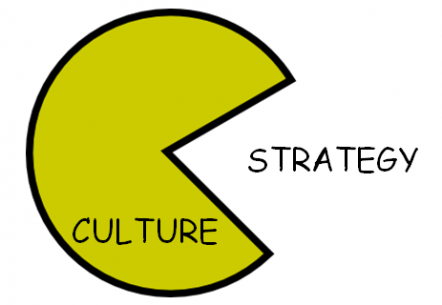
And one word that can blow it all up. Culture.

cultureeatsstrategy-442x3051

Customer Journey quotes and thoughts start to become the center of the universe of my notebook.Why?

February and March of 2016 Digital Transformation

Here’s an interesting page. On it are the names:

  • Dynamic Signal
  • Radian Six
  • Basecamp
  • Blab
  • Periscope
  • Lotus Notes and then at the bottom is the word/term…

Smart Cities,  Again

I wrote: “All anyone wants to talk and write about is…

“All anyone wants to talk and write about is digital strategy, except no-one really wants to share solutions.” If they do, it’s been done.”

#SXSW

Search Analytics

Keyword Frequency

Crowdsourcing

LiveStream

Boost/Program

Visibility plus Credibility =Profitability

April 2016

What is your strategy/vision?

What do you need to succeed? (I love this question)

My mantra? Make it right. Do it right. Make it cool. Do it cool. Happy People.

May/June 2016

Google analytics

Optimization

Inbound/Outbound

Linking Strategy

Killer copy

New Pages

“Performance issue with previous agency.”

Compliance

“Context and message can be 2 ships passing in the night or better yet, going on a cruise together on a really big boat and getting separated from the beginning.” -Me

Create amazing experiences

Designers need to think about people

#peoplefirst

“What are we solving for? Who are we solving for?”

July /August 2016

The true nature of design? #CX? or #UX

(iot) + (streaming) x (mobile)            figure out delivery

Humanize the strategy

Influencers? what gets shared?

When did influenceing the influencers become a thing?

There’s content, and then there’s our content

What are we using social media for?

What works? who is the competition?

September/October 2016

What’s more important a resource or a utility? app?

Whats the game plan?

Where does social fit in a brands mobile strategy?

Customer loyalty and disruption

Digital transformation, yea, yea, yea….

Disruption in mobile

Has the mobile imperative disrupted the design imperative?

How do you spell digital transformation?

Why are we valuable?

When you get marginalized.

IFTTT

November/December 2016

Word or term os the year? Digital transformation

  • Digital Transformation
  • Digital Disruption
  • IoT
  • VR
  • AI
  • AR
  • Design
  • Customer Experience
  • Mobile UI

Global Focus Local Thinking

What does digital ________actually mean anymore? Isn’t everything virtual?


CX is the new black

Mobile analytics is so crucial.

data

Which takes me to December 16th 2016.

These are the things I thought in 2016.


Sports and Social Media-What have We Learned?

hi-res-566d079c2f17c3b0a3d0dc3904fcdf2f_crop_north

Recently via ESPN,  a social media drama played out nationally as a Texas A&M  football recruit and one of their coaches sparred via Twitter, over the perception of each other’s veiled tweets. There will be no good that will come out of this. The fall out is bad mostly for the football coach and his respective university. The fall out is additionally bad because it also shows how recruiting athletes in a social media world can go terribly awry. In fact, it’s not even relegated to “just.” recruiting. Look no further than Laremy Tunsil and what happened to him on what was supposed to be the greatest night/ moment of his young life.

A few years ago I wrote about and presented on the need to measure twice and cut once on anything you might say via social media, but rather than heed that foresight, we’ve all, as a society have collectively run in the opposite direction. Into the light, if you will.

What’s happening is, we’re collectively realizing at the same moment, it seems, that we have become the media. This means that 1) we have realized the power and potential of the digitally written word/visual world and we realize its impact; and 2) all of us have become comfortable with the notion that we’re all publishers, editors and commentators of our lives, your lives and even the lives of people we know nothing about.

Which brings me to these quick thoughts:

  • Have we done a poor job of explaining the power of social to each other?
  • You may have no followers, but that doesn’t mean we don’t listen.
  • Everyone is a coach and will give you their 2 cents digitally
  • Digital has not lessened the consequences of our actions.
  • Athletes may have no fear but they always need to be accountable
  • The phrase, “Act like you been there before,” still resonates
  • Keep  it in the clubhouse still works
  • Team coaches need to have the social media talk with their teams

It really comes down to this. Organizations both large and small and teams of all sizes, have to have social media governance and policies that extend to their players and coaches, managers and staff. There’s too much on the line both personally and professionally as well as in the amateur ranks to not have the process and controls in place to deal with the coupling of social media and athletes. What you need to understand is that you may never have to worry about these types of issues but if and when it happens, you’re not in the dark as a coach or as an administrator.

The real question really comes down to this: What are you going to do when it happens?

What should you do?  What does an org do about the athlete who posts Instagram pics of their party life? What do you do about the athletes who dis another player or team via Twitter? How bout the YouTube video of athletes behaving badly? What do you do?  Who do you blame? Do you blame them? Because you know, we live in a transparent world now.

Going forward, athletes behaving badly via social media is not going away. The sooner you realize that as an org., the sooner you can prepare for what will happen. It’s not an if, it’s a when.

Why Entertainment and Social Media are Perfect for Each Other

9537999-large

Twenty six years ago at the New Orleans Jazz and Heritage Festival I watched Stevie Ray Vaughn rip it up in front of thousands of people. The only way people knew that I did was because I told them about it. Yep, WOM.

I would go on to see SRV a few more times after that before he was taken from us too soon. My memories and stories of the times I’ve seen him and hundreds ( Yes hundreds, I sold concert T-shirts) of other acts are solidly entrenched in a sense and duty that those stories are waiting to be told to another willing listener/fan. Thats #WOM.   in a nutshell.

What’s changed since then? A lot. The entertainment industry is now built upon “Jenga” blocks of streaming services, subscription services, platforms for buying, sharing and saving music. All are on tenuous ground except for social media. Entertainment and social media are made for each other.

Social Media is the spinach to the Popeye that is Entertainment.

Popeye-Spinach

The things is though, Social Media is just 1/3 of the elixir to what is ailing the entertainment business, specifically the music business IMO. The other two thirds that need to be “fixed” are streaming services and how artists can be rightfully paid for what they produce and what we hear. We can spend a whole blog post on that, but for now let’s focus on a few ways musical acts, venues and festivals can leverage social to  be successful

Let’s start with musicians. Above and beyond the actual creating of music, it’s imperative that musicians play. Whether it’s busking, club dates or in sheds, musicians have to play, preferably in front of people. But if no one knows they’re playing, then how’s that going to work out? Self promotion right? In a sense yes, but the key is social media, coupled with a an ample amount of balance. This tenet can hold true across the board, regardless of what part or side of the industry you’re on.

You have to balance the desire to pimp your stuff all the time with being interesting the rest of the time...oh and you have to make money doing what you love. So the balance is playing your music, marketing your music and selling your music. Artists can do it but it’s tough. Why is it? Last time I checked musicians are musicians and NOT marketers and certainly not social media marketers.

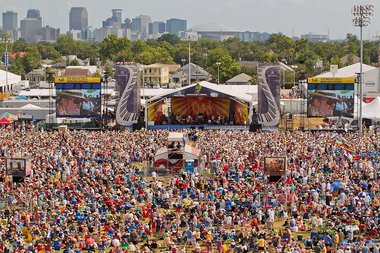
This is where the fans come in to play. This is where live events, concerts and festivals come in to play. All of the previous mentioned figure largely into the mix. Case in point, I go to the NOLA Jazz Fest as much as I can and to me, it’s about as good of a local and visitor “fan” experience as you can get with the combination of music AND Food. The Music is off the chain, but the food is a close contender. And people talk about it, A LOT. Tell me word of mouth is not big for an event like the Jazz Fest and I’ll see you some fertile Louisiana swamp land. 🙂

chicken.0

Recently I went to the Gasparilla Music Fest in Tampa. A small festival comparatively speaking but no less eclectic when it came to the music, the diverse and high quality food offerings AND the tremendous local libations (Hat tip to Cigar City Beer)  The GMF is an absolute under the radar home run.

Not only was it a great venue for musicians but ditto for local eating establishments as well as those who were there for Spring Break and the weather. My point? Technology and social media can and could help and does help, to a certain extent, all those involved. But it can be better. This might be the part that musicians will hate to hear, but they can help their causes more by becoming more actively active, is that even a term? in every aspect of pushing social engagement with current and future fans. Why? Social Media loves entertainment but if it loves musicians, it loves and rewards fans even more. It’s a natural fit for fans to profess their love for a band or an artist and vice versa. But we have to make it easy as hell for them. Don’t forget, people are lazy and technology makes them even lazier!

gmf1.erykahbadu2_8col (1)

Real quickly, how good was the music at GMF? Well, when you can watch an artist as globally known as Erykah Badu slay it, up close and personal, that’s pretty cool; or listen to Memphis group Lucero just tear up the stage and then be tapped on the shoulder and be asked, “who are those guys,” that’s even cooler.  All told there were over 50 acts of various degrees culminating with Stephen Marley closing it down in fitting fashion. Stop it, just stop it.

Mini festival review not withstanding, I’d like to see the chasm between the makers of music and takers of music narrow so that we can all enjoy the why behind the music. Why do we love music? Why do we love to play music? It’s all about smiles on faces…

IMG_2426


Ever Really Look at your Linkedin Contacts?

lilogo.jpg

In 2016, it should be readily apparent that each relevant social platform has a specific value to us. If you, as a digital marketer still don’t know what that value is, well then, shame on you.

Let’s stop for 30 seconds and re-look at that value of each. Let’s take stock really quick. Look at Linkedin, Twitter, Facebook, Blogs, Tumblr, Instagram, Snapchat, Periscope/Meerkat/Blab, Redit, Youtube, Pinterest, WhatsApp and G Plus. They all have a specific value and purpose. Right?

But have you ever really looked at who you’re connected to on Linkedin? Do you leverage those contacts at all? How many of them do you “know?” Better yet, how many of them do you know personally? How many of them have you met in person?

I have over a 1000 people that I’m “connected” to. Occasionally I will reach out to a few to see how they’re doing or to congratulate them on a new gig, Or to endorse them for something that I’m not even really sure they might be good at, but beyond that? Nothing.

You know what I use Linkedin for? First and foremost, I use it as a competitive intelligence tool. That process encompasses the people that want to link with me or the people that I might be working with. It’s a barometer.

Invariably, the majority of people that want to link with me, are people that think the connection allows them to pitch me. Sometimes, I’ll think, OK, this person just wants to network and nothing more- and then no less than a half day will go by and I will subsequently get the requisite pitch email.  I will immediately “unlink” that connection.

So beyond having this stable of intimate business connections, who does the passively dynamic social network that is Linkedin serve best? Job seekers and recruiters.  I check it every day. I look to see who wants to link up with me and 9 times out of 10, I decline. But I do get a ton of recruiters that want to link with me. And for that reason alone, Linkedin is a valuable passive dynamic social network.

There is no better opportunity or platform out there to put a more complete snapshot of your professional accomplishments and current role/position. If you do not take the time to do this, the right way, you lose. If you’re looking for your next great gig, Linkedin is where it starts.

Lastly, I will tell you this. One of the things that Linkedin took away that I personally saw value in was the QA (Question/Answer) section of the site. It gave me insight into the massive intelligence of the types of people that used it, who were willing to take the time, to help you and not necessarily want anything in return; and it also was a quick ad hoc form of getting some professional guidance on certain aspects of things I was not proficient on. For free. Bring that back!


Why is the Customer Experience so Hard to Deliver On?

rubik

You’d think brands would know what the customer wanted at this stage of the game, right? It’s 2015 and companies left and right keep talking about their new mandate of delivering on a quality customer experience. providing a powerful and memorable customer experience, etc. etc… It’s almost as if what has happened up to this point didn’t matter or was not a quality experience. I guess, what I want to know is, what have I been getting all of these years?

You might want to say this out loud: “Companies just now, are starting to actually care and do something about me and for me, the customer.” What changed? What happened? What took you so long? You have to wonder, could you have actually been getting more out of your brand experiences all this time? I almost feel like I’ve been short-changed. Until now.

I’ll tell you what happened and it’s really pretty simple; and most of you will slough it off as yet another social media justification post, but it’s true. What happened is social media happened. Social gave the customer a voice they never had.

For the longest time, companies just pushed out what they thought the customer needed and wanted. They didn’t really ask. Sure, they might have done the occasional test/focus group or survey but those were never a large enough sample size. Back in the day, wasn’t customer feedback the 800 number you called to leave your complaint? You never really expected them to get back to you. Did you?

Of course you know this but I’m going to say it again anyway to drive the point home. Social media has allowed customers to have a real voice on so many levels/platforms now. You can write 1000 words diatribes praising or bashing a company. You can voice your displeasure immediately in 140 characters or less on Twitter. You can rate your experience via Yelp or you can Video or take pics of how bad the experience was via YouTube or Instagram. Clearly the customer now has a voice; and that scares the crap out of really large brands as well as small and medium sized businesses.

Why does that scare them? Because the truth actually might hurt them for a change.

I hate when I hear the term, “the customer now has the upper hand.” That’s not what this is about. Customers should not have to compete with a brand. They just want a fair and equitable brand experience. The truth finally evens the playing field. So if consumers are competing, which they shouldn’t be, at least brands know that there are eyes and ears on the customer experience now.

Hard to believe that brands are just now starting to talk about and acknowledge the need for delivering a superior customer experience, but hey, talking is one thing, doing is another. Will the customer rise? Is the customer experience the brand experience? Or is it just lip service for 2015?