10 Killer Social Media and Web 2.0 Links

What people say about a brand or a company is equal, if not superior, to what the brand or company says about itself.-Me

I told you I was tapped out creatively on Twitter, but here are the 10 links I promised you.

Prezi

BuzzGrader

Skip1

Blue Fuego

Slick Plan

Peer Set

The 8 Irresistible Principles of Fun

Top 10 Social Media Presentations

10 Social Media Strategies From Top Brands

Attention

Lastly…

True Social CRM should be invisible for the vendor and transparent to the customer-Me again

The Top 45 Objections To Using Social Media

perry_mason

If you’ve been in the business of social media for any length of time, whether you have been selling it, marketing it, or implementing it, you will have heard one of the 45 objections below. What really makes this list though, is that the majority of it came from you and your clients and your experiences.  It was crowdsourced from Twitter!

However, There’s a larger and more important issue here though, and it’s one in which you can and should, use this list as your cheat sheet. YOU need to be able to answer all of these objections. Or at least anticipate that your clients and prospects will be voicing these concerns and more.

Feel free to add to this list.

1)  Why should I? I don’t need to. Just because everyone else is doing it, doesn’t mean I have to.

2)  It’s a fad, I’m going to stick to what works for our business

3)  It costs too much

4)   I’m in no hurry

5)  I have no desire

6)  It will require too many resources within our company

7)  I’m worried about the legal ramifications

8)  We’re better off by doing nothing

9)  To risky

10) You can’t measure it

11)  We give up too much to the customer

12) We won’t make any money

13) We can’t control the message

14) We don’t know the first thing about social media

15) It will take too long to pay off

16) It will take too long to implement

17) It’s just a blog, twitter and Facebook- What’s that going to do?

18) I can do it/we can do it ourselves

19) It’s not worth it

20) Our customers are not on social networks

21) It’s too complicated

22) We can’t control our employees using it

23) I can’t it’s a legal issue

24) We want to control the message

25) We can’t support with our current management/management   doesn’t support

26) We’re B2B so there is no reason for us to engage consumers

27) It’s a regulatory issue. So no guidelines in place.

28) No trust

29) Don’t want to acknowledge negatives

30) Not our customers

31) Don’t have time to adapt to the technology

32) Social Media results are not easily visible to non-users

33) Fear of change and the unknown

34) Not our target market

35) Our customers don’t use social media

36) Our deadlines are more important than your Tweet goofs.

37) Privacy issues

38) No ROI potential

39) Lack of expertise

40) Lack of a market

41) We already do social networking, we have a facebook fan page.

42) Too complicated & therefore, we’ll look for alternative options

43) We’ve been fine without it

44) We’re waiting for it to mature

45) We tried it, it didn’t work.

46) ?

What are we missing?

Share this Post

Social Media Conundrum #43 The rear view mirror

rearviw

Just because you have blog posts, white papers, e-books, podcasts, and books that tell you how to use social media or how to roll out your social media marketing plan-That doesn’t guarantee anything. If you have not done it yourself, then you cannot assume that what is written and what is said, is what is going to happen. With that being said…

Past performance is not an indicator of future success

Can you go left?

Basketball court

In basketball, there is a term that really separates the wheat from the chaffe so to speak, and it’s all based on a person’s ability to dribble the ball and to a certain degree, shoot the ball.

Fundamentally, those are 2 very important aspects of basketball. Shooting and dribbling right? So what enhances those 2 skills? Well if you’re right handed, chances are you will dribble with your right hand and you will shoot with your right hand and you will favor the right side of the court.

From a marketing, and social media marketing standpoint. You will play to your strengths. You will go or you always go with your right hand. With what you already know.

Now back to the hoop court. The most dangerous players are those with enhances skills and abilities. These are players who have a “handle” and…can go left. In other words, as they are going down the court, they can dribble with their left hand or right with ease, and shoot with either hand as well.

They can change hands on the fly and not skip a beat. They can adapt to any situation because they have the skills to do so. Were they born with those skills? Chances are they were not.  They trained and they practiced. But you don’t see that part. You just see the finished product.

One of the first things a coach looks for in an up and coming player is whether the player has a “handle” with his left hand. Can that player go left? It takes about a minute to assess and if you have 100 kids for example, trying out for 12 spots, it quickly becomes one of the main determinants.

Why is this important? Without the ability to dribble with your left hand, you essentially cut the court in half. It becomes useless, You can never go over to that half of the court because you cannot dribble with your left hand. So you favor the right side-all the time. I repeat all the time.

The same applies to  social media and marketing, you will lose unless you can bring more to the table than the next person. Oh, and you better be able to back it up.

Just as it is on the court, shit talkin’ can only take you so far and at some point, you have to start walkin’ it.

So how bad do you want it? What skill sets are you bringing to the table? Can you enhance what you already know? Do you always go to your right?

Nurture the connection not the platform

watering plant2

I’ve come across in recent days a number of people and their blogs who have struck a chord with me in a good way. I have found them in oh so many ways, but the bottom line is that I have found them. Which gave me cause to think.

I look at what makes us do what we do in online communities, in social networks and as much as I would like to thank the developers for creating a platform in which we can connect, I also realize that.

“No man is an island.”

-from John Donne

It’s the power and the passion of the people that make it work. It’s people being people. I also realize that because of the power of networks and the strength of the people that are within them, quotes like the one below, mean nothing.

You know where you are?
You’re in the jungle baby.
You’re gonna die!

-Guns n Roses,”Welcome to the jungle”

However, I do think it’s important to understand that though these networks can be robust and filled with people, if you don’t engage or try and in engage in thoughtful and meaningful discussions and conversations, you have nothing.  Thus, you might as well be speaking to no one.

“In space no one can hear you scream.”

-Tagline from 1979 movie Alien

Without people and without connections, they, the networks, will die on the vine. And as much as we depend on the platform for our connections, its more important to nurture the connection rather than the platform. Because what if the platform goes away tomorrow? What will you do, or what will you have to show for it?

If a tree falls in a forest and no one is around to hear it, does it make a sound?”

-George Berkeley, Irish philosopher

Augmented reality

I just tweeted that I thought social media delivers its own little slice of augmented reality. By that I mean that everyone now has the ability to create and enhance a persona that may or may not be a realistic version of who you really are.

Take this video for instance. What if this was the way it was in real world situations?

Or what if we all started to talk in a staccato like, 140 character, cryptic fashion? How would that fly?

Social Venom

snake_bite

What’s the difference between snake oil and snake venom?

Let’s recap the week.

Leigh Durst goes off on people stealing her hard earned, labor intensive work

Peter Kim laments the plague of plagiarism

David Armano discusses how to spot social media snake oil

Olivier Blanchard has called foul on bogus social media experts

Valeria Maltoni interviews Jonathan Bailey, the topic? Plagiarism Today

I wrote about Social Media might be free, but I’m not

Are you sensing a trend here? I am. That, my friend is what you call venom.  Oddly enough, none of the above posts were precipitated by the other. They all came out on their own, out of anger and frustration. And if I had taken more time, I probably would have found more posts.  Even more telling, is what you see in the comments. A lot of comments. More anger, more frustration.

I’m not sure I have a sure fire solution for any of these posts but I have a feeling that the days of wine and roses may be slowly coming to an end in some respects. If not an end, it certainly won’t be flowing like the wine at a Roman Bacchanalia. Content will be locked down more. Ideas and thoughts may not be so readily provided or shared as they once were.

Fortunately though, I have a feeling that Snake oil vendors will have a harder time of proving themselves. On the other hand, as I have experienced somewhat, we will have a harder time of climbing out of the hole that the purveyors of snake oil have dug for us with once burned clients.

I do have a feeling though, that this only the beginning, and that a larger backlash may be at hand. What to do about it is the question. A governing body? A policing body? I’m not sure. The floor is yours…

Share this Post

Social Media Mantra #112 Think Judy Garland

judygarland

Reading Peter Kim’s post from yesterday, “The Plague of Plagiarism” was both enlightening and somewhat disheartening. As well, David Armano’s post How to Spot Social Media Snake Oil, had something to say about the same issue too, though just a tad bit more extreme in his  professional prism of trust.

But then I saw this, the 8 irresistable principles of fun and things were put back in perspective.  However there was one line from it that caught my eye and it was by Judy Garland-she was Dorothy in the Wizard of Oz, and it was this:

“Always be a first-rate version of yourself, instead of a second-rate version of somebody else.”

Boy, does that resonate.

What’s wrong with social media?

baseball

If I told you I was going to offer you a job where you failed 70% of the time would you take it?  Probably not. What if I told you that I know of just that type of position where anyone worth there salt would kill to be a part of that organization.  Any clue yet? Its Major League Baseball. They pay their players millions of dollars per year to hit a baseball three out of 10 times.  That’s it just 3. The expectations of hitting it 4 out of 10 times are so unrealistic that it is barely mentioned in conversations. It’s rarified air.

If you close 3 out of 10 deals or you are supposed to sell 10 cars and you only sell 3, should you keep your job?

Anthony Bradley from Gartner has spent the past year collecting  social media cases. he’s collected 200 solid social media cases out of over 350 cases, in which he’s tossed out those that either were not really social collaboration, or were clear failures.

His findings?

  1. Cases with good ROI metrics are rare.
  2. Cases with well articulated business results are few.
  3. Cases with activity metrics are more common.

Ok that’s worrisome.

While his research indicates that if you measure success by business results, the failure rate is very high, If you were to measure success by adoption rates (social activity metrics), which is what a lot of social media folk seem to be zeroing in on these days, the failure rate is still high. So regardless of whether you are measuring business results or adoption rates- the failure rate is still high.

What the hell are these people doing?

Interestingly enough, one of his sources for cases was the social software technology vendors, and by a large margin this group could not articulate the specific business value their clients gained by using their products. I find this odd since this would mean that they essentially did not have a) a business plan or b) were never in it to make money or c) just didn’t really focus on that measurement thing.

Again, what the hell are these people doing? Better yet, maybe we should ask, what are we doing? We’re the ones using this stuff. Are we fricken freemium zombies?

Paying baseball players millions of dollars to hit a curve ball 3 times out of 10 I get. There’s a business plan in there. But are we as a group collectively just following the masses down the path not really knowing where we are going but content to just go with the flow? Developers and users alike? Why would they build social tools or nets that failed the majority of the time?

Are we ignoring the fact that failure might be the most common trait in social media?

I still cringe at the thought of the business plan that’s wrapped around ad revenues, but apparently Web 2.0 still seems to be pretty comfortable with that, and not much more. I would think that one would do everything in there power to reduce the odds of failing, but this data right now or what Bradley is asserting, just doesn’t support that hope.

I hope the data is flawed. because if it’s not, I guess we will continue to invest in and support failure. In an open and transparent fashion of course.

Share this Post

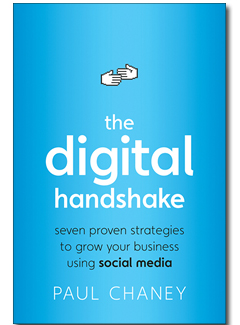
The Digital Handshake by Paul Chaney

digi

Today marks the launch of my good friend Paul Chaney’s new book, The Digital Handshake.  Paul is what we call good people, in the business. The Digital Handshake explains why advertising and marketing are losing their effectiveness and how to solve the problem using social media to corral elusive consumers.

If anyone is capable of simplifying what’s going on out there in the social media world, Paul is certainly that person. Here is a quick Video of Paul explaining the book.

Share this Post