Chasing the dragon that is social media

Social media…….social media…. I was reading Geoff Livingston’s latest post and he had a clip on there from Tech Cocktail in which he, David Armano, Frank Gruber and Danielle Wiley opened with a “what is social media” intro.. Which got me wondering, ranting, or just pondering first a) am I too close to the subject and b) c) d) e) and f) and g) are below…

This is what I wrote to Geoff..

Let’s talk about what social media is not. In fact, what if the term social media was banned from our lexicon, what would we call it then? Is it an accurate term to use? Have we trounced on it too much? Or is it still this mystical nirvana like state that marketers, advertisers, agencies, and corporations are all chasing? Are they chasing the dragon? Are we forcing them to chase the dragon? Is it elusive? Are we making it that way? Can we dumb it down? Does it need to be?


It’s not really a rant per se, more of just “lots more questions” from maybe a different point of view. Some might say that social media is merely the flavor of the moment for marketers and PR people. Uhh no, it’s where we are headed, and we can choose to integrate and embolden and implement or we can get steamrolled by the ones who decided to embrace it from the get-go.  Who is the person that said “a computer in every home will never happen, it just doesn’t make sense…” Who would like to step up and say, social media is nothing but another internet phase…a fancy web based app…go ahead and throw the first stone.

 Here’s a link to the Vid

Surprise! Conversations with the customer pay off!

What has been the most effective thing you’ve done to grow your business?

What tools, software or otherwise, have been invaluable to you? Have you used any social media tools?

I asked this in LinkedIn this past week, and I got news for you, Just when my faith is beginning to waver in how business is conducted these days, I got alot of great answers. Here are some snippets of those responses. see if you can come up with what the end all be all answer is yo the question.

Tim Brown of In The News “Number one with me sounds SO much like “consultant-speak”, but I stop myself and think about how the customer experience is working. I’m constantly trying to make that emotional connection and deliver an enjoyable buying experience. Our product is a non-critical item, easily deleted from the budget. If we build the relationship and make it easy, customers will still buy.”

Brian McCarthy of Tipping Point Media “Build a solid engagement strategy for business development that can be repeated within the sales organization. Once everyone is speaking the same language, it’s easier to push new customer development.”

Jolie O’dell “IRL conferences, LinkedIn, Twitter, and (surprisingly) Chatterous. Through these tools, I was able to start my own business and network with people who could tell me how to do that in all the right ways. The three social nets I named are repositories for best practices in new media, marketing, and technology, the latter two because they’re teeming with brilliant early adopters.

And immersion in the right kinds of social media can make things happen very quickly, as well. It’s often like being at an IRL conference 24/7… As long as you learn how to use it properly!”

Kent Lewis of Anvil Media puts it this way:  This may not be the answer you’re looking for, but I would advise you not to be distracted by tools, software and social media. They are enablers, but not solutions. Start with a unique vision and world class product, then market your story. Oh, and read Good to Great and First Break All The Rules.

Second, we spend a great deal of time evolving and perfecting our product offering and ensure we provide world class service. The end result is that we’ve averaged 75% annual growth over the past 3 years, without having a sales staff or a marketing budget. Our team and our clients are our sales force and with high retention in both areas, it makes the work easier and much more enjoyable.

That said, the more pat answers to grow a business have largely been answered, but I’d say:
-public relations (builds a brand)
-search engine and social media marketing (go hand-in-hand)
-online and offline advertising (protects the brand)

Just make sure all of your marketing efforts are fully integrated…your Twitter and LinkedIn profiles are embedded in your email signature file, etc. It’s a brave new world, and everyone knows your a dog these days, so be authentic and remarkable

Or maybe Lisa Van Allen nails it on the head with her short but succinct list?

Most effective (in order):
1. live (in person) networking
2. public speaking
3. publication of articles in local media and online (blogs, e-newsletters)
4. website
5. social media (LI, Facebook, Twitter)

I think we’re getting warmer, Look what Karen Schultz says: “Listen without selling. Learn what works toward the customer’s team’s success. Choose a customer who matches your definition of partnership. Have their healthy growth in mind. How can you help their success. Be prepared to embrace the customer needs while exceeding their expectations, not yours. It is all about the customer. You are the customer’s advocate. Without the customer, you are not in business. The business you are in should be your passion, not about the weekend, not about the money ( I believe it will come in a fair fashion and you will feel great for your accomplishments, people will like to do business with you, people will advertise for you, and your customers will grow your business for you).

Ultimtaley they were all great answers but I will leave you with Tina Indalecio’s response: To be honest – the most effective thing I’ve done to grow my business has been offline.

My firm consistently used social media, blogs, html newsletters, surveys to get feedback on customer experience, etc. But those have really just been ways to stay in contact with the customer so they don’t forget us.

The conversion to actual business has always been through face-to-face interactions. I always asked for referrals and repeat business (online and offline). I created incentive programs to increase repeat business and referrals – then used online tools as one way to deliver the messages – but always followed up with a call or face-to-face meeting.

We would also hold a client thank you mixer every year and invite our clients and encourage them to bring a friend that could use our services. It was a great way for them to get new business as well from our other clients and they all loved it.

Ultimately, personal interaction has grown my business and the “phone” has been invaluable. For online items, they have helped in the following ways:

– Survey’s have been good at getting feedback. (I’ve used survey monkey regularly during and after each project closed)

– Html newsletters have been good at staying in front of the customer – but be sure to ask them what they want in the newsletter and then deliver it. (I’ve used constant contact and cooleremail)

– online social networks have been valuable at bouncing ideas off other professionals, etc. (like linkedin)

– offline social networks have been valuable for keeping a presence in the business community (like membership to your local business association)

Good way to head off into the weekend I think!

4 More Social Media Luminaries

First I wanted to thank some of the gracious people who got back to me in regards to my post about 30 social media experts, evangelists and pundits. It was a fun list to compile and did not really expect to hear from some, and am surprised I did not hear from others. So much for the conversation? too busy? traveling? 3 day weekend? Nevertheless I want to thank Chris Brogan, B.L Ochman, Valeria Maltoni, Phil Gomes and Toby Bloomberg, Their responses to this post were more than gracious and reinforces why I read their blogs on a regular basis.

Sure, I know I should be bashing twitter right now, but Chris is all over it like a cheap suit, and there’s nothing I can think of thats going to change it except to say that Twitter is effin up in a big way. Maybe IT IS time to go over to Friend Feed? Actually I have, I just don’t use it as much…yet.

Meanwhile back at the ranch, One of our Top 30, who rocks the effin house, has graciously provided me with 4 more peeps/peers that we can add to the list. Here they are, and I must admit, they were great additions to this list.

Geoff Livingston
Rajesh Lalwani
Jeneane Sessum
Paul Chaney

I’m still open to add to this list as it might be a pretty cool list to maybe work up to 50. or maybe this is it? Maybe the conversation only consists of 34? You tell me.

Peace

-MM


Monetizing Social Networks. The simplest analogy possible!

Aside from the big players in social media making money via advertisers and cutting deals with some of technologies biggest hitters, there are more social sites that do not make money then there are those that do. What do they do? How are they going to make money?

Obviously one of the ways to create a social networking site that actually makes money is to niche-ify it to the extent that is speaks to a specific type of brand user and all the products or services that can be wrapped around the user. Picture the hot dog . Thats right, you are the hot dog. Your social network, the hot dog. You are going to be interested in all things related to you. 

Now the hot dog has the bun, the ketchup, the mustard, the relish,and the onions. All viable participants in the network. Including our friends chil and cheese. Couple with that will be napkins,  something cold to drink and perhaps to go with the hot dog, a side of chips.

All of these mentioned make perfect sense. They are viable, channel driven, niche driven, complimentary, cross promotional products that speak to the center of the social network universe known as is…the hot dog,

The problems arise when something that is totally irrelevant tries to crash the party. And interestingly enough, you would be surprised how often the following happens:

The best example of a lot of people trying to crash the party is perhaps the frenzy that is Myspace and Facebook. The frenzy of advertisers wanting to take advantage of million and millions of customers waiting(or are they?) to be pitched. Problems can arise from people who try and crash a party that they’re not invited to. Some great examples can be found in Jeremiah Owyangs post on brands that got punked by social media

As an advertiser, one just needs to know and it’s not like it’s that difficult. Are you the windshield, are you the bug? Are you the louisville slugger, are you the ball? Are you the hot dog? are you the bun? Or are you window cleaner that is the upsell to a box of triscuits?

16 links that I need to share on Wednesday April 30th 2008

It’s wednesday April 20th 2008, so I think it’s important that we keep it light, interesting and still add a bit of tech stuff in todays post. First off lets go here:
The world’s most famous colossal squid was still thawing yesterday in a New Zealand museum laboratory as researchers prepared to measure it, probe its interior, and take samples. It has a huge eye.

Here’s how much of a snooze fest was American Idol was last night, I started watching the Pittsburgh Penguins versus the New York Rangers hockey game!

How can they have the contestants singing songs we haven’t heard… ever?  Or better yet, songs our parents barely remember? And they wonder why the ratings are starting to slip. Perhaps we’ll look back on Neil Diamond night as the night the show “jumped the shark”. 

For the uninitiated, the term jump the shark refers to when a tv show tops out in popularity and starts to fade in to Bolivian-as Mike Tyson once said.. The origin of the term comes from an old episode of Happy Days, where Fonzie decides to try and jump over a shark on a pair of water skis…nuff said.

On Monday night I caught the intro to Deal or No Deal where they had Storm Troopers as brief case holders, Darth Vader as the banker and Chewy as a cheerleader…Can you say JUMP The Shark?

jump the shark?

This just in: If you’re young and have zero cash, then you probably use Yahoo more, and if you are rich and older, then you use Google! Say what? According to Hitwise the stats bear this out, check the matrix.

spend it like ya got it!

According to Uptrends, there are some social networks out there that need to get their act together. This is in reference to the amount of time certain social networks were down, as in “Page not found”. Not a good idea to be anti-social when your business model is..ah hem a SOCIAL NETWORK. Two of the biggest offenders were BlackPLanet.com and Reunion.com. BlackPlanet was down for a total of almost 21 hours in the past 30 days and Reunion.com, almost 13 hours. Uptrends, is one of the leading remote website and server monitoring companies that tracks uptime of some of the most popular social networks.

My plan for optimizing some terms for the sake of SEO, specifically the term, direct response marketing, seems to have worked rather well. I’m not shouting it to the rooftops, just merely giving myself some props for having a plan, sticking to the plan and watching it work. Right On, Me! It was not an easy term, but it wasn’t like it was mortgage lenders either, but the results have been favorable.

On a sports note, The Spurs are still the champs until someone knocks them off, though the Lakers are really looking good. The Chris Paul gang out of New Orleans is a really good story this year, and I’m glad the Rockets are not laying down. Are the Mavs ready for an overhaul? The New York Times thinks so.  Looks like the J kidd trade might not have worked out. But do you fire the coaches? Same holds true for the Suns and Shaq? It’s been fun to watch snippets of the games each and every night. Looks like we might see the Pistons advance as well as the Cavs. Am I the only that thinks the Wizards are turning into a bunch of punks? Don’t think I’m right? read this post by Mary Schmitt Boyer  One last thing, the TNT announcers on all of these games have been fabulous! Major shout out to them.


Social Diversity on Social Networks

First, let me talk about how I just tried to publish this and poof it was gone, so I am having to rewrite it. But it’s also giving me more time to think about whether social diversity exists online in social networks. My gut reaction is that online social networks are direct reflections of the offline world and thus we run with our own pack and very seldom do we like to step out of the bubble. Heres a quick test: Try doing a search on social diversity in social networks, there are no results or better yet, nothing with any substance. 

Although in doing an initial search, I did come across an interesting site called Mixyourworlds. The title should say it all but Mixyourworlds goal is to “put the fun back in racial profiling”. I say that tongue in cheek but they are dead serious. Mixyourworlds wants to help its members create diverse friend groups while helping them realize and change their racial biases. In fact it’s tagline is “Can racial profiling be fun?”

A noble if not challenging task to say the least. Especially when there are many many other larger, more well known social networks out there. Yes but are they diverse? That’s tough to say. But interestingly enough, when searching for friends on Facebook for example, you cannot search based on race. And why should you? or should you? I understand the premise. We want you to search on people not race, creed, or color.  Which means that you can search on people, just people… People with like minded interests but who may have a different skin color or ethnic background. You won’t know until you see their picture. Then you’ll make your snap or accelerated decision.

 But if we like to hang with people who are like us, another question arises, Do mixed race, mixed ethnicity relationships work better in social networks? Do they have a better chance of making it?

They do if the social network is niche based. They might have a better chance to flourish. Businessweek broaches the subject in the Rise of Niche Social Networks But really what we are talking about are 2 types of social networks here. We’re talking about the pasty white networks that are Facebook and MySpace and then all of the “other” social networks. Mixyourworlds’s “racial profiling” for instance, comes from tracking the make-up of users’ friends on the site and pointing out racial attraction preferences and biases. So if your looking to expand your social base beyond what MySpace and Facebook offer, then the thinking is that “yes there are plenty of other niche sites out there to meet exactly what you are looking for”. I know that is a direct conflict in trying to create a harmonious online social networking experience, but that may be more of a reflection of 21st century society than we care to admit.

After thinking about this long and hard, I decided to throw the question out to my Linkedin colleagues a few weeks ago.  The question wasn’t geared towards diversity in social networks per se, but you will understand the context as you read further. Here was the question:

Can social networking help the poor and the disadvantaged?

On the surface social networking seems to be reaching the far corners of the universe. But are the poor, the disadvantaged and even minorities, operating on an even playing field? Do class distinctions hold steady even in social networks?

One of the better answers came from Jason Breed from Neighborhood America:

Good question. I will answer in a couple of ways.
1. I’m making a couple of assumptions – it seems the spirit of your question is genuine and I do not believe you are trying to insight any prejudice or tensions by grouping anything together, you simply want to know if and where social nets are leveling the playing field and are there still inequities. the other assumption is that by “social networking” you are referring to digital social networking. In both of these cases, I”ll give you some examples where it has worked.
2. Case Studies (and a couple of different ways to think about it) – MOBILE – adidas has a campaign running “Basketball is a Brotherhood” targeted to basketball players at the street level or street-ballers. there is a mobile component to this campaign that lets you interact with any of the 5 sponsored players like T-Mac, KG, Chauncey Billups, etc. They have received over 100k people who have opted in via mobile that is a series of ongoing interactions. Consider Mobile as a way to engage populations who are less likely to be online or who want to connect whenever, however they want to.
The second example is the Government (believe it or not). Specifically working in the Miami area, the transportation department is mandated to reach out to citizens and provide fair access to information on any project and specifically on a road project that spanned 7 different neighborhoods of varying socio-economic and demographic residents. Using the web, the department was able to create dialogue with residents who were comfortable using the web in this way. The benefit is they were able to focus their limited amount of employees to meet face-to-face with more of the people who did not want to communicate via the web. This is in-direct however very effective use of social media in the gov sector. Who would have thought, right? I have dozens of other examples too. Hope this helps.

A great response that touches on a few points there. The most important being that social diversity can exist on may levels in online social networks, and is and can be accessible by more than just the privledged, affluent, white middle and upper class. Tom Ford, CEO of Town Connect puts it more succintly:

Interesting question. The public Internet and sites like MySpace remove economic, class and social barriers. Since anyone with internet access can interact with anyone else with Internet access.  People are communicating online with others that they would never interact with offline.

In the U.S, class distinctions are determined by wealth, income, education, and type of occupation.

Although Linked In enables greater interaction between classes (CEOs connecting with entry level workers) it still remains a social network for educated, higher income, knowledge workers.

Facebook began as a network for class distinction based on education – each university was their own network. The students at Harvard weren’t friending the kids at Podunk State in rural U.S. Today, networks are still established based on class distinctions – corporate, geographic, etc.

Our research and experience with TownConnect indicates people feel safest in social networks in their local community and with those they know. The class distinction in our network is based on where you live- which implies a level of income. Online social networks are mirrors of offline social networks, just accelerated.

Accelerated relationships. Couldn’t have said it any better than that. So do accelerated relationships promote the possibility of social diversity? No, if anything they imply that you make a quicker decision based on quick touch points, like ASL. People cut to the chase online and probablly as much do the same when reading profiles. You read a profile, you look for certain things. If you do not have access to a profile then what do you do, you look at a picture. Then you are going to make a decision based on that picture and nothing else. Looks like an accelerated decision is at hand.

Bottom line, social diversity in social networks probably has a better chance of succeeding online than it does offline since you can go out of the hood without the usual fear and backlash that accompanies someone who does the same in the offline world. Bottom line: We choose to run with our own pack even in the online world.


5 more websites to sustain us for the rest of the week of April 12th.

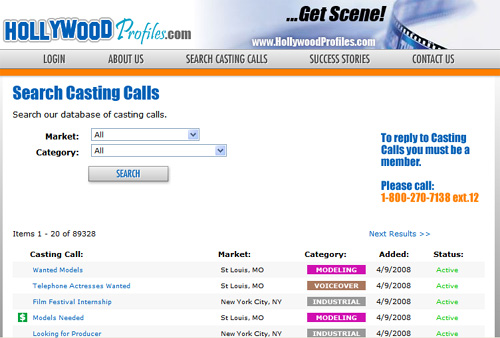
So you’re sitting at home and the weather is finally starting to break and you’re thinking, “Maybe I should just move to LA and become a movie star.” Seems like a solid plan. With that being said you might want to go to Hollywood Profiles “We are the absolute best resource on the internet for talent and casting agents alike. Post your profile and get noticed! Or search our extensive database for the perfect talent for your project.” And no they are not paying me. Actually they were getting some major play and were mentioned as a site on the rise.


Hollywood Profiles


LocalPages  Seems to be pretty cool. It has a nice clean interface but looks like it might be heavy on ad driven content. I played around with it a little bit and it has a nice LBS feature as well.

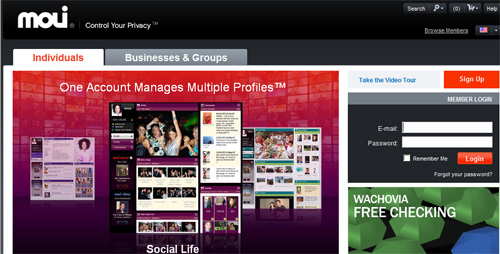
Moli  was an interesting site. Picture a website for Sybil. Sybil was a book and movie that told the story of a woman who was treated for multiple personality disorder in which she had up to 16 co-existing personalities. Moli allows you to create multiple profiles that you can use depending on who you interact with and what you want them to know about you. The name is a bit odd though.

SpiralFrog  is  another music site but for now it’s offering free songs. Though they do force you to load a “download manager”. Which always makes me nervous. But hey… Free music right?


Vlaze hot original content…hmmmmm, that was the pitch. Vlaze  delivers original  video content while connecting artists and entertainers to a global audience. Vlaze features a 24/7 live television stream with a full-lineup of daily programming, a Vlaze On Demand content library, and an interactive social network. It appears to be an interactive, streaming media, social networking content driven site.

Well I hope you make it till the weekend with these and we’ll see you on the flipside. If there is a site worth mentioning let me know and we’ll check it out. If it’s worthy. You’re in!


Social Media begs the following 50 questions:

Below are 50 questions that prior to the creation of social networks, had no home. But now, all of these questions have a relavent place in the hiearchy that is “social networking” and thus needed to be answered. Because, though there are millions upon millions of people out there that know about social networks, there are millions that are clueless. Before we start answering these questions, are there any that I might have neglected or forgot to ask? Let’s get to it then.

  • What is a social network? For this answer we head to Youtube. You can watch it now, or come back to it.


  • Is it like MySpace? Well maybe we should qualify what MySpace is!
  • What’s Facebook?
  • Is it like blogging? Hmmmm…first, let’s explain what blogging is!
  • How does it work? Social networks are  networks of relationships that we have formed that tie us to others that may have a something in common with us. Think the 6 degrees of separation game. Think about what happens when you meet someone new. You ask where they work, where they grew up, where they went to school etc etc. Eventually, you realize that this person knows the girl that you work with and is a relative of your best friends boss.  Even though you’ve never met before, you’re both part of the same social network — a friend of a friend if you will. So, Social-networking sites “make off-line relationships more transparent” by allowing us to see (with pictures, videos and links) who our friends are, who our friends’ friends are, and who our friends’ friends’ friends are — all in a supposed easy-to-use format. Like a MySpace or Facebook. When you create a profile on a social-networking site, you are putting yourself out there and saying, “Hey world here I am, who knows me? and who wants to be my friend? and who do you know?” You can use the social site to:
    • look up old friends; make new ones
    • share music, photos and videos
    • join groups based on interests such as politics, hobbies, sports, religion or pets.
    • find jobs or love; or network with other professionals.
  • Are you on MySpace or Facebook? If you are 18-34, This might be one of the key face to face questions you may ask of someone within the first 5 minutes of meeting them.
  • What do I do with it? Here is an interesting response from Marcel de Ruiter and his blog Shaping Thoughts
  • How many social networks can I join? According to Mashable, last year there were 350 that they thought were worth mentioning, but I imagine that that number has grown exponentially. Pick your niche and I bet you can find a social network for it!
  • How many hours should I spend in social networks? Although Jennifer Laycock has some thoughts on this, I’d say this depends on what you want to get out of your social network. Depending on the number of social networks you join, you really should pick just a few and develop those. It really should amount to time spent once you are home from work or school. But not to the extent that your school work or your job performance starts to suffer.
  • How can I grow my business with social networks? Entrepreneur.com has a great piece on how to grow your business using social media. But make sure you have a firm foundation and understanding of what you are getting into before setting out. This also will allow you to ask better questions, should you choose to have someone grow your business with the help of social media.
  • What is the value proposition of being in a social network? According to Jill Konrath “A value proposition is a clear statement of the tangible results a customer gets from using your products or services. The more specific your value proposition is, the better. ”  However Jim Long seems to have nailed by saying that “At the end of the day, isn’t the value proposition that it connects people on a deeply personal level across time and geography? I think so, Jim…
  • What do I get? It all depends on what you want. Just like anything else, what you get out of it is in direct proportion to what you put into it.
  • Am I spending my time properly by being in or on a social network? A great post on this sits here, titled “Avoiding information and conversational overload from social media” My thanks again to Jennifer Laycock
  • Am I using it right? There is no right way or wrong way, though if you do nothing with a page that you have created, then chances are, not much will happen with it. Remember, the essence of social networking is to find your voice and find others who have the same voice. Finding others just like you is one of the primal instincts of mankind and animals alike. We like to run with our packs. Find your pack and the experience will be golden.
  • Am I using it wrong? See the above answer.
  • How do I know the difference between Facebook and MySpace?. Chris Salazar has an excellent post on this exact question, so for those who truly do not know the difference between the two check it out.
  • Do the developers really know what I want and care about on a social network? Of course they do… to a certain extent. Social networking sites are not successful unless they know or have an idea what people want. And ever since Facebook opened up their development platforms, the widgets are flying in. Widgets expand the things that you can do with your page and actually help you network with others.
  • Do I care what they do with my information? You should, so watch this:


  • If I am not on a social network, will I be scorned? Absolutely not. One of the biggest constraints to SN is the allocation of time that one has to set aside to “do this”. If you don’t have time, then thats fine. That would generally mean that you have your days and evenings filled with work, school and family obligations, in which case, there is nothing you can do about it and bridges will not be burned if you are not part of a social network.
  • Should I worry about social media and its effect on children? If you are a parent, if you do not do anything, then it’s like swimming in an undertow, you swim at your own risk. To not monitor what your children are doing online, not only in a social network setting, but in general, is foolish and ignorant. For more information on this subject try Connect Safely
  • What about predators in social networks? All you need to know on this subject can be found on the link, but if you are a parent you need to be vigilant and if you are a kid, just be smart.
  • Is social media measurable? According to Jeremiah Owyang “For many marketers who want to deploy a campaign on a social network, access to server metrics isn’t always available. As a result, they have to often visually monitor the interaction on the site, or measure click throughs to their site. In some of the more sophisticated platforms, a crude dashboard is provided.”
  • Is there a niche site out there for me? If so what can I do with a social networking site that is geared especially to my interests? There are tons of niche sites, in fact, in this blog, if you do a search and just title it top social sites, you should find something, better yet, here are the latest numbers for February of the top 25 social networking sites.
  • Isn’t it the same thing as chat and online forums and bbs’s? Yes and no. That is more Web 1.0 and social networking sites are more Web 2.0. Bbs’s are and were more static and had zero real time applications to them. Chat is and was real time but did not have the other tools attached to make the chat expereince more interactive and fullfilling. Social networks are more about sharing and creating and communicating. Its more about user generated content. Chat is just what it is, it’s talking and nothing more, to a certain extent.
  • It’s difficult for me to use, isn’t there a simpler way of doing it? Its going to get easier. As each iteration of social media evolves it will become more user friendly, more intuitive, and easier to set up. Remember, we are talking about something that is still really in its infancy.
  • Are there social networks for minorities? There are, though social networks are not, for the most part, geared towards any specific race, creed or color. There are some social networks, however.  that are geared more towards people of color. A primary example of this would be Black planet
  • If social networks are so cool, then shouldn’t they be available to the disadvantaged? That’s a great question and one that needs to be thrown out there for more discussion. Stanford University, touches on it here, but not to the level that it really deserves.
  • Will society eventually look down upon people who are not associated with a particular social network? I hope not, but if were to look into my crystal ball, it would seem to be heading towards a society where each person has a social network that he or she is a part of. To the degree that eventually your ID and who you are is also supported by your social network. Similar to Second Life, your social network will define you as much as your offline persona.
  • Why do I need it? You don’t. It’s a choice that you will come to on your own, once you get done reading the news, answering your email, doing a search, paying your bills and looking for flights.
  • What should I do with it? Again, it’s entirely up to you. Do nothing or you can do a little, or you can jump in with both feet. It’s your choice.
  • How is it going to improve my quality of life? The quality of your life is often defined by your friends and family and your job. Taking those 3 into the context of a social networking setting you could: Connect with friends you have not seen in a long time. Improve your relationships with existing friends.  You can connect with relatives that do not live close by. and lastly you can connect and use the power of social networks to either network with colleagues, find a new job, or improve the job or career you have now. How’s that?
  • How far can I take it? The possibilites are really quite endless.
  • What is the shelf-life for a social network? As of this writing, the big boys have no reason to believe that things will not get even better. However for the niche sites, because the business model is often supported by ad revenues, it will be tough. Though niche sites have a great value proposition, the numbers in regards to people will have to be somewhat strong for them to survive. And that remains to be seen.
  • Should I wait before I jump into a social network? You can take baby steps. You can try out some smaller sites or niche sites or even a shopping site for instance to just get a feel for what types of information is required, how much of yourself you want to put “out there” and what to expect in return. You will find that the larger sites are much more active, but in some cases, might be overwhelming. Take your time. Poke around.
  • If I was to use a social network, what would be the best one to use and why? A good question, Obviously the top 2 are always referenced but start with this top 25 and see if in the list, there is one that might catch your eye.
  • What separates a good social network from a bad one? Users, tools, content, and the technology. Is it always down? aAe there many users to begin with? What are some of the tools, widgets and applications they are offering that make a social network so fun to use? do they have a lot, a little? Ask yourself if this is the right group for you and go from there. Do some sleuthing, sign up and see, if not, just walk away.
  • Whats a widget and why do I care? You should. It’s what makes a social media experience that much richer. To quote Wikipedia just once, “A widget adds some content to that page that is not static. Other terms used to describe web widgets including: gadget, badge, module, capsule, snippet, mini and flake. Web widgets often but not always use DHTML, JavaScript, or Adobe Flash
  • Whats a mashup? Almost to the tee, a mashup is a way of combining more than one type of app with another to create a completely unique application.  It combines data from more than one source into a single integrated tool;  thereby creating a new and distinct web service that was not originally provided by either source. A classic example of a mashup is the combining of peanut butter and chocolate.. what did we get?   Fill in the blank____________
  • Does that matter to me? Yes and know, eventually all that you will want may be the result of a mashup.
  • How do I even attempt to create my own “page”? Thats the beauty of CMS and user generated content. No offense, but developers have really dumbed it down so that it really is quite simple to create and make your own page. And if you make a mistake, you can always go back and start over. Nothing is rarely etched in stone.
  • What kinds of time does it take to devote to social networking? Your time management skills will be tested, especially if you find your voice and your peeps. Eventually you may find yourself doing nothing but rushing home and jumping on your machine to check out your page and any action that might be associated with it. If it starts to hinder work and school, then you need to chill. Plain and simple.
  • Will corporate America take over social networks? It has to a certain degree With Newscorp buying MySpace and Microsoft sinking millions into an ad deal with Facebook, it’s inevitable that it is to happen. There is a lot of money at stake to be made and to lose, and corporate America isn’t about losing propositions. Can you say Murdoch and Gates?
  • Is there a place for social networks in society? Or is it a fad? They are here to stay. Though the social networks that you see now, may not be the social networks you see in 5 years. A lot can and will alter and change the look and feel and especially the technology running these networks, so stay tuned.
  • Don’t web developers just use it for driving traffic to websites? Some do. Social Media and Search engines have a major love-fest going on and it did not take search marketers long to figure that out.
  • Aren’t social media sites like just for collecting names so that I get hit on by advertisers? Yes and no. But right now that is the revenue model for most highly trafficed sites. Don’t forget, all of the sites we are talking about are free, so how else are they supposed to make money? Advertising and having access to the user information drives that train.
  • Will it help me get a job? There is a nice niche group of business related social networking sites. So the answer is yes.
  • Can I get famous? Maybe for the wrong reasons, though some seem to have carved out a niche for themselves say for example on You Tube.
  • Can I get a date? It’s possible, there are some social sites geared towards dating. Facebook actually has that potential, so we’ll go ahead and say yes.
  • Can I make lots of money? Again it’s possible. The potential lies within you, to leverage it the way you see fit.
  • It’s used to build brands right? Absolutely. Marketers are starting to realize that using social networks to build, promote and grow brands is and can be a very effective way to reach a sometimes unapproachable and skeptical audience.
  • Social networks are set up to influence purchasing decisions right? They can be. They can be used to support and promote products that ultimately you the consumer may buy. More and more marketers are setting up product-centric social networks in which the users are consumers and buyers of that product.
  • Why should I join one? Because everyone else seems to be talking about it and to not at least experience the power of it wouldn’t be any fun.


Well there you have it. Some answers are better than others. Some require more elaboration than I was willing to give and ultimately, I  may have left out a few that did not come to mind. That’s why you people are here. To help me out, to grow a powerful KB for those who do not know enough about the power of the social network.

Cheers

Direct response marketing and social media have not evolved yet.

This morning as I was laying in bed deciding if I should get up. I start thinking of the strangest of things. One of them being direct response marketing, which is built on the premise that the customer is required or prompted for an immediate response. Of course it comes in many forms. “Act now”,… call this 800 number within the next…”order now and we’ll also add…”. You all get the point.

So my thoughts were, can there be a business model that ties in social media to direct marketing? I immediately went and Googled, “direct response marketing and social media”, and  the results look like this:

social-media-and-dr.jpg

Thats great, the results show 3 links with stars that point back to Emerson Direct sites. Apparently we are one of the few companies actually engaged in thinking and writing and actually trying to meld the 2 disciplines into a viable working business model that clients and companies can utilize in driving traffic, sales, and eyeballs to their products and services.

Ok so here’s the deal.  I looked at the first result on the page and the original article came from Hollis Thomases at Clicks, the article Social Media Advertising: No Direct Response Proposition asserts that because of the ROI driven impatient nature of most DR marketers, the social media marketing model does not work. A valid point given the amount of time it takes to establish and grow any social network. But is it really? Or is that just a knee jerk reaction? Given the explosive growth and the phenomenal nature of social networks, my question would be, Why wouldn’t you want to go after targeted traffic congregating in one place? Isn’t that the challenge? To find that traffic, that demographic, so that you can market to it?

Hollis states that:

The problem with reconciling direct response (DR) advertising and social media is that to most advertisers, it’s all about a mathematical equation. If the numbers don’t work, they see the campaign as a failure. This mentality just doesn’t jibe with how social media ad campaigns succeed. Social media is about nurturing. In fact, the process is really more marketing than advertising, period. So unless the DR marketer is comfortable with the “D” standing for “delayed,” channel your ad dollars elsewhere.

I can again, partially agree with that but… Here are some questions that marketers and advertisers can ask themselves:

1) Why can’t Youtube, Flickr, and any type of VOD(video on demand) be a vehicle for a DRTV type of marketing? There are already a ton of advertisers taking advantage of viral videos. What do you see in the first 10-20 seconds of a lot of the video you see? A quick spot. What about URL’s watermarked on the bottom of videos? Why or what is stopping a DR marketer from tryinig to piggyback or create a DR spot that is used only in a Youtube type format? has it been done? I’m not sure. But I’m going to venture to say yes it has. Perhaps because of the fear of a low ROI or the time it takes for some of these social media sites to evolve it has driven marketers into a position of paralysis by analysis?

Isn’t a viral video a type of DRTV? Think about it, it spread so rapidly because the RESPONSE is so instant! The same holds true for direct mail for example. Isn’t a viral email the same as direct response mail? Your response to the email is direct, immediate and viral. Your attention is captivated and you must act. And what do you do? You send it to your favorites, the people that are most like you. Targeted, immediate and impressionable.

So the question remains: Can you or do you build relationships, which is the basis of social media in favor of a direct and immediate reponse? Or is there a happy medium? The only way for DR marketers to find out is to try. Sure it’s easy to say it doesn’t work and to fall back on what you know, but why would you ignore one of the most amazing technological advances to come along since Google?

Can social media alter or change a company’s negative public perception

One of the great things that I love about Linkedin is that you can share information pretty freely with your peers. Of course isn’t that what social networking is supposed to be? One of the many ways that you can share and exchange information is by merely asking or answering industry specific questions.

As I was reading some questions and answers earlier today on Linkedin, I received a phone call from a client who had a client who had a problem. The problem was that this client who had been in business for over 15 years, had some disgruntled customers who had decided to take their grievance or beef online in the form of a forum and blog post. It was more than just one person but it was not an overtly large number.  One of the issues appeared to be that instead of calling or going directly to the client to vent or air their grievances, they decided to just go right online and post it. “To let the people know”!

As luck or the SERPS would have it, some of these posts and forums take on a life of their own. They morph into something larger than it really needs to be, and as I said the SERPS will keep these posts alive a lot longer than they need to be. In that pretty soon, when someone might do a search on Company A, instead of getting Company A’s website as the top search result, they get the angry blog post instead.  This effect that it has had on the company, it’s image and it’s ability to do business is and has been, to say the least, “not good”.

Don’t get me wrong, in some cases, this form of  online vigilante justice is completely warranted as a way to warn others, of unscupulous companies. But what about the companies that have been in business for over 15 years who do things on the up and up, and they just so happen to anger someone? They anger someone who knows how to blog.

Their reputation is forever linked to a SERP that reflects a possible isolated incident for all the world to see, and for all the world to come up with the “3 second impression”. i.e scan the results, read a negative blurb and come up with a negative impression. In other words; especially in the online world, you never get a second chance to make a first impression.

Or do you?

So I was asked if I could help. I’ve actually done it for other clients and it’s a tough haul. Like George Clooney’s role in Michael Clayton, I had been asked to go in and “clean up” a situation. So given that the call came in as I was answering a few questions on Linkedin, I thought that Linkedin might be a good forum to ask the following question: Could social media, given that it’s sites can be spidered very quickly by the search engines, be a way to alter or change a company’s negative public perception?

The answers have come in fast and furious and they really do hit on the touching points of what social media is, what social media can do and  what it cannot do. And as much as it is the 6th Estate, it still has some unwritten rules. But lets take a look at some of the responses and you tell me what you think.

This interesting answer to the question comes from Andrew Munro: I think the answer is “it depends…”. I’m fairly certain that a social media blitz will not be “enough to stem negative press” but it may help. One thing to be aware of is that changing any sort of negative perception requires a lot of time and energy. It’s not a quick fix. You need to identify what aspects of the perceptions are key and hen determine how to set about changing those. A first step would be to identify who the key influencers are on the subject, then think about how you build relationships with them to either support them (if positive) or to encourage them to change their views (if negative). Those are the individuals who – through their blogs etc – can help to change perception for you. ANother thing to be aware of is that you need to be subtle and considered about this. Any appearance of trying to manipulate opinion, buy opinion, deceive etc etc etc will blow up in your face and worsen the situation. Think carefully about what you are trying to achieve.

The next answer from Louis Rosas-Guyon  who says: “If the company addresses the issue frankly with an open and honest approach then they stand a solid chance of recovery. Americans love it when the guilty apologize. However, if the company adopts a position where they try to spin the situation or to attack then they are doomed to failure. I have always found it’s just better to tell the truth. It is amazing how quickly people rush to forgive you.”

Next up is Sallie Goetsch who really is blunt in her assertion that “Unless the company fixes the problem(s), *nothing* will stem the tide of bad publicity. And it’s better for any company to have a social media presence already established than to suddenly create profiles on all the networks and start sending “We don’t suck, really” messages out on Twitter.  Nevertheless, it seems that one company with a consistently bad rap, TSA, has managed to improve its relations with some of its public by means of a blog with open comments. Do everything you can to get your side of the story out–including using social media, but not forgetting more traditional media. But first, fix the problem.”Last up is Erin Berkery who states: “While not every company can alter their negative perception online, there are steps that can be taken both to improve public perception, and the performance of the company.
For example if a company finds a forum discussing their bad performance, it gives them a chance to answer in a specific and tailored way to people who often have had direct problems with their service.
I’ve worked for companies with web forums, and they would regularly post ‘How are we doing?” topics. This would allow them to address what comes up, and (if needed) apologize and deal with it in a professional way.
It also is a good place to explain nuances of the company that the consumers may not understand. It is useful why certain practices perceived as ‘bad’ might actually be better for the consumer.
However, in all of those situations the companies were actively looking to improve themselves, not just their image. If it’s just a PR blitz just to get the word out, many tech savvy people who are in social networks will not be impressed. Also if it is not followed consistently-for example if someone is in a forum for two days explaining why the company performed a certain action, and then never returns, the perception will be ultimately worse than if they were never online. “

So essentially what you are seeing is that all of these people, myself included, feel that though you can stem the negative perception, your best way to “react” to it is to be as proactive, forthright, and honest as you can in re-creating and expounding on your “real” or desired public persona. You are never going to please everyone but if you are upfront and address the issues in a social networking environment, it can go a long way in repairing and heading off any further misdirected public perception. What do you think?