In social media, What’s more important? The technology or the user experience?

Recently, I had the opportunity to sit down with Kim Kobza, the CEO of Neigborhood America. If you are not familiar with NA, they are one of the top players in the social media platform space. To say that it was interesting  is putting it mildly. We kept taking the dry erase pen from each other constantly in the course of an hour to drive our points home on a white board about our thoughts on all things community and social media related.

My take away points were many but I kept thinking about one thing even 3 days later. That being-What drives the community? What is more important in the social media communities that we swim in? Is it the user experience or the user interface? Kim and I discussed what makes the community thrive and there are some interesting variables that determine this. Not the least being if we look at the 6 degrees of seperation theory, the sixth person is as important as the primary or focal person in the chain. Kim’s point that if you has a brand champion, this person is important yes, but the others on the peripheral are as well. In my head the best way I can wrap my arms around this is to perhaps think of worker bees being as important to the community as the queen is. They are integral to the survival of the colony.

My point to Kim, was that I could have this new and shiny social community ready to launch, and in my mind I totally got it, it made sense to me perfectly, and my thinking would be it would totally rock the social media space. My thinking and hope being that the buzz would bring in some fantastic members and thrive, quickly. But what if the technology was too slick? Could it have too many bells and whistles. Absolutely!

Which brings me to my point-Isn’t the user experience as important if not more than the platform? I don’t like to say dumb it down, but as technology people, we are exposed to cool tech stuff everyday and we get it. But put yourself in the shoes of the stay at home mom or the somewhat savvy electrician who has a familiarity with Myspace or Facebook for example. Will they get it? Maybe , maybe not? Do you want to take the chance that they “might” get it?

The user experience and the user interface are each predicated and determined by the other in my mind. If you have the technology but it’s broken and doesn’t perform, then you can forget it. If you have a community ready to go but they can’t understand how to use the technology, then they are gone. If you have a community that can grasp the technology quickly, and the technology is solid. Guess what? The user experience is elevated. With that being said, as managers and developers of communities, we need to walk that fine line between what works for the user and what the user can work with

Serve me what I want, not what you think I need.

The word community is derived from the Latin communitas (meaning the same), which is in turn derived from communis, which means “common, public, shared by all or many. Makes perfect sense to me what makes a community thrive. Give the people what they want. What they want, is people that they have something in common with and then beyond that, an experience to share and talk and engage. If they can’t do those things because of things out of their control. They’ll go elsewhere.

Ironically, how many times have you seen companies stray from what they do best, in the hopes of making more money doing something that they might be marginal at? And then failing? They lose their customers in droves.

The examples are plentiful and graphic and yet it still happens over and over and over again. If we take online social networks and communities, the drive for market share and penetration is on the minds of the people that launch these things. It dominates their thoughts. But what sometimes occurrs, is they see what is being offered and feel they too must deliver what social network A is doing, and provide what platform B promises, etc etc..Losing sight perhaps, of the technology or offer or idealistic goals, that initially prompted them to get in the game in the first place!

The one problem is, rather than trying to do one thing very very well, they do a lot of things that are somewhat average.

Case in point. McDonalds, we have all eaten there but why? A) because they brand the hell out of the product better than anyone and B) you always know what to expect-consistency. Keep the comments about consistently bad to yourself- but the point being they have strived to do those 2 things well while concentrating on their core business- Hamburgers. Yes they test and launch different products to cater to the whims and desires of a more health conscious public, but at the end of the day they are still dancing with the partner that got them there. Hamburgers. The McDonalds community revolves around-Hamburgers. Billions and Billions Served.

A word to all of the designers, entrepreneurs and architects of these new shiny online social networks and communities: Do one thing right and make it repeatable. First and foremost, being the community, with the communities best interests at heart. Yes we like bells and whistles, and yes they are sexy, but when all is said and done, if it doesn’t work or fails to deliver, our ever decreasing attention span will lead us back to the things, the sites and the tools that we know will deliver day in and day out. Make it consistent, make it repeatable and make sure it delivers without fail.


If you give me what I came here for and it’s exactly what I expected, I will come back. And if it is exactly the way it was the first time, not only will I come back, but I will tell my friends. But if you fail me, not only will I tell my friends, I will tell people that I don’t even know about the bad experience.

The Junta 42 Top Blogs

A nice surprise occurred over the weekend as the Emerson Direct Blog cracked the top 25 of the top 42 blogs according to Junta 42. Any time we can be recognized for anything we do on behalf of the industy that we work in, it’s a nice feather in the cap.

The Top 42 Content Marketing Blogs list was designed to organize and feature the best blogs on the internet that discuss some aspect of content marketing. Content marketing is all about the creation of great, story-form content (delivered through any channel) that ultimately influences someone to buy your product, take an action, or believe in a cause Here is more detail on the Junta 42 selection process. Thanks Joe Pulizzi

You don’t know who your customer might be!

I was with a group of people today. We played golf. No big deal. I found out what one of the people did for a living. I did work for one of his competitors. He was a nice guy and I was thinking of maybe seeing if he might need help with his business.  He seemed nice enough that maybe I could help him too!

Then he said something funny, but I was the butt of the joke. He did not take the time to think about what I might think. Guess what? He had the potential to earn the business of someone that could have helped him out but he did not take the time to learn more about the person he was with. In the end, a client, or a customer, take your pick mis-read the situation and blew it. How well do you know the potential relationship?

Sorry Bob, you just Effed up!

Social Media Visualization Part III:10 Wordles of your peers, do they fit?

In deference to Hermann Rorschach, I give you 10 Wordles from some of the more popular or notable people in the social media, marketing, and internet space that we swim in.  Interestingly enough, what makes them unique, is what makes them different, yet similar. Lets check them out and come up with a few words that might describe each of their blogs.

For the uninitiated, Wordle is a toy for generating “word clouds” from text that you provide. The clouds give greater prominence to words that appear more frequently in the source text.

Our first Wordle belongs to Jeremiah Owyang, the notable Forrester analyst:

What sticks out? Content, brands, social, personal, chanel, community and Youtube. All of which, in one way or the other, speak to what he writes about on a day to day basis. The one that is the real head scratcher is Ronald. Jeremiah?


Next up is Toby Bloomberg’s wonderful blog, Diva marketing Blog

I’m going to go out on a limb here and say that Toby is all about blogging, blogger relations, business strategy, marketing and social media. Your thoughts?  How did I do?

Next up is Todd Defren’s  Why is the McCain reference so prominent?  Todd’s wordle appears to look like it’s been tagged by some of Boston’s best graffiti artists. But PR does jump out of the mix, thank goodness.

Well, lets bring in Chris Brogan, the very prolific, as of late, Chris Brogan

Actually Chris’s wordle is very much like him as of late, all over the place. Lots of words. I mean lots. but Speech and Post certainly reveal what Chris is all about-in a good way of course. But so does email?

With that being said, Lets look at the wordle of Brian Solis

As you can see, the word information was cut off, but was essentially alone at the bottom. I find that odd for someone  with this type of blogsite. As if there is some sort of disconnect between PR and the conversation and information? The wordle does reveal the things that Brian blogs about, are dead on with his passion. PR and social media.

Did someone mention Hugh Macleod?

Given the nature and style of Hugh’s blog, its interesting and appropriate to see the word prominence falling on…of all things, people!  But companies and organizations fall in behind the term along with thought and know.

The next few people are certainly people we all know about, so lets see how their wordles compare. The first being David Armano’s Check out how prominent Twitter is, and like people, as well as media, talking, social and brand.


Next is Shel Israel’s  Whic speaks to everything that Shel is about. Very representative.

Speaking of representative, check out Scoble’s.

And lastly here is mine: Social, media, conversation, value and people all figure prominently.

Are we all too predictable? Or do we all just stick to what we know?

13 websites that you might want to bookmark

Sometimes I come across websites that seem to make sense for one reason or another. At least they did when I bookmarked them. Then I go back and wonder why. Some ring a bell at the time and others are downright headscratchers. Has that ever happened to you?  They must have had some sort of real world relavance. Nevertheless, while trying to streamline the hundreds of blogs and sites that I have accumulated, I came across these.

CrunchBase is the free directory of technology companies, people, and investors that anyone can edit.

The tagline for Liferemix is “Great writing about great lives…”

Perhaps I should read more of what Steve Pavlina is pushing given these interesting times in our lives?

How can you not learn something from the Harvard Business Blogs?

I like the premise of Tech Cocktail ” to help amplify the technology signal in under served markets and have fun doing it.”

At The Consumerist, where the shopper bites back, you get your fair share of horror stories from the customers perspective.

Here’s a podcast audio player widget from personal life media

Here’s a a social microblogging service similar to Twitter when I was pissed at them, built on open source tools and open standards. Allows users to send text-based posts up to 140 characters called Identi.ca

But then I found the love again with Twitter and was curious as to just how popular I was and Twittercounter does just that…

Roomatic is similar to Summize

PostSecret is so cool, the books are awsome and so is this site. We all have a post-secret, and if you think you don’t, you’re full of it.

Finding signal in the noise with the most popular stories over the last 8 hours on RSSmeme

and who doesn’t want to Get Slightly Famous?

OK, so there, this should get you through to the weekend. Who knows? If you had to share one bookmark or site of your own what would it be? Tell me, as my Indian programming counterparts used to say on a regular basis.

Visualizing Social Media Part 2

I had such a good time with the visualization of what we all do, what we evangelize, what we learn and what we share on a day to day basis that it seemed like a good idea to show you a few more graphical representations of the space:

Here is Deborah Schultz’s version of the social media ecosytem

Then there is Fred Cavazza’s Social Media Landscape


Next is Deirdre Breakenridge I know its tough to see, but it was a huge file.

Or perhaps you can relate to this?

Although, I always like David Armano’s visuals.


Which ones make sense to you? What should be obvious is the interconnectivity of every diagram up there, with the exception of the web 2.0 diagram of all the social media apps currently out there. Where do you fit in? Where do you see yourself in any of these? Are you a watcher? A participator? Do you contribute?

7 Social Media Visual Representations

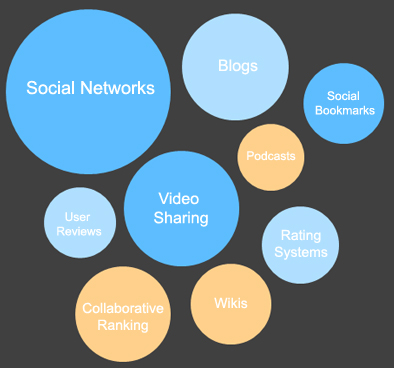
I’m a visual person, so I want you to be too. With that being said, I think it’s interesting to look at the many different types of graphical examples of the social media space. The first graphic I want you to see comes from Lorna Li’s post on 6 Steps for Creating a Social Media Marketing Roadmap & Plan It’s interesting to note that her bubbles do not connect. They merely float around each other. Does that work for you?

The next is from Susan Scrupski’s post Circles of Expertise in 2.0 for Biz I like hers since they are interconnected, but I think that in some instances, that perhaps they should bleed over more.


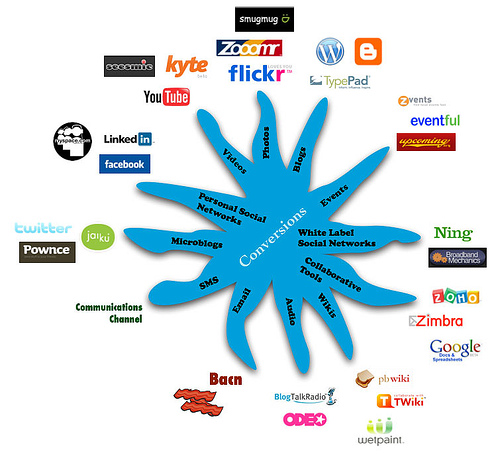
Then we have Brian Soli’s Conversation Prism which is pretty cool since it doesn’t appear to have left out much. It reminds me of the NBC peacock though.

Next is Scoble’s Starfish Very accurate except for the sickly starfish. It looks more like a mutant glove.

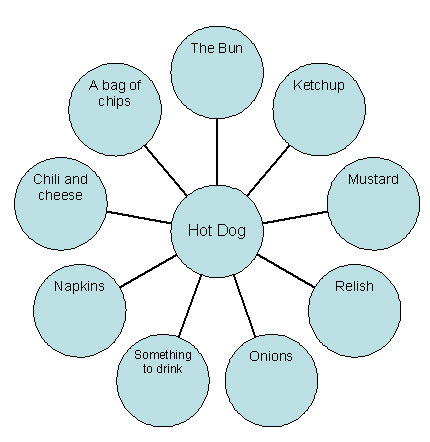
Then there is my simple explanation of how the hot dog could be the center of the universe from a social networking standpoint. Chew on that, if you will. No comment on the  public bathroom shade of blue I used.

And lastly, this one is pretty cool from Touchgraph Go there and type in “social media” to see a larger view.

Of course we could really dumb it down to a scrawled spiral and draw it on a napkin as well

Here’s one more submitted by one of my Twitter frinds, this one titled the new marketing ecosystem from Mullen Though it does look a bit like a Christmas ornament or some type of dangerous coral.

Which one works for you? or maybe there’s a better one? Flippant sarcasm aside, the point is that social media’s influence is far more reaching than anyone could have ever expected and the exciting news is that it’s only going to grow in depth and breadth.

The Conversation As Transaction

I recently read a post titled The social media expert, Who is he?  in which Jacob Morgan espoused on the question we all have been asking each other as of late and that is, just who is the social media expert? But an interesting thing happend while reading some of the responses to Jacob’s post, someone wrote that the conversation, or that the interaction on social networks, could end up being monetized or transactional.

I’m not sure how it went from talking about social media experts to dovetailing into monetizing social networks but it certainly gave me pause to ponder whether social networks could find that happy place and actually make money beyond relying on traffic and Ad dollars.

But herin I came up with some questions that not only do social media startups need to ask themselves, but even ourselves as users and readers and participators need to ask.

If you are the architect of a social media app or community, are your goals and aspirations purely altruisitc? Or do you want to make money? Your success does depend on the community, which of course is predicated on what? the quality of your apps? or the quality of your participants and the interaction of those individuals?

Its not the platform or is it?

The easier you make it for people to interact, then the better your chances are to succeed? Right? So then it is about the platform. See the catch-22? What comes first the people or the platform?  or rather what drives or determines the success? The quality of the platform of the passion of the people? Or is it sales and marketing and $30 million in funding?

So this made me think that could the conversation, could a conversation be monetized? Could there be a conversational transaction? Monetizing the conversation. Putting a value on the conversation above and beyond it’s intrinsic value? Is that possible? would we go for it?

Robin Carey brings up a great point in her response to the above blog post in which she says:

I think there is a world of hurt out there around the notion of “monetization,” or “transaction” and social media.  Personally, I think the hurt is misplaced.  Let’s face it, people do need to get paid for their intellectual endeavors, whether that is for designing a great app or moderating a productive conversation.  If you think of social media as an online, 24/7 conference, then if there is value to be had in that conference, then people are willing to pay for it. I would venture that relationships do have value, which can be monetized, but hopefully in a way that is acceptable to both parties (“transactions.”)  The big change with social media is that these transactions and monetizations (if that is a word) take place in a more transparent and inter-active fashion. 

So essentially what it may boil down to, is that social networks will no longer be free? Or perhaps you have to pay for your widgets, pay to communicate with your peers? Not likely. Which means this steers us right back to the value of the conversation, or the transactional value of the conversation. Yes it’s valuable but only between the people that it concerns. Above and beyond that it has zero value. And lets be honest, has anyone tried to attach value to a conversation? Beyond its personal value to you and I? I guess that means, for now, we’re back to relying on traffic and ad revenue. For now.

I guess the last question would be then: If Twitter started charging, would you use it?

My Wordle

Found this thanks to Chris Brogan. The site Wordle allows you to create word clouds of your blog content. Check out my content. Interesting to see what i write about.