How to Navigate Social Media in an Era of Misinformation and Disinformation

Featured

I have a difficult job. Not like it threatens my life or heaven forbid, it involves manual labor, but aspects of it can certainly be a drag on my psyche, my energy, and my hope for humanity. At the very least, over the last seven years, my job has gotten progressively more challenging; and maybe challenging is a kinder more diplomatic word but suffice it to say, it has become at times, quite vexing. If you look up the word vexing, Merriam-Webster defines it as causing annoyance, frustration, or worry. My job is that, and more at times, as I work in social media.

Which is why I asked the golden child, Chat GPT, the following question:
How do people navigate social media in an era of misinformation and disinformation?

I wasn’t so much asking on my behalf as I was wondering how others, lay people if you will, tackle the day-to-day challenge of separating fact from fiction and beyond in social media.
What I got back as an answer was close to what I might advise organizations, companies, and people to do. However, what I’d like to do is add my two cents to whether it’s possible to actually execute on each bullet of Chat GPT’s response. So, let’s break it down.

Let’s start with Chat GPT’s overarching response to the initial question: “Navigating social media in an era of misinformation and disinformation requires critical thinking, digital literacy, and a cautious approach.”

I agree, but right out of the blocks I must openly ask three questions:


1) How many of us while consuming social media content critically think about what we are reading or viewing? Do you ever ask yourself if what you’re reading smells? Or are you good with whatever it is you just read or viewed?


2) Being digitally literate means what in today’s day and age? That’s such an all-encompassing blanket statement but I get it. We all know how to fire up a computer and “go” to a social platform but at that point, all bets are off on what happens next, and lastly,


3) How can consuming content and being cautious NOT be mutually exclusive? That being said, throwing caution to the wind starts with that first click within any social platform. Does it not?

Let’s continue. Here’s more of what Chat GPT supplied in italics with my running comments baked in.

Verify Information: Always verify the information you come across, especially if it seems too sensational or questionable. Look for multiple credible sources to corroborate the information. In practice, you would think or hope that everyone would do this, especially today, but I can tell you unequivocally that few actually do. Opinions, facts, lies, hyperbole, and images are very much strange bedfellows and yet they are the malleable pillars that content creators rely on. It’s the fuel they need for their fires to roar.

Check the Source: Examine the credibility of the source. Reputable news outlets, government agencies, and academic institutions are typically more reliable than unknown or biased sources. This is like the first bullet point but if your go-to source is not credible or if all you do is watch or listen to ONE source for your information and think that’s credible enough for you, then how would you know ever if something was fiction? And oh, by the way, the truth, is never in the middle.

Fact-Check: Use fact-checking websites and tools to verify the accuracy of claims or news stories. Fact-checkers like Snopes, FactCheck.org, and PolitiFact can help separate fact from fiction. Who really does this?

Watch for Red Flags: Be vigilant for red flags that suggest misinformation, such as misspellings, outrageous claims, or sensational headlines. I think we’re all guilty of this one, but it essentially comes down to two things, 1) If it’s too good to be true, then it probably isn’t-think Nigerian Kings and or 2) Common sense? …it’s not so common.

Question Your Biases: Be aware of your own biases and how they might influence your perception of information. Try to approach content with an open mind. Not a chance. Most people believe that their beliefs, that their truths are the only beliefs that matter and everyone else has no idea what they are talking about.

Limit Information Filters: Avoid the filter bubble by following diverse sources and viewpoints. This can help provide a more balanced perspective. What are the odds that someone watches a left-leaning network and a right-leaning network regularly?

Educate Yourself: Invest time in improving your digital literacy. Learn about media literacy, critical thinking, and how social media algorithms work. This sounds like a great idea on paper but John and Jane Doe in Oklahoma ain’t got time to do that.

Privacy Settings: Adjust your social media privacy settings to control the information you share and who can see it. I consider this to be something that a more seasoned user might do, but for the average user, or even the power user, muting oneself is not something that most prefer, nor does it prevent the consumption of or proliferation of misinformation.

Avoid Sharing Unverified Information: Refrain from sharing content you haven’t verified. Sharing unverified information can inadvertently contribute to the spread of misinformation. “I don’t need to do any homework, I’ve been following this source for years, thus, I trust it…” Which leads us to,

Report Misinformation: Many social media platforms have mechanisms for reporting false information. If you encounter fake news or misinformation, report it to the platform. No one is doing this. Why? How would they know what is fact or what is fiction? If it’s their “trusted source”, then that’s good enough for them.

Educate Others: Help friends and family become more digitally literate by sharing resources and discussing the importance of critical thinking online. This sounds great in practice but…most people’s eyes glaze over when talking about critical thinking.

Follow Experts and Fact-Checkers: On social media, follow experts in relevant fields and organizations dedicated to fact-checking and truth verification. Their content can be a valuable resource. A fantastic idea but who determines who an expert is? What is your criteria for deciding that an organization is dedicated to fact-checking? What is the experts’ credentials? I actually think that if you can identify someone who is non-biased you might be onto something. Good luck?

Discern Satire and Parody: Understand the difference between satire or parody and actual news. Some satirical content may be mistaken for real information. Probably one of the more difficult things to do. Content these days is created so seamlessly and so effortlessly that discerning what is real and what is not can sometimes be virtually impossible. This is where the, “doing your homework” aspect of social comes into play.

Use Critical Thinking: Apply critical thinking skills to assess the logic, evidence, and credibility of claims and arguments. Great idea but that’s no fun. Right?

Stay Informed: Stay up to date with current events and developments to have a better context for evaluating information. Context is everything in social media, but understanding the context of something requires the ability to take one’s head out of the sand from time to time and look around. Take the temperature of the room from ALL parts of the room.

Ok, so a couple of things. First, did Chat GPT’s response nail it? Sort of, but to be honest, for the average user who might be searching for the right answer, this comes pretty close. For the power user though, was there anything in Chat GPT’s answer that was new? Not really. So it’s a push. I’ll give it a grade of C+/B-.

I know a lot of these bulleted points require some type of lift, which a majority of people will not do. But if you care about the veracity of the social content that you’re reading or consuming, then it behooves you to at least consider the content and the source simultaneously. In today’s climate of 24-second new cycles, obtaining completely unbiased and purely factual information from any (news) source, be it a social media post or not, is going to be challenging; as all sources are subject to some degree of bias or editorial perspective. Your quest, if you care, is to understand why the content you are reading, viewing or consuming, was put out there in the first place. If you understand the motive, you can understand the game.

What Determines Social Media Success in a Company?

9 years ago, I wrote and saved this title as a draft idea. I now feel like I know the answer. A lot has changed since I first had the idea, including myself. I have evolved. My thinking around social media has evolved. As has social media. It’s no longer the thing as much as it is A thing. It’s like an appliance now.

In 2012, I was working at Accenture. Prior to that I was at Ernst and Young. At each place, my sole focus was on Social Media. At EY it was on behalf of our clients. At Accenture it was all about promoting Accenture. It’s crazy to think that in the span of nine years, we now have a mature Instagram and Pinterest. Google+ came and went. Same with Vine, Periscope and Meerkat. Poof, gone. We’ve seen the meteoric rise of Snapchat and TikTok and we’ve seen the demise of civil discourse on social platforms.

What else has changed? What hasn’t changed?

Really the answer is everything and nothing.

So what determines social media success in any organization? Two things. One, define what success looks like and how you’re going to measure it and Two, commit to that success and don’t bail on it.

Trust your process and your people.

It doesn’t matter whether you’re using it for marketing, sales, HR or recruiting. Social media is only nebulous to those that don’t understand its impact.

The Many Faces of Digital Influence

b

I’ve been in the search and social media space long enough to know that without a doubt the two most vexing topics year in and year out are how best to leverage a brands presence in social media and how to engage with influencers. In my opinion, influence in social can have many faces. The face we see the most isn’t an influencer but what I like to call a “frequencer.” This person isn’t as much a thought leader as they are someone who pushes out content like they’re a bot. In fact, they just might be a bot, but what we need to stop doing is calling them an influencer and relying on their influence to help our brand. There’s a better way. You see at the end of the day, it’s all about eyeballs and traffic. If it’s “influence” that drives them, then so be it.

Look Beyond the Numbers

If we look at Twitter for example, what does 600,000 tweets mean to you? Does that mean influence? What are they influencing? How to schedule a post or a tweet 100x a day? They aren’t influencers, they’re conduits of someone else’s information. They’re facilitators of someone else’s thoughts. When do they have time to take a meeting? When do they have time to formulate their own POV?

A thought leader, in my opinion, is sharing their thoughts, their opinions, their fears, their predictions and their point of views on a topic or discipline that they’re deeply familiar with in a space that they’re deeply tethered to. These are people that drive traffic.

Recently Onalytica came out with their Top 100 Influencers in digital transformation, a space that I am deeply familiar with. I don’t necessarily consider myself an influencer in the space, but I am acutely aware of what is happening in the space, who the players are, who the companies are, and who the wannabe influencers are.

If we are going to determine influence by frequency and ‘hashtagery’, then the Onalytica lists are spot on. If we were going to base it on thought leadership and actual engagement, then you’d have to pare the lists down by half, maybe more. This isn’t an indictment on Onalytica or those that are on the list as much as it is a suggestion to brands and those that manage social media at the highest levels, to understand more of what and who you’re measuring. Or better yet, what the end game is.

Brands and orgs can not get caught up in an equation that looks something like this:

Visibility x Frequency = Authority

Readers have to take the content that is pushed out on all social platforms and do the following: Consider the source, consider why it’s being shared, consider what the end game might be, and then determine its value to you and your org. At the end of the day, give me the thought leader, not the influencer.

The Key to Success in Enterprise Social Media

b

Lately, I’ve been thinking way too much about organic B2B social media marketing. For obvious reasons, it’s where I play and have played for the last eight years. In that time, I’ve worked for some of the largest companies in the world and If you were to ask me what keeps me up at night it would vacillate between how can I do more with the tools and resources I have available to me and what am I missing? This is the great struggle for the enterprise in social media. Where does it fit? Does it fit?

I can tell you answering any of these questions requires some soul searching. The bottom line is that creating a solid, measurable, B2B social media strategy is extremely difficult, and to say that the enterprise just doesn’t have a clue, though it makes for great copy, just isn’t true. They know what’s up, to a degree. Whatever their degree of understanding is, the stark reality is that the pressure is on every CMO to make something of the potential that social media might offer the organization.

Let’s talk about business value

That clock you hear in your cube at the office? That’s for your benefit. It’s ticking and you need to figure out real quick where social media fits within your org. I’m of the opinion that social has to be part of any org; and where the rubber meets the road is the understanding or lack of understanding of those that are entrusted with managing it. My quick and dirty argument is that if you don’t use social then what are you going to do?

But let’s back up. You see, the challenge in your organization as it is in every other B2B organization, is that solving for X in social media, boils down to closing the chasm between conversations and conversions. It’s brutal at the B2B level.

Conversions in social media in general, in the purest sense of the word, can be few and very far between. But the same goes for conversations. Can we get people to click on content? Yes. Can we get people to talk about that content? Not really. We can get them to like, share and retweet but those are passive activities. They’re easy and lazy forms of what everyone defines as engagement. Now snap B2B on top of that. Uh-oh.

To put this in terms we can all relate to. A home run in B2B social media from an engagement standpoint for some companies might be 1%. That’s right,1%.

Time to temper those expectations or time to innovate.

I have a suggestion though. Maybe we need to look at B2B social media metrics differently and perhaps weight them differently. If you can get the data right, you can get the analytics right, right? Maybe I’m suggesting that conversations at the the B2B level, are so tough to come by, that maybe we need to measure them differently? Quit looking at them through a B2C lens.

Let’s simplify this. Would you agree that essentially, B2B marketers, are relying on a definition of engagement that a) really doesn’t mean much anymore in social media and b) shouldn’t apply to them? One could argue on behalf of both points.

The way engagement is and has been measured has been fairly consistent from the very beginning, but that doesn’t mean it’s right. What I’m really saying is that in place of more quantifiable metrics, the best that we have or the best that is presented to us as metrics by various tools and platforms, is how we’re measuring success. Likes, loves, mentions, favorites, follows, shares. expands and clickthroughs are our barometers for success in social media. Those are good but we need more, we need better.

For myself, I look at all of those things the same way, they’re good metrics and they give me a glimpse of something, a taste of something, a start, a start to something, something that could turn into something more. That’s it. It’s a pulse and it might be the closest we can get to a customer, client, prospect or partner, short of being with them in the flesh; and that’s pretty damn compelling. However, if we want to move the needle, then we need to do a better job of measuring customer engagement. Why? We need a better snapshot of who does what with our content. Should I care, that you took a millisecond to share, like or re-tweet a piece of my content? Not really, but if I know more about you. then maybe I can gauge and measure your INTENT.

You’re only as good as your content

The driving force behind this will be content. Content is driving everything. Great content, bad content, middle of the road content. All of it, in all its many different forms, is driving e-v-e-r-y-t-h-i-n-g…. We call it content, but back in the day it was a newspaper insert, a magazine ad, a radio spot, a 30 second commercial on TV. The form has changed but not the function. Get our attention.

What’s consistently baked into that content? A brands message. The point of that message? Buy our stuff.  And Social media? What’s its form? What’s its function? Buy our stuff.  The difference between the old and the new,  social can be a more direct conduit to the customer. The problem? One voice to two ears. Multiply that exponentially and what do you get? A funnel with noise.

b

Social media marketer doesn’t mean social media analytics guru

If we can’t get comfortable with a firm definition of engagement where the only thing that matters is, if there is some type of conversion behind it, then we need to at least get a better idea of who our followers are; or who is most engaged with our stuff. The keys will be your content and how your audience is engaging with it.

The bottom line will be the data that’s derived from your content. Quality data, not just likes and mentions. Once we have the data, then we can make better decisions and informed decisions on what’s working, what’s not and how we’re going to reach those that matter. I’d also like to suggest that having a robust and separate social media analytics practice would be one of the wisest investments the enterprise could have going forward. Translation: Just because you might be a CMO or a director, doesn’t mean you’re a data scientist. Maybe you are but in my opinion, it’s the only way the enterprise is going to move the needle forward in 2018 with social media. Take the analytics side of the equation seriously and fund it properly.

With social media and its various platforms  we do what we do and it is what it is; and because of that, you can do anything, try anything and say anything. For brands, that’s the great potential.

Conversation Gained-How to Determine Influence in B2B Social Media

b

I don’t know a marketer out there that would say that influence in social media is not a commodity, if you know how to leverage it.

I do however, know a lot of marketers out there, who struggle with determining and identifying influence in social media and because of that, can not leverage it; and that’s NOT a commodity!

Discussions on influence in social have been around since social began. For me, those postulations and assumptions began back in 2006, so I’ve got 11 plus years of data and experience on what I think and what I think I think. Yea, we were forced to think about it just as much back then, as we’re doing today because influence mattered. Then and now, and thus, the more data a marketer has, the better the decision they can make. Right? Especially in a B2C setting.

Now B2B marketing? B2B influencers? Just as important. Just 5X to 10 X more challenging.

It’s amazing to me that in 2018, the questions on influence in social are still pondered as if it were the latest work-out fad, “Yea but will it give me abs?” The reality is that we shouldn’t be surprised that the questions still persist. Over the years, the definition of what true influence is, has kind of changed, at least in the context on how to measure it and what the criteria is to measure it. The bottom line is this:

Influence is a nebulous but nevertheless, powerful “thing” in B2B social media, and you my dear marketer, need to understand how to determine it, identify who is influential within your space, and then decide what you’re going to do about it.

Pro Tip #1: If your org is using social media of any type, you should have some type of social media influencer strategy. Even if it’s low impact. 

The whole reason is simple. The more you know about your space,  the easier it is to decide how to market it to it. And… Having some type of influencer strategy will allow you to know more about the space that you’re marketing in and to. It’s a reciprocal arrangement that mutually benefits both parties.

By “owning your space,” individually, organizationally and operationally, you become the true master of your business and social domain. Knowing your industry backwards and forwards becomes one of your biggest strengths; and yes, ideally industry expertise should extend from the c-suite all the way down to the lower junior or new hire levels.  For your newbies, it should be about continuous training and boots on the ground experience so that they can become SME’s ( subject matter experts).

Additionally and theoretically, by ‘owning it,’ you should now know by default the answers to the below questions that slightly resemble a SWOT analysis:

a

  • What makes your company great?
  • What makes your company and its products or services better or different?
  • Who is your greatest threat? Which competitor do you pay attention to?
  • What does your company not do well?
  • How can we improve the #CX? The #UX?

Ironically, The challenge to this pragmatic, common sense thinking is that we’re all situated in a unique moment in time in which, whether you like it or not, there’s a high likelihood that your organization might be in the midst of  some type of digital transformation. Which means that your company might be culturally changing its  digital capabilities as it pertains to process, product, services, technologies and assets in all to improve operational efficiency, enhance customer value and the customer experience, manage risk, and uncover new opportunities to compete and make money. That’s a mouthful…

The translation? The key to being a good social media marketer is what? Exactly! It’s your ability to answer an expanded list of the above questions:

  • How well  do you know your space? Posed as a question and a statement
  • How well  do you know your company,  your service, your product and its people?
  • Do you have a social/digital mindset? You’ll probably need to be somewhat adept at that aspect or understanding. Do you know what that means?
  • How “good” are you at social media engagement? If you can’t hold a conversation, don’t understand context and are taking yourself too seriously-this might not be for you
  • Do you know what you’re doing? Like, really know what you’re doing? Managing your personal social accounts helps, but this is different.
  • Do you know what the strategy, tactics & goals are for your organization?
  • Can you execute a social media marketing strategy?
  • Do you know what success is? Can you define it?
  • Do you know who the players are? Do you know who isn’t?
  • Who moves the needle in your space? *Hint: These might be (are) your influencers
  • Can you measure your results?

Keep in mind that anyone can “do” social media marketing especially in a B2C setting but can you be the special person that can own it in a B2B setting?

Pro Tip #2: You don’t need any tools to do B2B social media marketing effectively.

So the grand point of all that I’ve been saying up to this point is this. If you know your space, you’re a social media marketing worker bee, you’re managing some initiatives and you’ve been doing it for over 9 months, then you should be able to tell me pretty right away…Who your industries’ influencers are. Could you do it?

You don’t need a tool, though it can and could make it easier in identifying some ‘people’ that may not be as active and yet are still effective and impactful within the space. Point being, if you’re actively engaging, managing and participating, and you are the owner of the branded social media accounts of your organization, then you know what’s up. You’ll be able to answer the above questions. You will be and are the master of your social domain and you’ll know who the influencers are.

Pro Tip #3: Influence needs to be qualitative not quantitative

Here’s how I measure influence in social media. particularly Twitter. I look for those that are authentic voices and experts within their space. Authentic Voice being the operative term. I look for practitioners. I look for ‘normal’ activity. Not ridiculous participation. I’m looking for success not excess.

If you’ve written a book on Big Data and analytics in social media for example, and that’s what your interests are, and that’s what you talk about on social platforms and you share things that pertain to that on social platforms, and your feed shows a balance of content mixed with conversations and your numbers, i.e., your number of followers,  the number of people you are following and your number of tweets, are balanced, I would consider you an influencer. I would follow you. A big key for me going forward, however, would be how well do you engage?

Should we consider the person that has tweeted over 600,000 times, has a 150,000 followers and is following 150,000, an influencer? Here’s more context. Is that same person an influencer if they occasionally write or tweet about the Internet of Things, AI, VR, AR, MR, machine learning, digital transformation, digital disruption, design thinking, 5G and cloud computing? Are they an expert in all of those things? Are they an expert in one thing? What if they don’t engage?

By the way, that’s the description of an actual person on Twitter that brands and sells themselves as an influencer. You can come to your own conclusions on that but here are some more qualifying questions that might help you decide and determine true social media influence

  • Do they enhance your experience?
  • Do they engage?
  • Do they share your content?
  • Do you get the sense that they don’t even pay attention to their feed?
  • Are they a SME? An expert?
  • Are they an industry resource?
  • Who do they work for?
  • Do they push out their own though leadership?
  • Could they solve your organization’s most difficult problems?

At the end of the day, you have to ask yourself, “What do I want out of my relationships with the influencers that I have targeted and or have followed in social media?” Once you’ve narrowed down who the influencers are, once you have thoroughly vetted them, then you can start thinking about your influencer strategy and tactics in order to get the most out of your B2B social media marketing initiatives and the influencers that are in your space.

Conversation Lost-How to Align B2B Social Media Marketing Efforts with the Right Strategy

b

B2B Social media success is like the American ninja warrior TV show. Everyone makes it to the starting line and yet very few make it to the finish line. In fact, those that can make it just halfway through the course can sometimes advance to the next round, based simply on how difficult the course can be. They’re deemed, somewhat victorious for just getting ‘that far.’ The same holds true for B2B marketers. B2B social media marketing can be brutal but it’s not a loser.

If you’ve never watched the show, it’s essentially an impossible obstacle course that takes a lot of balance, agility, strength and sound judgment to complete. Those challenges, metaphorically speaking, completely exist in B2B social media in 2017. For those that were around in the “early days” of social media will be the first to tell you that today’s social media is a far cry from what it was back then. Understatements be damned, one could say that social media has evolved and still, others could say it has regressed.

So what is a marketer to do? Where does social media fit in the marketing mix? Should your organization have a social media strategy? The quick answers are: There is a path, it does fit into the marketing mix and yes but let’s quickly review what’s been happening.

Over the past 7-8 years, the act of truly conversing has slowly dissipated on most social networks, Twitter in particular. On other networks, however, see Snap for example, the act of communicating has escalated and changed. In reality, communicating in social media hasn’t so much as gone away, as it has been replaced by different types of communicating dominated more by imagery and less by conversations.

For marketers though, the one-way, scream it and blast it style of pushing out messages disguised as conversations, still exists today. Partly because a) they are struggling with a medium that deemphasizes the written word and embraces the emoji b) a general lack of understanding of how to use that medium and c) it’s not the only channel.

It used to not be like this. Social Media was at one point this living, breathing, conversational thing. Somewhere along the way though, marketers started to misunderstand the platform and treat social media and its content like it was an arms race. It became a content battle wrapped around the quantity and output of messages and how quickly follower ratios could grow.

Beyond that, companies became enamored with vanity metrics. Those are your typical likes, mentions, retweets, etc. In fact, orgs of all sizes still like vanity metrics, we all do. Why? Because it’s a tangible hard number that we can wrap our arms around. Like a unique visitor in the world of website traffic. How many times have you heard or have asked the question, how many uniques do you have or what’s your traffic like? It’s how we quantify and quantified success. The parallel is exactly the same as asking. “How many followers do they have?”

Recently I told someone that the same metrics that revolve around direct mail and direct e-mail success now apply to organic social media. Meaning that getting a 1-2% organic engagement rate via social is about equal to what you might see or hope to see in direct mail open rates. It’s almost considered a ‘win’ but not quite. It’s average. You would think that social media and social networks might have an advantage but social media marketers are generally not working off of lists. So for them, it’s all about the content and the creating of content. Engagement? That’s a bonus. Measurement? Maybe.

The crazy thing about social media content today? It’s not bad. In fact, it’s more visual than ever before. There are some great content creation tools these days and the whole process of creating content for social is an industry in and of itself. It’s not boring. It’s dynamic, it’s compelling and dammit, it’s clickable. But the kicker is, you have to see it. You have to find it. So really it’s not how the content is being packaged and it’s not how it’s being created or delivered. It’s more about when do you push that content out? It’s where and it’s why. Oh yea, and to whom matters too. Social media in a B2B setting is effective when the right content finds the right people at the right moment.

Blame it on growth and blame it on the “noise” that growth created but that’s the ‘other’ new reality. Getting the B2B customers’ attention is more difficult now than it ever was before. Your new digital marketing challenge is to figure out where social fits in your marketing mix. Keep in mind that it has to be there, you just have to decide which platforms you’re going to use and what the distribution of dollars and resources will be.  Let me reiterate. Social Media efforts in a B2B setting have to be there for the simple reason that the customers are there.

Does engagement really matter?

What is engagement? Or rather what did it used to mean? Loosely defined in social media. it means that an action occurred, some type of reactive action occurred in the form of a like, a retweet, a mention, or a share. All of those actions dependent on, in theory, you, the user, doing something. Some, thing. Oddly enough, the actual true meaning of engagement could not be more diametrically opposed to what is happening here. You have either a formal agreement to get married or an arrangement to do something or go somewhere at a fixed time. Neither of those really pertain to social media, do they?

In social media, because an ‘action’ did occur, marketers measured it in a positive fashion. The problem occurs or occurred, when nothing happens or happened after that. Thus, marketers were and are ostensibly hanging their hats on hollow metrics.

In email marketing or direct mail marketing, we can measure click through rates, open rates, conversion rates, leads generated and of course sales. These are things that happened after the fact. We don’t call it engagement. These are definite and distinct actions. We have a crumb trail we can measure. We have user data before and after the mail is sent. We can create a snapshot of the user based on that data. We can tailor content and give them what they want. Social media marketing on the other hand, organically speaking has to be more strategic in order to be effective. The tools and data are there but marketers are lazy.

Let’s explain it a different way. What kind of crumb trail or user data do you get from an egg with one name, no bio, following 50, with 10 followers and 5 tweets? Not much. Marketers will recognize and acknowledge the retweet, the mention and the share of the egg-but what does that really mean? Nothing.

In part two, let’s look at what a marketer should do. Let’s talk about what the distribution of marketing and social media strategies, tactics and activities should be and let’s talk about bang for the buck. The operative word being, buck, as in dollars, which should be your clue.

Why Entertainment and Social Media are Perfect for Each Other

9537999-large

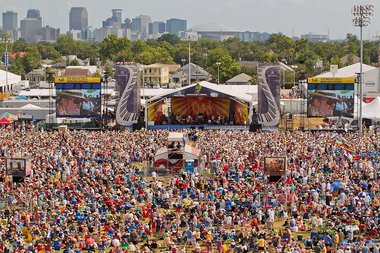
Twenty six years ago at the New Orleans Jazz and Heritage Festival I watched Stevie Ray Vaughn rip it up in front of thousands of people. The only way people knew that I did was because I told them about it. Yep, WOM.

I would go on to see SRV a few more times after that before he was taken from us too soon. My memories and stories of the times I’ve seen him and hundreds ( Yes hundreds, I sold concert T-shirts) of other acts are solidly entrenched in a sense and duty that those stories are waiting to be told to another willing listener/fan. Thats #WOM.   in a nutshell.

What’s changed since then? A lot. The entertainment industry is now built upon “Jenga” blocks of streaming services, subscription services, platforms for buying, sharing and saving music. All are on tenuous ground except for social media. Entertainment and social media are made for each other.

Social Media is the spinach to the Popeye that is Entertainment.

Popeye-Spinach

The things is though, Social Media is just 1/3 of the elixir to what is ailing the entertainment business, specifically the music business IMO. The other two thirds that need to be “fixed” are streaming services and how artists can be rightfully paid for what they produce and what we hear. We can spend a whole blog post on that, but for now let’s focus on a few ways musical acts, venues and festivals can leverage social to  be successful

Let’s start with musicians. Above and beyond the actual creating of music, it’s imperative that musicians play. Whether it’s busking, club dates or in sheds, musicians have to play, preferably in front of people. But if no one knows they’re playing, then how’s that going to work out? Self promotion right? In a sense yes, but the key is social media, coupled with a an ample amount of balance. This tenet can hold true across the board, regardless of what part or side of the industry you’re on.

You have to balance the desire to pimp your stuff all the time with being interesting the rest of the time...oh and you have to make money doing what you love. So the balance is playing your music, marketing your music and selling your music. Artists can do it but it’s tough. Why is it? Last time I checked musicians are musicians and NOT marketers and certainly not social media marketers.

This is where the fans come in to play. This is where live events, concerts and festivals come in to play. All of the previous mentioned figure largely into the mix. Case in point, I go to the NOLA Jazz Fest as much as I can and to me, it’s about as good of a local and visitor “fan” experience as you can get with the combination of music AND Food. The Music is off the chain, but the food is a close contender. And people talk about it, A LOT. Tell me word of mouth is not big for an event like the Jazz Fest and I’ll see you some fertile Louisiana swamp land. 🙂

chicken.0

Recently I went to the Gasparilla Music Fest in Tampa. A small festival comparatively speaking but no less eclectic when it came to the music, the diverse and high quality food offerings AND the tremendous local libations (Hat tip to Cigar City Beer)  The GMF is an absolute under the radar home run.

Not only was it a great venue for musicians but ditto for local eating establishments as well as those who were there for Spring Break and the weather. My point? Technology and social media can and could help and does help, to a certain extent, all those involved. But it can be better. This might be the part that musicians will hate to hear, but they can help their causes more by becoming more actively active, is that even a term? in every aspect of pushing social engagement with current and future fans. Why? Social Media loves entertainment but if it loves musicians, it loves and rewards fans even more. It’s a natural fit for fans to profess their love for a band or an artist and vice versa. But we have to make it easy as hell for them. Don’t forget, people are lazy and technology makes them even lazier!

gmf1.erykahbadu2_8col (1)

Real quickly, how good was the music at GMF? Well, when you can watch an artist as globally known as Erykah Badu slay it, up close and personal, that’s pretty cool; or listen to Memphis group Lucero just tear up the stage and then be tapped on the shoulder and be asked, “who are those guys,” that’s even cooler.  All told there were over 50 acts of various degrees culminating with Stephen Marley closing it down in fitting fashion. Stop it, just stop it.

Mini festival review not withstanding, I’d like to see the chasm between the makers of music and takers of music narrow so that we can all enjoy the why behind the music. Why do we love music? Why do we love to play music? It’s all about smiles on faces…

IMG_2426


A Look Back: What to Look for in Your Next Social Media Director Hire

new guy

About four years ago I wrote a post/checklist on what you should require when you hire your next social media rockstar. Recently I was asked to build a roles/responsibilities description for a client who had a similar ask and thus I thought my old post might help me in building out that description. So let’s relook at the post and see how it compares to 2015 with comments, updates and observations in red.

1. Do you understand how social media fits into the overall marketing plans and goals of any organization regardless of industry? In 2015, I’d say now more than ever social is part of the fabric of every org. It’s either an integral part of every marketing plan or it does have some role.

2. Could you build a sound business strategy for a client around social media? Let’s hope so! Gone are the days where all clients or brands should or would accept someone who knows how to tweet, post to Facebook and take Instagram pics. That’s a given. But can you go deep on strategy? Do you know how to measure? And no not just vanity metrics.

3. Will you be accountable for the quality of all social media plans/strategies/services delivered to clients as well as their overall client satisfaction? You do know that we measure everything and everything can be measured? This is probably the biggest difference. In 2015 we can measure so much more in social than we did back in 2011.

4. Could you establish social media programs that actually drive revenue? Nothing, I got nothing. Self explanatory. Either you can or you can’t. 

5. Can you drive social media work for clients? Including strategy development, tactical expertise and execution, and measurement of all their social programs? Soup to Nuts and then some. Not only do we want you to drive the work, we want you to think ahead as well. Think Mobile and Social. What works now? Will it work next week, next month, next year?

6. Can you develop a methodology that includes resources, team structure, core processes, and best practices that can be  scalable across the board with media and marketing teams? What’s different in 2015? Managing social needs a team. In some cases, a very large team and a diverse team with general and yet specific skill sets.

7. Could you identify and define social media opportunities for clients as they align with their overall digital marketing goals and strategies? Can you replicate success? Do you understand that one size does not fit all in social?

8. Could you collaborate across all departments and disciplines to identify and implement social training needs? There’s “doing” social and being social but do you understand and can you articulate the nuances of social? Particularly as it corresponds to different platforms? This is a biggie as it can determine success.

9. Could you identify and act on opportunities to attract, market, and recruit top social media talent? I can tell you that what’s attractive to new talent is being able to craft and create social media programs and strategies that push the envelope of what’s possible. Want a hint? Think Periscope and Merrkat and Blab. 

10. Can you manage the recruitment, hiring, retention, and professional development of a social media team? Do you know what to look for? What you’re looking for are people that have worked on projects and campaigns from beginning, middle and end. They know what to measure and they know what success looks like. And, they can think on their own.

11. Can you determine the correct roles, responsibilities, and expertise needed on your team to scale and grow a social media practice? If you’re our director, you better be able to. By the time you’ve reached this point, you should be able to “do” every aspect of social and yes that includes creating topic profiles in Radian 6. 🙂 So we need to assume that yes indeed you can determine correct roles and expertise.

12. Do you know how to monitor trends in any industry and collaborate with upper management to ensure preparation for potential changes within a market segment? and then position the company or division for success as an industry leader? This is the backbone of or one of the pillars of social. You have to know how to monitor what’s being said, where it’s being said and who is saying it and then…How to act on it. If you don’t? Next in line please…

13. Could you work with global practice leads and other social media managers to develop, document, and share social media strategies and successes? Can’t we all just get along? Social media is the best place to collaborate on best practices of what works and what doesn’t. We get new toys and platforms coming at us all the time. This is the fun stuff.

14. Can you facilitate collaboration, knowledge sharing, and encourage participation for social media across teams and offices? This is a tuffy Your ability to create handles, profiles and platforms is one thing, but then to mandate participation at least within your org, whether it’s internal or external, will always be a struggle. Why? Because not everyone is social and not everyone wants to be social, even if it’s on behalf of the company. Sometimes you can lead a horse to water…

15. Can you act or be the central resource for information related to social media? Would you want to be? I would hope so, on both accounts. I mean it is your profession and you are applying for the director position…Should I even ask if you can? Never mind. Shame on me for hiring you if you can’t.

16. Could you be a credible spokesperson of social media at industry events? This isn’t a deal killer. If you could that would be awesome, but if not, no worries.

17. Could you increase and raise the awareness of your organization’s credentials on social media both internally and externally? I would like this person to be active on the behalf of the company but we have others who can push that agenda. However, it is a bonus, whether it’s internal or external if participation is coming from you. So if I were you I’d answer yes to this, regardless. 🙂

18. Could you advise client teams and other internal executives on the execution of social media programs and new business opportunities? No changes here in 4 years, this is a resounding yes, you better be able to.

19. Can you determine the right solutions for technology and measurement of social media?  Including evaluation of current resources as well as social media vendors and develop partnerships with those vendors? This one is huge. What it requires is that you are on top of what is out there right now. What works, what doesn’t, what sucks and what can definitely elevate who we are and we do in the social space.  Technology and tool wise, you need to know what’s out there. Bottom line.

20. Can you collaborate closely across all departments and teams within an organization to provide complete solutions for clients? Depends on your role but in general, I would say you can count on probably being pulled into more meetings with more groups in which your expertise is required, than you initially thought. You’re the expert. 

21. Can you contribute to new business development by representing social media strategies and services? Could you sell social media to a client? If you got hired for your position, I’d say the answer is yes.    

22.  Do you have the ability to build relationships with senior executives within key client accounts? Is schmoozing part of your DNA? Here’s what you need to know, you’re always going to be selling social media to someone within your org. There will always be someone who is skeptical. Get used to it and don’t take it personal. Win early and they’ll come find you wanting to know how they can leverage it. 

Am I missing any more key requirements that you can think of? Let me know in the comments section. Let’s build the ultimate requirements doc. 🙂

The Reality of Social Currency

Image

One of the tougher jobs on any given days in the digital space is the curation and or the creation of good content. It’s everywhere and sometimes it doesn’t matter what RSS feeds ot Flip Boards or whatever you use to find it, it can slip through the cracks. Case in point, this morning I came across an interview with Erich Joachimsthaler, a former Harvard professor, author of over 40 articles & two books on brand strategy and the CEO of Vivaldi Partners Group. The interview, conducted by Steve Olenski on Explore B2B was titled: What Twinkies Can Teach Marketers About Comebacks And Social Branding.

Though it was a great read, I was struck by two particular exchanges that I’m semi-condensing. Pay attention to what Joachimsthaler says about social metrics.

Steve Olenski: What are some of things Hostess has done right in re-introducing and re-engaging the Twinkies brand with its fans in your opinion?

Erich Joachimsthaler: They have done well by building on key drivers of social currency mainly conversation, advocacy and affiliation (#cakeface instagram, etc). That is, the comeback campaign sought to activate loyalists and fans through various efforts on social networks. The good part about this effort is that it stretches the marketing dollars because it creates more visibility and awareness for the re-launch. At best, the effort creates some awareness to consideration conversion. The problem with this effort is that it does not lead toward purchase and loyalty.

The category requires constant and always-on top of mind marketing/PR buzz and it is hard to sustain such effort on social channels alone, and media advertising which is relatively expensive and not sustainable. I would say, it is impossible in today’s media cluttered environment, and consumers’ who tend to have ever shorter attention spans.

Olenski: How can Hostess ensure this (Twinkies return) will be a sustained effort and not just a fad that will eventually fade?

Joachimsthaler: Don’t be misled by social media metrics, likes, fans, and followers. It has about 650,000 likes on Facebook, compare this to more than 17 million for Nutella and 34 million for Oreo for example. Don’t measure the re-launch and sustained success on these metrics. Sustainable success will require driving consideration to purchase conversion and purchase to loyalty conversion. Those are the social currency metrics that really matter.

What caught my eye?

  • Social currency metrics worth measuring are driving consideration to purchse conversion and purchase to loyalty conversion.
  • Don’t be misled by social media metrics, likes, fans, and followers.
  • The key drivers of social currency are conversation, advocacy and affiliation

I know you’ve read and heard it all before about social currency and social metrics, or maybe not, but sometimes the message can resonate in different ways depending on the context in which it is said. In this context, it was said matter of factly. Well done!