Why should social media be any different? Online or Offline, the user experience and the need for that to be “actualized” takes precedence over all things.
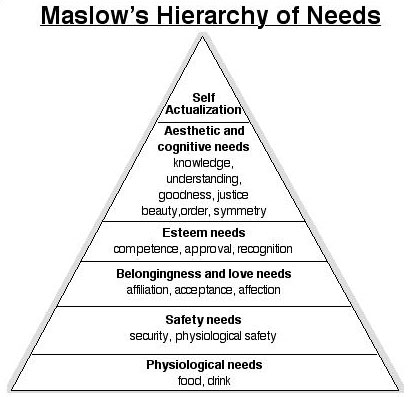

Why should social media be any different? Online or Offline, the user experience and the need for that to be “actualized” takes precedence over all things.
This week for me brought to light what makes social media so great. But conversely, it also showed me or allowed me to share in the pain and sadness of the passing away of someone who made a difference in the lives of many.
Andrew Bourland, the co-founder of ClickZ passed away this week after battling cardiomyopathy, a form of heart disease.
Bourland was also the former publisher and CEO of ClickZ. In 1997, He and Ann Handley, founded ClickZ to cover the Internet advertising and marketing sector.
Andrew Bourland also had Bourland.com, his blog where he covered everything from blogging and email marketing to video marketing and viral advertising. But back in November, he did something amazing; similar to Randy Pausch he used his blog to announce that his heart condition was worsening, stemming from having radiation treatments to treat testicular cancer many years before, and that he wasn’t sure how much longer he might have.
He subsequently had posts from him, his brother and his wife, who all chronicled his remaining time with family and friends and loved ones.
It was painful, it was joyful, it made me cry, it made me smile; but most of all, it dawned on me that this very private time was there to be shared by anyone and everyone. Social media, specifically this blog, had allowed us to share in the life and times of Andrew Bourland. Andrew Bourland and his family had allowed it. They let us in. For me, these are truly amazing times. Thank you for that Andrew.

There are people out there, that don’t like you. I know, shocking isn’t it? For some of you, it might be. In social media we talk about, and write even more about how social media creates these magical relationships of synergy, business alliances, and friendships. But what people rarely talk about, are the relationships that have originated from social networking-that have gone sour.
On the Today Show recently they did a segment about “friending” people on Facebook. And you don’t have to look too hard to find blog posts about people who have written about breaking up via Facebook.
As you should know by now, relationships that are played out through social media channels take on another dynamic. There are many layers. The most prominent layer now being that all aspects of it, are out there for all to see. Warts and all. Sometimes I wonder if part of us wants everyone else to see whats going on. Of course we can “choose” to make it or take it private, but a lot of us don’t. We want others, should things take a turn for the worse, to participate in the drama. We want people to choose sides.
What I’m talking about above are truly personal relationships. But what of.. the business relationships that have occurred from social networking? Or the blossoming relationship? What are the business rules for that? What if your paths cross with many of the same people and your relationship with one of them has just turned sour? What do you do?
How are you going to play it?
Better start thinking about it.
I know I am, because it’s happening to me.
A sweet spot is a spot where a combination of factors suggest a particularly suitable solution. On a racquet or baseball bat, it’s the ideal spot you want to hit the ball. It’s the spot where you have a confluence of things that all align into harmony at once. Below is diagram that defines what I think is the sweet spot for social media.

I have so much to learn about the human condition as it pertains to social media, it’s not even funny. I learn something every day. Today I learned that I really don’t know as much as think I do. Case in point. I smugly tweeted the following:
So I comment on a person’s blog who claims 2 b all about the conversation & they choose to delete it. Guess it’s not about the conversation…
I was thinking that I was right and I was thinking that it might be cute to tweet that if it’s so much about the conversation, then why are they deleting comments? So what did I get back in response? Ken Beaulieu tweets the following:
No. There are times when you have to push back to protect the integrity of your business.
Pretty succinct and to the point, wouldn’t you say? The bottom line is this. My comments, no matter how cute or clever I thought they might have been, brought zero value to the conversation. ZERO.
That person, who I highly respect, who probably has zero respect for me at this point, pushed back to protect the integrity of her blog and a very good blog post. She had every right to not include my snarky, baseless comment.
As I said, I have so much to learn about the human condition as it pertains to social media. In social media, our human condition is there for everyone to see. Regardless of who you are, there is a certain amount of respect that we need to show everyone. I learned that there is no place for ego here.
I had been throwing the following around in my head after meeting with a quite a few business owners and talking with some respected thought leaders in the social media marketing space and I want to know what you think.
As an SMB you need to ask two primary questions when pitched with incorporating some aspect of social media in to your business and they are:
#1 What is in it for me and my business?
#2 What’s in it for my customer?
Simple enough right? But we’re forgetting someone. Someone as critical to the business as the customer is. Do you know who it is? One of the beauties of social media is that there are so many layers, aspects and dynamic components that allow it to address people it all levels of an organization. Including the sometimes forgotten and under appreciated employee.
So Mr. or Mrs. SMB, what we are really saying is that, if social media is pitched or considered then, the pitcher/social media practitioner, should be focusing on 3 aspects of the business:
For the business owner you will want tangible hard core proof of “If I do this, this is what I can expect for my business and my employees and If I do this, this is what the customer can expect or will do, or this will be the customers reaction. It’s that simple.
If you are a social media marketing…person, show the SMB what the expected results will be. Give them examples of either what you have done, or… if you are in the majority and are just starting out as a social media marketing N00b, utilize the many URL’s that are starting to crop up citing examples of other companies using social media components within their organizations.
Here is a list of links that SMB’s can utilize that may help them in at least understanding more of what is going on should they be approached by a “social media marketing consultant” or are thinking about doing it on their own. At the least, you will get a better understanding of what’s in it for you, and whats in it for your customer!
Why Executives Don’t “Get” Social Media This is a good article on executive level mindsets as they wrestle with including social media into their companies.
The Ultimate Small Business Twitter List This is not only a great list but it also includes a list of Orgs. and their employees or Reps. that serve the small business market.
Here is a great link on Facebook titled, Social Media for Small Business that some of you should check out.
Why Social Media Is Worth Small Business Owners’ Time Taking advantage of all the Web has to offer is like eating your vegetables or getting exercise — most of us don’t do enough, and even those that do could always do more.
My friend, Amber Naslund, who now works at Radian 6 has 2 posts that I think are worth reading. here is the first Getting a social media foothold and The social media starter kit. Self explanatory right?
Lastly we’re going to finish with some video. I encourage all of you SMB’s out there to watch it, as well as newcomers to social media marketing. It includes a number of my friends and colleagues and thus, I would put a lot of stock in what they are saying. They are the genuine real deal: Brian Solis, Rohit Bhargava, Tim Ferris, Toby Bloomberg, David Alston, Liz Strauss, and Paul Chaney,
Lastly, let me say this. IF, you are a social media marketer, wannabe, or whatever… At the end of the day, you better do a pretty damn good job of stating your case. Because no one, and I mean no one can afford to screw up right now and the last thing an SMB wants is for them to be your test case!

This is a cautionary tale that I’ve been thinking about for awhile. Having noticed how much social networks and communities have grown exponentially recently, I’ve noticed that people do things within the context of what we consider New Media, i.e. social networks, and then ultimately regret it later.
The evidence is everywhere. We see the demise of relationships, axes to grind, pure anger, mob mentalities, bruised egos, bitterness, love, hate, and fraud all played out in glorious real time and beyond, thanks to digital footprints.
Some groups seem to be more comfortable with this aspect of Web 2.0 than others. Gen Y and millenials are used to, and comfortable with leaving their mark. They’re comfortable with the ability to express free form raw emotion on their social nets of choice. So much so that they take on the characteristics of an animal marking its territory. They do not care about the repercussion of what they do online. It’s all they know and it’s almost expected and assumed by their peers
Why do they continue to push the envelope? Why do they do “it” knowing that there could be major reverb from it? Some do not care and they are looking for the desired reaction and effect.
Maybe for others, they have no idea? I don’t think they do. At least Gen Y and Millenials don’t, nor do they really care at the present moment.
But that’s just one segment, what about the rest of us?
Some of us do it specifically for that purpose, to get under someone’s skin, to challenge and and to poke and prod what people say. Yet they regret nothing and apologize less. But for them, that’s their schtick.
Others do it and have no idea of the ripple effect it may have online. They have zero clue that their actions, their written word, their audio, that video, once it’s online, that content… ceases to be in their control anymore.
You see online, you lose that buffer of physicality. You lose the ability to “take it back”. Your margin to screw up is increasing and you know what? The statement, “Once it’s done it’s done” isn’t true. It ain’t done. You now not only have to deal with “it” when it happens, but you also have to deal with it every time someone finds it. For years to come.
My advice to you is if you want to use social networks as your primary means of communication, be prepared for any and all repercussions stemming from your interactions…. to now be public fodder.

Last night I was talking with Rachel Happe and Leigh Duncan-Durst on Twitter and we were discussing the following statement I made:
Some industries have built in fan bases and thus are naturals for social media implementation, so .. why the delay? Fear? Lack of expertise?
Fear of social media. It’s more prevalent than you think. Sure some will say they are waiting for the true ROI to shake out. That might be true, but I doubt it’s the main reason.
Leigh brought up some great points: “Is it Fear? Resources? Ignorance? Unwilling to be transparent?” She goes on to add without mentioning industries, “that some large orgs. are terrified of the VOLUME of feedback and detractors so much they can’t see upside.”
Can you imagine being so burdened with the fear of negative press or negative reaction, that you, as an organization, are paralyzed into doing nothing?
Leigh concludes: “They are just not comfortable with that level of transparency. Turning a blind eye negates the opportunity to turn around negatives…Treat customers with respect, respond – and identifyadvocates too!
Rachel then adds: I think the biggest inhibitor of adoption of new tools is that people are overwhelmed and don’t have time to play with them. Sometimes I think you have to drag people into a room and make them play around with the tools until they are comfortable.
I couldn’t agree with them more! So lets review this. Are these the things that are holding companies of all sizes back from utilizing social media?
What else can we add to this list? How many of these are really legitimate?
In my attempt to add excessive frivolity to all things social media today, I give you this:

 Direct Marketing Observations