The dumbing down of America

Last week on HBO, they reran  CostasNow, a “sort of” sports oriented talk show hosted by Bob Costas, one of this nations most gifted sports authorities, scribes, oracle and overall mouth pieces for all things related to sport.  One of the segments featured  concerned the Internet and the impact of bloggers, as it pertains to sports. The guests were, Deadspin.com editor Will Leitch,  Pulitzer Prize-winning author Buzz Bissinger, and Cleveland Browns wide receiver Braylon Edwards.

First, let me say that Buzz Bizzinger was so caustic, so adamant, and frankly so foul mouthed in his opinion that the current state of blogging, Deadspin in particular, was taking writing, sports writing in particular, in a direction that demeans everything that he ever stood for, that I had a hard time really agreeing with anything he said regardless of his pulitzer prize winning credentials.

At least I think that’s what he was saying, when he wasn’t yelling and cursing. I was ready for him to blame the demise of sports writing on that “damn rock and roll”! But alas, he didn’t. I’m guessing he’s just a completely jaded sports writer that’s mad that athletes make more than him.

So I sat and watched this exchange and started to think about what has the blogging community, and social media, and really the internet, created? Or what has it taken away? It’s pretty simple to see what is has created. It has created this:

Lots of talking, lots of conversations and lot’s of communication.

But what has happened is that the users expectations are starting to be raised. The user wants to be engaged, entertained and dazzled by the latest technological advance when it comes to communications and media. The days of relying on a newspaper and Time magazine are slowly being replaced by the rise of the blogosphere, the kindle and podcasts.

So are the users expectations rising? Or better yet, are we raising expectations while lowering the barrier to understand and comprehend? Or, dare I say it, are we simplifying the way we want users to get their info? Are we compartmentalizing their intake of information in such a way that it now can be treated as fast food. Information that is gathered at the take-out window. To be digested before you get home.

Funny thing though, the more we as technologists try to simplify things, the more time we demand of others to use the things that will “simplify” our lives. Email streamlines our lives so that we can communicate with our frinds and family. Text messaging so that we can give or receive an immediate response. Our phone allows us to not only call or text but also allows us to go online and do research and or check email! If you’re worn out already and wondering how one folds this time into one’s busy schedule, keep in mind that currently the average American spends 30 hours per month onliine according to emarketer.

If you take into account all of the current activities that a U.S. adult uses the internet for: Email, Local search, IM, blog reading, watching video, and podcasting to name a few-The average internet user needs their info quick and dirty (pun intended), easy to read, to digest and ultimately easy to discard. It can’t be complicated, they don’t have the time nor the patience to wait. If it is any of the former, expect the bounce.

The internet is taking away our patience. We expect our results, our information, to be delivered to us now. What this breeds are expectations in other social settings that might not necessarily be realistic. We wait longer at traffic lights or so it seems, so we run lights that are more red than they are yellow, and for what? Because we don’t want to be late. We grow impatient in a line when trying to check out at a store because the sales person is having trouble with the RFID scanner. We want product now and are unwilling to wait. We expect service now because it’s the way it’s delivered to us online. Fast with no bullshit. If any exists, we are OUT OF THERE.

OUR EXPECTATIONS OFFLINE ARE NOW IN LINE WITH OUR EXPECTATIONS ONLINE

THEY’RE UNREALISTIC!

When they do not meet those expectations, we complain. Why are our experiences online so unrealistic? Because the online world has eliminated the human element. It delivers what we need and want instantly. That is not reality.  Online, the old adage “Good things come to those who wait”, never meant less that ever before.

In turn, if we can get what we want without having to deal with a human, that suits some of us just fine. Some desire as little human interaction as possible. Coupled with our desire to speed up things, is the desire to simplify. These 2 elements have prompted companies and developers to try and speed things up by over simplifying the processes involved in creating the speed. In essence THEY ARE DUMBING THINGS DOWN

Thus the more a developer can dumb down the learning curve by not sacrificing the performance of the app, the higher the chance that it will be embraced by not only the casual user, but also the development comunity as well as investors. Investors love something that is sexy and easy to understand or can be pitched in the elevator. If it can, and it’s fast and solves a problem, and speeds up a process, it’s a winner.

Tim Ferris comes right out and states that he receives 500 to 1000 emails a day…

To contend with this, I have virtual assistants in Canada and sub-assistants in Bangalore who filter my inboxes using processing rules in Google Docs. Connected via Skype and compensated via PayPal, this team translates a 10-hour task into a 20-minute phone call.

Simplification? Hardly. E-mail has dramatically increased the number of coping mechanisms required to handle communication, the net complexity as compared with previous alternatives.

“If the promise of technology is to simplify our lives, it is failing.” The wording of this proposition is tricky. To quote Bill Clinton: “It all depends on what the definition of is is.”

Ironically,  Tim is the author of the 4 hour work week and thus may or may not be a good proponent of encouraging more humanistic encounters with a hint of challenging the intellect of the masses. With that being said, Seth Godin puts it pretty bluntly when he says, “When you dumb stuff down, you get dumb customers.”


Why Linkedin is growing so fast.

As first reported by Mario Sundar, Linkedin grew 319% last year.  And to some this seems almost surprising. But if you really look at what Linkedin does, it brings more to the table than a hookup site like Facebook does. Does that surprise you that I said that I said that? Talk to your average college student and ask them what they use FB for. They might not admit it but it’s a mechanism to try and hook up without having to actually speak. it lessens rejection and makes eventual physical interactions less stressfull and less in your face. People on Facebook when talking to others, will say things they would never say face to face, and thus the reason FB is so popular with the 18-24 demo.

Now some would say that Linkedin’s growth could be attributed to the growth of social networking sites into demographics that traditionally stay away from social networking. As Nick Oneill wrote in Social Media Today, the Boomer generation has an increasing number of people on social networks. Users over 45 now account for a whopping 31 percent of LinkedIn’s user base.  But Linkedin is NOT a boomer-centric site. That’s not what is spurring its growth.

I don’t view boomer’s as a traditional user of Linkedin per se, I look at boomers as PART of the mix that is the sum of the parts that define Linkedin’s user base.

What’s happening, is that business professionals are  a) starting to see the value of being transparent and b) beginning to utilize the power of  online networking and c) understanding that social media can be used in a way that does not construe them as being too young, too trendy, too ignorant, too old, too un-tech savvy, or too uncool to their peers. They are comfortable with it, and they are now sharing that comfort level with others. So the effect has been viral! And…here is the last part no one will admit.

People are addicted to watching their number of connections grow. They are obsessive to the point that I wouldn’t mind taking a straw poll as to how many times a day the average LI user logs in to look for people, add people, and or reading about someone, asking a question, or answering one.  The question would be: How much time do you spend on Linkedin each day?

Case in point: With other demographics, when they get together, the first or last question out of their mouth might be, “Are you on Facebook?”  Whereas, now because of the prominence of social networks, that same general social networking question now resonates differently and has a more meaningfull response when professionals ask each other, “Are you on Linkedin”? 

Linkedin’s creation has allowed some of the old school traditional business processes to be bypassed, such as: the exchanging of business cards, leaving voicemail, sending intro-letters, putting together press kits, creating static web pages, mailing out brochures, and giving away swag. Anything to connect. In favor of a clear, non invasive, low stress evaluation of someone and their company. The ability to reach out to that person and their company now takes on a whole new meaning. Introductions to people and their companies now can be done efficiently and business relationships now have a  pre-existing comfort level that is in place between parties who actually may do business together. A streamlined engagement. Look at it as “hooking up” the professional way!

Micro Interactions

David Armano of Crtical Mass has a blog that I really enjoy. It’s called Logic+Emotion. Today I just ran through a great slide show presentation that was derived from something he said:

“We live in a world where the little things really do matter.  Each encounter no matter how brief is a micro interaction which makes a deposit or withdrawal from our rational and emotional subconscious. The sum of these interactions and encounters adds up to how we feel about a particular product, brand or service.  Little things. Feelings.  They influence our everyday behaviors more than we realize.”

6 degrees of social randomness

I saw this post in Adfreak about a social networking campaign on Facebook to combat the spread of a particular STD. The kicker was the campaign was dubbed “Spread it to beat it”…huhh?

Now here is a niche that no one will ever fess up to but all have travelled through at some point in their business lives. Check out EthicsCrisis Here’s an excerpt…

Clueless!

I had received an e-mail from an account manager whom I loathed for her inability to do her job correctly, even at the most simple level. After receiving this ridiculous e-mail from her, I wanted to send it to a peer of mine whom I had vented to to witness firsthand just how bad she really was. I flamed intensely on the forward, and then sent it off — only to realize that I had REPLIED to the e-mail, not forwarded it.

Do you ever want to draw on the back of business cards? Then check out Gaping Void

Guess what? The Wall Tweet Journal has contacted me!

Scott Van Pelt of ESPN has started to hit his stride at ESPN. He has now joined MIke Tirico as a cohost in the afternoon, as well he has his own hour. Good for him, he has the humor and knowledge to make the most of his time on air. FYI- Last night Lebron was fouled at the very end of the game and Caron Butler walked. Sure makes for some fun before dog days of summer begin. And yes Van Peezy, Deshawn is a punk. At least on the court.

Scott Van Pelt


Im reading a great blog at the moment by Gavin Heaton and eveeryone should hop on over when they get a chance and give it a good read!


16 links that I need to share on Wednesday April 30th 2008

It’s wednesday April 20th 2008, so I think it’s important that we keep it light, interesting and still add a bit of tech stuff in todays post. First off lets go here:
The world’s most famous colossal squid was still thawing yesterday in a New Zealand museum laboratory as researchers prepared to measure it, probe its interior, and take samples. It has a huge eye.

Here’s how much of a snooze fest was American Idol was last night, I started watching the Pittsburgh Penguins versus the New York Rangers hockey game!

How can they have the contestants singing songs we haven’t heard… ever?  Or better yet, songs our parents barely remember? And they wonder why the ratings are starting to slip. Perhaps we’ll look back on Neil Diamond night as the night the show “jumped the shark”. 

For the uninitiated, the term jump the shark refers to when a tv show tops out in popularity and starts to fade in to Bolivian-as Mike Tyson once said.. The origin of the term comes from an old episode of Happy Days, where Fonzie decides to try and jump over a shark on a pair of water skis…nuff said.

On Monday night I caught the intro to Deal or No Deal where they had Storm Troopers as brief case holders, Darth Vader as the banker and Chewy as a cheerleader…Can you say JUMP The Shark?

jump the shark?

This just in: If you’re young and have zero cash, then you probably use Yahoo more, and if you are rich and older, then you use Google! Say what? According to Hitwise the stats bear this out, check the matrix.

spend it like ya got it!

According to Uptrends, there are some social networks out there that need to get their act together. This is in reference to the amount of time certain social networks were down, as in “Page not found”. Not a good idea to be anti-social when your business model is..ah hem a SOCIAL NETWORK. Two of the biggest offenders were BlackPLanet.com and Reunion.com. BlackPlanet was down for a total of almost 21 hours in the past 30 days and Reunion.com, almost 13 hours. Uptrends, is one of the leading remote website and server monitoring companies that tracks uptime of some of the most popular social networks.

My plan for optimizing some terms for the sake of SEO, specifically the term, direct response marketing, seems to have worked rather well. I’m not shouting it to the rooftops, just merely giving myself some props for having a plan, sticking to the plan and watching it work. Right On, Me! It was not an easy term, but it wasn’t like it was mortgage lenders either, but the results have been favorable.

On a sports note, The Spurs are still the champs until someone knocks them off, though the Lakers are really looking good. The Chris Paul gang out of New Orleans is a really good story this year, and I’m glad the Rockets are not laying down. Are the Mavs ready for an overhaul? The New York Times thinks so.  Looks like the J kidd trade might not have worked out. But do you fire the coaches? Same holds true for the Suns and Shaq? It’s been fun to watch snippets of the games each and every night. Looks like we might see the Pistons advance as well as the Cavs. Am I the only that thinks the Wizards are turning into a bunch of punks? Don’t think I’m right? read this post by Mary Schmitt Boyer  One last thing, the TNT announcers on all of these games have been fabulous! Major shout out to them.


Seth Godin must see video

In a world of too many options and too little time, our obvious choice is to ignore the ordinary stuff. Marketing guru Seth Godin  awhile back, spells out why, when it comes to getting our attention, bad or bizarre ideas are more successful than boring ones. And early adopters, not the mainstream’s bell curve, are the new sweet spot of the market.

Would you rather have a budget for offline marketing, online marketing or sales?

Below is a conversation I had with Fred Yee, President of ActiveConversion/FoundPages in regards to a question that I had posed to the Linkedin group. The Question Details are below, but the main question is in the title of this post.
——————–

Me: I once had a colleague who told me he rather would have a 2 sales people rather than x amount for marketing. I had another colleague or vigorously defended marketing and branding as something that could not be ignored. It ended in a stalemate. Is it possible to have one without the other and still be realtively successful?

On 4/23/08 11:50 AM, Fred Yee wrote:
——————–
Marc, I think I understand your question and although the ‘mix’ is important, and having all is important, I may have your answer if there is only one allowed.
Today I would say online marketing. You can do a lot with a website, search marketing and email marketing, which is low cost and bring leads in, so that even non-sales (owner, manager, admin and technician even) can engage to produce sales. It’s also why Google has 800,000 customers now…
Offline is good for branding and credibility but short on producing tangible sales. Sales people can close but they need leads and without decent marketing, it’s expensive sales.
Of course, there are situations and industries where online marketing doesn’t work that well or is outperformed by the others but in general I have noticed that it works well for most.

Links:
http://www.activeconversion.com


On 4/23/08 12:52 PM, Marc Meyer wrote:
——————–
Fred, I would have to agree with you in that given all of the online productivity tools that are out there, the advent and rapid acceleration of user generated content and the ability to leveredge them at little or no cost, an inhouse team that consists of everyone from the folks in HR to the folks in IT, to the people down the hall in management, all have the opportunity to brand and market and create sales leads and marketing materials and opportunities. Which means that a collaborative effort and a sense of ownership can do more for growing a company selling a product than a single marketing department operating out of a vacuum, an autonomous sales force working without sales leads or a management team demanding results without a budget.

Thanks for responding to a great thread.

Marc, what can I say? Having been pained by this for over 15 years, I totally agree. Great minds must think alike! Fred.

Marc

11 websites to use, share and send to your friends this week.

I know you get tired of going to the same sites day in and day out hoping for something other than your usual blah blah experience. It could be your blog you go to and you’re hoping for that killer response to your post that you labored on for hours. It could be a new connection in one of your many social networks. Or maybe it’s the hopes that some of the 129 emails in your inbox are actually from people you know! Instead of the usual plethora of Nigerian kings, male enhancers, and cheap software emails.

Nevertheless, here are 11 websites that you might actually bookmark and go back to at least more than twice. Who knows? You may even bookmark and use one or two of these on a regular basis!  So Here is your latest weekly List:

RateMyDrawings Might be a good one to try out with the kids or maybe you might want to use it yourself.

Yapta This one’s timing might be better than ever. Track airfares and save money!

BossBitching I had no idea there were sooo many bad bosses out there! How did they get the jobs in the first place?

Want to access your pc from your phone? Then check out Soonr Over 600 handsets supported, including all major feature phones and smartphones.

Whenever Google buys something it must be good, so maybe that is the case with Grand Central With GrandCentral, you can be reached with a single number, answer a call at any phone you want, seamlessly switch phones in the middle of a call, and even know whether a call is important before you take it. Cool!

How bout free wake up calls? Ok I know we all don’t travel that frequently, but still good to know about Wakerupper Because it does more than just wake up calls.

I know I could use something like this ProQuo which stops junk mail and protects you from ID theft!

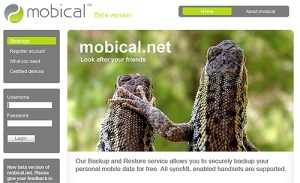
This company I could have used back in December Mobical allows you to securely backup your mobile data for free.

Here’s a quick way to send files, pics, vids and music to your cellphone with Beam it up Scotty

Now is a good time to be watching where your money is going, try this free app out Mint

Lastly, this site lets you funk things up a bit Be Funky

Social Diversity on Social Networks

First, let me talk about how I just tried to publish this and poof it was gone, so I am having to rewrite it. But it’s also giving me more time to think about whether social diversity exists online in social networks. My gut reaction is that online social networks are direct reflections of the offline world and thus we run with our own pack and very seldom do we like to step out of the bubble. Heres a quick test: Try doing a search on social diversity in social networks, there are no results or better yet, nothing with any substance. 

Although in doing an initial search, I did come across an interesting site called Mixyourworlds. The title should say it all but Mixyourworlds goal is to “put the fun back in racial profiling”. I say that tongue in cheek but they are dead serious. Mixyourworlds wants to help its members create diverse friend groups while helping them realize and change their racial biases. In fact it’s tagline is “Can racial profiling be fun?”

A noble if not challenging task to say the least. Especially when there are many many other larger, more well known social networks out there. Yes but are they diverse? That’s tough to say. But interestingly enough, when searching for friends on Facebook for example, you cannot search based on race. And why should you? or should you? I understand the premise. We want you to search on people not race, creed, or color.  Which means that you can search on people, just people… People with like minded interests but who may have a different skin color or ethnic background. You won’t know until you see their picture. Then you’ll make your snap or accelerated decision.

 But if we like to hang with people who are like us, another question arises, Do mixed race, mixed ethnicity relationships work better in social networks? Do they have a better chance of making it?

They do if the social network is niche based. They might have a better chance to flourish. Businessweek broaches the subject in the Rise of Niche Social Networks But really what we are talking about are 2 types of social networks here. We’re talking about the pasty white networks that are Facebook and MySpace and then all of the “other” social networks. Mixyourworlds’s “racial profiling” for instance, comes from tracking the make-up of users’ friends on the site and pointing out racial attraction preferences and biases. So if your looking to expand your social base beyond what MySpace and Facebook offer, then the thinking is that “yes there are plenty of other niche sites out there to meet exactly what you are looking for”. I know that is a direct conflict in trying to create a harmonious online social networking experience, but that may be more of a reflection of 21st century society than we care to admit.

After thinking about this long and hard, I decided to throw the question out to my Linkedin colleagues a few weeks ago.  The question wasn’t geared towards diversity in social networks per se, but you will understand the context as you read further. Here was the question:

Can social networking help the poor and the disadvantaged?

On the surface social networking seems to be reaching the far corners of the universe. But are the poor, the disadvantaged and even minorities, operating on an even playing field? Do class distinctions hold steady even in social networks?

One of the better answers came from Jason Breed from Neighborhood America:

Good question. I will answer in a couple of ways.
1. I’m making a couple of assumptions – it seems the spirit of your question is genuine and I do not believe you are trying to insight any prejudice or tensions by grouping anything together, you simply want to know if and where social nets are leveling the playing field and are there still inequities. the other assumption is that by “social networking” you are referring to digital social networking. In both of these cases, I”ll give you some examples where it has worked.
2. Case Studies (and a couple of different ways to think about it) – MOBILE – adidas has a campaign running “Basketball is a Brotherhood” targeted to basketball players at the street level or street-ballers. there is a mobile component to this campaign that lets you interact with any of the 5 sponsored players like T-Mac, KG, Chauncey Billups, etc. They have received over 100k people who have opted in via mobile that is a series of ongoing interactions. Consider Mobile as a way to engage populations who are less likely to be online or who want to connect whenever, however they want to.
The second example is the Government (believe it or not). Specifically working in the Miami area, the transportation department is mandated to reach out to citizens and provide fair access to information on any project and specifically on a road project that spanned 7 different neighborhoods of varying socio-economic and demographic residents. Using the web, the department was able to create dialogue with residents who were comfortable using the web in this way. The benefit is they were able to focus their limited amount of employees to meet face-to-face with more of the people who did not want to communicate via the web. This is in-direct however very effective use of social media in the gov sector. Who would have thought, right? I have dozens of other examples too. Hope this helps.

A great response that touches on a few points there. The most important being that social diversity can exist on may levels in online social networks, and is and can be accessible by more than just the privledged, affluent, white middle and upper class. Tom Ford, CEO of Town Connect puts it more succintly:

Interesting question. The public Internet and sites like MySpace remove economic, class and social barriers. Since anyone with internet access can interact with anyone else with Internet access.  People are communicating online with others that they would never interact with offline.

In the U.S, class distinctions are determined by wealth, income, education, and type of occupation.

Although Linked In enables greater interaction between classes (CEOs connecting with entry level workers) it still remains a social network for educated, higher income, knowledge workers.

Facebook began as a network for class distinction based on education – each university was their own network. The students at Harvard weren’t friending the kids at Podunk State in rural U.S. Today, networks are still established based on class distinctions – corporate, geographic, etc.

Our research and experience with TownConnect indicates people feel safest in social networks in their local community and with those they know. The class distinction in our network is based on where you live- which implies a level of income. Online social networks are mirrors of offline social networks, just accelerated.

Accelerated relationships. Couldn’t have said it any better than that. So do accelerated relationships promote the possibility of social diversity? No, if anything they imply that you make a quicker decision based on quick touch points, like ASL. People cut to the chase online and probablly as much do the same when reading profiles. You read a profile, you look for certain things. If you do not have access to a profile then what do you do, you look at a picture. Then you are going to make a decision based on that picture and nothing else. Looks like an accelerated decision is at hand.

Bottom line, social diversity in social networks probably has a better chance of succeeding online than it does offline since you can go out of the hood without the usual fear and backlash that accompanies someone who does the same in the offline world. Bottom line: We choose to run with our own pack even in the online world.