Children and Facebook-15 links to Help Parents Learn

This is where my head is at right now. I’m listening to the pushback from Facebook users and parents who are concerned about Privacy. I’m compiling an exhaustive list of blog posts and articles related to Facebook, children, and privacy and how it impacts all of us.

Stay tuned for the wiki. In the meantime, here are 15 links to posts that address the issues that dominate not only my thoughts and hopes to see something done about Facebook’s complete disdain for its users; but also what keeps parents up at night… Some of the links here are to not only open parents eyes to what they are forced to deal with right now, but also in “how” to deal with it. I hope it helps.

Facebook: Children evade social websites’ age limits

Social media create new bullying issues for schools; Collier forum set for Monday

Too young for social networking?

Facebook, states set bullying, predator safeguards

How can parents access their children Facebook account

What is Facebook Doing to Protect Children from Sexual Predators?

Facebook ‘fails to protect children’

How To Monitor Children On Facebook

Should you be Facebook friends with your children?

Facebook urged to add ‘panic button’ for children

Facebook May Share User Data With External Sites Automatically

The Big Game, Zuckerberg and Overplaying your Hand

NYU Students Start Privacy-Minded Social Media Site

Social Media Parenting: Raising the Digital Generation

Why Facebook Can’t Be Trusted

There is no point in using Twitter for your business. Wait, Yes there is…

Given some recent Twitter data that shows that most people don’t actually “use” Twitter-Why in the hell should we sit here and tell SMB’s to use Twitter to listen, to monitor and “be” where there customers are when a) Their customers might not be on there, b) They don’t have time to use it and c) Those customers or competitors that might be using it are using it wrong and d) There is essentially nothing there. So chances are, you may not see the point in using Twitter and I don’t blame you.

I can excuse SMB’s for claiming that they don’t have time, because I know of all of the things that sit on their plate, but to be honest, I can also see why they might be skeptical to use Twitter. Turn it on- and it looks like a sea of useless information.

I have a suggestion though and I have a reason why things are the way they are.

If Twitter is not working the way you want it to or expect it to, or in the way you were told it would work…

Change it.

If you’re looking at the state of the Twittersphere in your local area and it truly is pathetic, and it’s giving you cause to think that maybe it’s not worth your time.

Change it.

Be proactive. You start the conversations! Why no be the one to lead and to “make it work”?  You may have to add hashtags that matter. You may have to do more than just pimp your stuff.  But if  you were expecting to “turn on” Twitter and see this wellspring of opportunities and conversations and companies and customers talking about your company-Guess what? It still may be too soon. It may have to start with you. You may have to be the early adopter because there are just not a lot of people using it in your area or wrapped around your business, your product, and your company.

You may not have a choice. But that does not mean that Twitter does not “work”. You just have to work a little.

Why Twitter Still Matters

Recently I read somewhere that the demise of Twitter is imminent and all anyone wants to talk about anymore is Foursquare and Gowalla, 2 shiny new LBS based companies that are reeling in new users by the bushel.

Sure I’ll talk about and use Gowalla and Foursquare, but that doesn’t mean that Twitter is no longer relevant though. In fact what this  simply means is that those 2 aforementioned companies have merely carved out a niche for themselves in a space that Twitter doesn’t necessarily play in, though they have added an LBS type feature as of late.

But let me cut to the chase. let me tell you why Twitter still matters. It occurred yesterday and I’ll break it down for you. Watch this quick clip and we’ll talk about it after the jump.

First of all, this is  NOT the first time this has happened where Moore has stepped up and “helped” someone via Twitter, but it’s magnified because it was Demi Moore and Nia Vardalos (another actress), but it could have been anyone who stepped up.

The point is, a life was saved because someone sensed that someone needed help and they took action, and they used Twitter to do it.

In today’s society a lot of us have become spectators to everything; and we prefer to keep it that way. Rubber necking our way through life and content not to get involved. Couple this with a general sense of apathy and what we have become is… a nation of desensitized onlookers.

So why does Twitter still matter?  because without it, this person might have ended their life if not for 2 people that cared to listen, got involved, and called the authorities. Oh and by the way, they just so happened to be celebrities. Twitter still matters because of it’s reach, it’d depth, it’s breadth and the potential of hitting it’s designated audience.

So what other ways is Twitter making an impact on people’s lives?

Oklahoma City uses Twitter to notify people of impending Tornadoes

The Red Cross uses its Twitter page for disaster and preparedness updates

The American Cancer Society tweets about cancer research, specific types of cancer news, and information.

The Leukemia & Lymphoma Society provides information about blood cancer, research and events that readers can get involved in.

Share Our Strength is a national organization that works hard to make sure no kid in America grows up hungry.

Without Twitter, these causes continue to struggle for visibility. But now, because of social networks, in this case Twitter, they’re able to have an impact and make a difference on the lives of thousands of people. I know this is just a handful of examples, but I wanted to point out to those that think that Twitter might not be relevant anymore, you may want to think again.

18 reasons a social media snake oil salesman might want out

Last week I wrote a post that got a tremendous amount of love from the folks over at social media today and rightly so, it was all the reasons why I love social media.

But what if you were sick of it? What if you were a snake oil salesman trying to cash in on the social media phenomenon and you were starting to realize that this social media stuff sucked? What might be your reasons for getting out and jumping into real estate short sales or something?

Your excuses, er reasons might look something like this:

1) You didn’t realize how much work it took

2) You realized that people aren’t into your “get 200 Twitter followers” for $19 a month program

3) Your social media certification classes didn’t really take off like you thought

4) Stealing other peoples content was hard work

5) Spamming hashtags wasn’t driving any business

6) No one is calling you or responding to your sign up landing page with exclusive offers and social media tips

7) People were not sharing your viral videos that you stole created

8. Strategy? What strategy?

9) The trusting client is pissed because the Twitter account you created for them with the 30 tweets, 30 followers, and the 5000 people you’re following, hasn’t really amounted to anything

10) There was too much to learn

11) You’re tired of RT’ing others on your 6 month old Twitter account

12) You never figured out what that Facebook vanity URL thing was

13) Case studies? On what?

14) Social media is dead anyways

15) You hate creating content and no one was coming to the blog

16) Social Media ROI isn’t important

17) It doesn’t work

18) When someone asked you about Gowalla and Foursquare you looked at them like this…

Share this Post

This weeks #SocialMedia Tweetchat Topic: Sentiment Analysis-Opinions Matter, If Only You Knew Which Ones

active_listening

Listening is the first step in social media (everyone says so).  Not only do you have to listen, you have to listen for 6 months or more before you are allowed to do anything.  Just ask the experts!

Frankly, I think everyone says that just to buy a little time before they have to really figure out what to do with social.  At any rate, most of the people who are told to listen have no idea what to listen for or who to listen to.  I’m not going to get into the depths of all things social media monitoring because that would take all day.  So let’s focus a minute.  

  1. You want to listen for mentions of your company, brand and top executives
  2. You quickly determine there is no way to manually search every blog post, tweet or comment on the web so you turn to automation
  3. Yeah, now you’re tracking buzzzz, but what does it all mean?
  4. So you start running reports and determine they are inadequate at best.
  5. Now you’re back to listening again but still not sure what you’re listening for.

 There is a word in the industry called “Sentiment” that is used when trying to determine a person’s attitude.  Online it’s a digital attitude and you only have text to go by.  No voice inflection.  No hand gestures or facial signals.  Just a bunch of words (or “noise” as they call it in the bubble) with little signal.  The challenge, after aggregating all of the buzz or mentions of everything you are tracking, is to make sense of it all and to make it actionable back inside your company.  So the sticking point here is whether or not you can use automated analysis to provide sentiment or if it has to be all human interface.  For any local or small business, human processing of sentiment might be reasonable.  However with any size at all, you would need a small army to determine if people liked your new product or enjoy working with your company…or would you?

If you ask 10 people how to measure sentiment, you will most certainly get 12 answers (yes 12).  The popular themes of managing sentiment revolve around polarity and intensity.  Polarity meaning either good/bad, positive/negative, like/dislike, etc and intensity meaning the volume or amount of mentions.  These are not wrong by any means, but I use a little different formula and you might say it’s probably for different purpose.  I like to consider the following:

  • Mentions – which is broken into volume, intensity and opinion (polarity)
  • Influence – of the person it comes from. How many followers, how often they interact (like a TwitterGrader)
  • Severity – of the content itself. “X product just saved my life or killed my brother” would be Sev1, where “Boss caught me goofing off and fired me, X company sucks” would be low severity.  Further defined by a direct vs indirect mention and context of the content.

OK, try managing that formula through reports.  No way, Jose!  And, by the way, I usually change what I am monitoring (at least the focus) to match what I am working on.  There are companies who are working on ways to automate forms of sentiment through natural language processing and machine based or community based learning.  They have their claims on successes and what they have may work for a lot of people in a lot of situations.  It has to be an individual call.  So how do you know what’s right for you?  That’s where this week’s moderator Katie Paine comes in.  Katie, affectionately known as the “queen of measurement”, spends most of her day answering these questions for her customers.  She will host our next chat with the following topic and questions:

TOPIC: Sentiment Analysis: Opinions Matter, If Only You Knew Which Ones

Q1:  How do you define positive sentiment?
Q2:  How does that impact your organizational goals?
Q3:  How do you know that what you are measuring matters?

Please join us Tuesday 02/16 at noon est and become part of the conversation.  Learn insights and have an opportunity to capture Katie’s attention for a solid hour.  Follow along using #sm47 or simply go to our LIV

Posted via web from marcmeyer’s posterous

This weeks #SocialMedia Tweetchat Topic: Destruction of the Media Industry: Will We Be Better Off In the Long Run?

———————

tough-times-newspaper

Laying out the fundamental issues and challenges in a post has become an integral part of the success of our weekly events.  Usually I produce the post and the moderator comes on Tuesdays and facilitates the discussion.  This week is an exception.  Our moderator, Paul Gillin, has delightfully taken the initiative to not only come up with his own topic, but to construct a post as well.  The following is the guest post by Paul Gillin:

As we head into the second decade of the new millennium, it’s amazing to think how much has changed in such a short time. In January, 2000, few people had heard of Google.  Online advertising was banners and e-mails.  Big media brands dominated the Web. US newspaper ad revenue would hit record levels that year.  Newsroom employment would peak in 2001 as newsstand sales of the top 100 magazines approached 30 million.  No one had heard of blogs.  People used mobile phones to talk.

Fast forward to 2009.  Last year, people spent six billion minutes on Facebook, downloaded one billion YouTube videos and logged over 1.4 million blog entries every day.  The iPhone became the first mobile phone to be used more for data than for voice.  The Internet became the second most popular news medium behind television.  Wikipedia posted its three millionth article.

Meanwhile, US newsroom employment fell to a 25-year low and magazine newsstand sales dropped 63% from of their 2001 peaks.  Reader’s Digest declared bankruptcy.  Comcast said it would buy NBC.

The statistics go on and on. In just 10 years, our century-old mass-market media model has given way to a new structure dominated by the economics of one.  Customers now take their opinions directly to the market.  Woe to organizations that don’t listen.

The contraction of mass-market media has brought plenty of pain.  Tens of thousands of media professionals have lost their jobs in the past two years, crowdsourcing has sent some professional fees into a tailspin and veteran marketers are under threat if they don’t “get” social media.  But is this pain necessary, even beneficial in the long run?

Media has historically been one of the least efficient disciplines on the planet. It’s a profession that declares success if only 97% of its audience ignores an ad or tosses the mailer into the trash. It gains one customer at the expense of annoying 50 bystanders. When department store magnate John Wanamaker said half his ad dollars were wasted, but “I don’t know which half,” he was being generous.

The new Internet has flipped the economics. As media control has passed from institutions to individuals, waste has begun to be worked out of the system. The cost of reaching a targeted customer will only decline in the years to come.  Sadly, efficiency will also devastate those industries and professions that thrived on media’s historical inefficiency.

There’s no question we’re in a period of media destruction, but is this a necessary precursor to a better world?  Today, everyone can be the media.  That means we have unprecedented access to information from all points of view, but we’ve also lost our sense of whom to trust.  Is ubiquitous access to unlimited information a blessing or a curse?  What will we be saying about his period a decade from now?

———————

That’s a great foundation for this week’s topic.  I’ll add a couple of thoughts directed squarely at the corporate side of this discussion that relate to content, trust and brands.

Today anyone can produce content and distribute to a potentially sizeable market.  The capabilities are ubiquitous and the cost is next to nothing.  With so much content now available, many forms of content quickly become commoditized and thereby become almost irrelevant.  With that, think about your company for a minute and the brand/s you represent.  These brands are usually strongest when consumers view them as a resource for their specified purpose whether it’s household cleaning, motor oil lubrication, exercise equipment or anything else. 

Since commoditized content is counter-intuitive to your brand strategies, aggregating stuff (content) just so you have more stuff does not fit with most corporate objectives.  Whether it’s for your customers, employees or partners, you want them to come to you as a resource for trusted content rather than as an aggregator of everything. 

Harnessing appropriate and relevant content as a resource for your customers / audience is becoming a significant differentiator in the market. 

Topic:  Destruction of the Media Industry: Will We Be Better Off In the Long Run?

Q1:  Does the proliferation of new media make us more informed or just more confused?

Q2:  Can businesses and institutions legitimately fill some of the trust gap that’s been created by the collapse of media institutions?

Q3:  Can armies of bloggers and citizen journalists fill the void left by the loss of media institutions?

So the chat will take place Tuesday 2/9/10 at noon EST.  Participate by following #sm46.

Posted via web from marcmeyer’s posterous

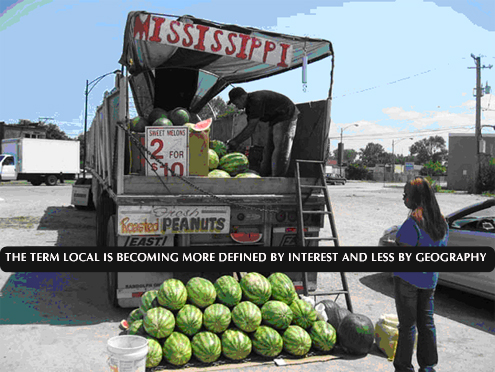
Social media is forcing us to operate in the now

We have our memories; and we all have a future that we look towards, but what we have right now is now. Social media provides us with, and allows us to provide, that real time data stream of what is happening now. Today. This moment, this hour, this minute.

We connect on various social networks with people who we have shared our lives with in the past. We connect with folks who we share common interests with in the work place, but it all happens in real time. We share our lives now with our family and friends as it unfolds. It’s immediate. We react, we create, we comment. In the moment.

These interactions are going to become more defined, more finite and more micro as we hurtle forward.

And I’m OK with that.

Social Media for B2B-10 links for the week that was in Social Media

Last week seemed to be the week to talk about social media and B2B. And rightly so. You see, THAT is the niche that all marketers and consultants need to be focusing on right now. Why? Because B2B is focusing on social media. The impact of social media on B2C is obvious, but B2B is starved for information, case studies, consultants that know what they are doing and knowledge. Most don’t know in what direction to head, or where they should start.

My word to you, point your efforts towards B2B. In the meantime, here are some links that may make you better at what you do, four of which are about…social media and B2b.

1) First up is a fun site. This site is so chock full of wisdom its not even funny, well actually it is, but check out Tweeteorites

2) I couldn’t have said it better than this: Using Balsamiq Mockups feels like you are drawing, but it’s digital, so you can tweak and rearrange controls easily, and the end result is much cleaner. Teams can come up with a design and iterate over it in real-time in the course of a meeting. IMHO, this is bloody simple and easy to use.

3) We cannot stress enough how important it is to engage but here is a post that stresses how important it is to, yep you guessed it, engage and also. how to win. How to Fail at B2B Social Media

4) Speaking of B2B, forget what you just read and read this. Forget Facebook and Twitter, For B2B, it’s all about Linkedin. How many of you currently use Linkedin in your social media marketing/marketing efforts?

5) In my humble opinion,  some really smart women get the short end of the stick in our business. However. thanks to Lee Odden, they are getting some nice recognition in this post of 25 women who rock social media. I’m happy to say that I know 3/4 of those mentioned on this list.

6) Ever heard of Shamable, the no BS social media guide? Me neither until last week. Some good content/writing here.

7) Remember when I told you to forget about Facebook? I lied. Again. New Study Reveals Facebook Better Than Twitter for Marketers So another question to you: Are you using Facebook as a marketing tool? If so, in what way? How are you measuring?

8. Buzzom has some nice analytics tools and some cool graphics. Don’t worry it’s free.

9) So all of that B2B stuff probably has you confused on what you should do right? Stop, go, tweak, advance slowly, what is it? Well maybe you should read this Forrester post on Social Media’s impact on B2B marketing budgets.

10) Lastly, I Love the concept of Twitterfall but the interface sucks.

Take all of these posts and share them. Learn from them and then do your thing. Lastly, make sure you have fun doing it. Peace.

The Confluence of Social and Search

When defining the next big think, I am never surprised how much mobile, search and social continue to loom on the horizon. In fact, if you look at what’s happening in Japan it would boggle your mind.

Three-quarters of Japanese social network users access the sites only from their mobile phones.

Couple that with Google buying AdMob for $750 million and you can easily see where this is all heading.  But as the barriers to search and social and mobile continue to be broken down, I cannot help to think that the following is not true to some degree…

This weeks #socialmedia tweetchat topic: The Future of Socialnomics

social-media-revolution

Social media: The most important change in business or the biggest waste of productivity?  Looking back, 2009 brought about some better examples of the value that social media brings to businesses yet social is still very much an unknown quantity to executives and hard to execute by practictioners.  In short, it comes down to the economics of social media or, Socialnomics.

In order for social media and social networks to be truly transformational in the corporate world, they need to show value.  Many of the efforts of 2009 were experimental while there were a few glimmers of hope including Ford Motor Company and the acquisition of Zappos (a buisiness built almost entirely on social media).   We have discussed the need to move from campaigns to conversations and the importance of hiring an agency that has the skills to best serve your company.  For a better understanding of some metrics, Erik Qualman has put together a widely viewed video on the idea of socialnomics. Socialnomics 09

Most of the digital experiments using social media for businesses has happened on two primary consumer networks: Twitter and facebook.  In looking into the future, what will be the goto networks next year?  What does it take for these networks to entice companies?  It’s apparent that size does matter.  How about quaility though.  Does it matter if the digital network has elements of quality without the quantity of users?   Consumers are using social networks to connect with old friends and get access into “a day in the life of” whoever they follow.  Will that be enough in the future though?  What will consumers require out of their digital interactions with brands?  So many questions and not enough answers.

To explore the value and economics of social media we went to the source.  Charlene Li has been the source of information for many of us since her days at Forrester, her bestselling book Groundswell and now with her company Altimeter Group.  Charlene has influenced corporate executive boards for many years and this week we have an opportunity for her to help shape this discussion.  So what does 2010 and beyond bring for the industry?  That’s what we will discuss:

Topic: The Future of Socialnomics

Q1: What social networks will prevail in 2010?

Q2: How will consumers use them in the future?

Q3: What will the value metrics look like for consumers / businesses?

This week’s chat will take place Tuesday December 15th at noon EST.  Follow along using #sm38 or on our Live site.

Posted via web from marcmeyer’s posterous