The Implied Participation of Social Media

If you’re new to social media marketing, you might feel like you’re a little late to the game. In a sense, if you are new, you are a little late. However, fear not, there are some who have actually been slogging through social media so long without any discernible results that they might as well have started yesterday. What is the reality? There is not much of a difference between you and them.

Two questions come to mind however. Why in 2011 have some waited this long to do anything with social media? And why does mediocrity prevail for those marketers that have been doing it awhile? For the novice and the advanced user, the similarities abound. Both feel the world of social media is moving incredibly fast. Too fast it seems. It’s why the beginners have waited and it’s a great excuse for those marketers that have been coming up short.  In fact the excuses might look something like this: I won’t be able to keep up, there’s no time, why bother, why continue, it doesn’t work, our customers don’t use it, there is no point, what’s the point? Or gasp, you can’t measure it and there’s no ROI! The collective belief being that maybe, just maybe, social media is temporary.

In either camp you could almost say that you’re waiting for things to become so simplified that participation will be as implied as Google’s home page. Enter a word, click a button, get a result. Good luck with that.

Funny thing though, it really doesn’t matter what your background is in 2011. It’s implied that you’re either in a social network and or you know what to do once you’re in a social network. Wow, that’s terribly assumptive isn’t it?

In today’s Uber connected world it’s easy to be intimidated or influenced into participation in social media just based on the notion that a) Facebook has almost 600 million active users and you need to tap into that or b) Your customers are on Facebook and Twitter and you’re not. You feel you must be there. Whether kicking and scratching or willingly, you’re being pulled into the vortex of social media-whether you know what you’re doing or not.

Did you know that when you go to Google’s search page and type in, “How do I use…” that one of the first results that show up in the search drop down box is, “How do I use Twitter and Facebook?” Which means that the phenomena of social networks has definitely peaked our collective interest as marketers and yet we are still not quite sure how to us social to sell or market our stuff-What do we do? How do we use it? How does it work?

Unfortunately there is not enough room here to really answer the above questions at length, but those types of questions are still coming from two familiar groups of people. That’s right, the novices and the advanced users, and all groups in between. The queries are emanating just as much from the small business owner wearing the marketing hat as the CMO charged with managing the Fortune 100. Though the surface level questions still revolve pretty heavily around the how’s and the why’s-The deeper question still might be-Why is there still a big disconnect or gap in social media adoption in 2011?


You might not think there is a gap because you might be the atypical user both from a marketing perspective and a consumer level. In fact some of you might think that things are evolving at a pretty normal pace- and they are, for you; but there are still a lot of segments of our society and business world that are lagging behind in social media knowledge, usage, experience, and adoption. Why is that?

Culture and cultures.  All of your customers are wired differently. Not all of them are always sitting in front of computers tweeting, downloading coupons, friending brands and buying stuff through Groupon and Livingsocial. Thus the types of usage, consumers, and networks that abound are as diverse as the people that live in one square block in SoHo.. What makes us different makes us unique. What makes this world the way it is? Our personalities, our backgrounds, our heritage, our family, our tribes…Our cultures. Social media and social networks are no different, they are just online digital extensions of our offline lives and the spaces that we play and work in.  So why the difficulty in adoption and usage? It’s implied we know what we are doing and what they want. It is assumed we know how to market to “them” because we know how to use social. I say Ha!

Do you remember back in grade school in PE class when it was demanded/expected that everyone would participate in dodge ball or kickball? Was everyone capable of playing at the same level? Did everyone want to play or participate? Did everyone know the rules? In some cases kids were forced to play right? If the option was given to play or not to play, how many would have? Half?  Either the coaches and PE’s teachers assumed everyone knew how to play, didn’t care, or they focused on the one’s that knew how to play. Those that didn’t know how, were left to figure it out as they went. Sound familiar? Just think if they had taken the time to teach, and or learn what they had to work with from the kids in the class!

If we’re to look at today’s social networks, Facebook is THE implied or de facto platform for social media participation and yet, there is nothing that says you’re supposed to have a Fan page for your company or product on Facebook, or that you know what you are doing. But we all drop into the funnel anyway, like lemmings. And yet there’s nothing that says you automatically know how “to be” social with your customers on Facebook either; or that success is guaranteed on Facebook. And that’s part of the problem. Lack of knowledge. The other part is that technology is waiting for users to catch up and users are waiting for technology to slow down, thus a lot of times most marketers are flying blind when it comes to using social media to sell products. They revert back to traditional forms of marketing using social tools and platforms. One way messaging with frequency.

With that said, here are 4 resources to help keep you current in today’s ever changing social sphere.

  • All Facebook http://www.allfacebook.com    –The unofficial Facebook Blog
  • YourVersion http://www.yourversion.com  –YourVersion is a tool for delivering the latest news, blogs, tweets, and videos on content that matters to you, all in one place.
  • TechCrunch http://www.techcrunch.com  –TechCrunch is a real time site profiling startups, reviewing internet products and breaking tech news. I start and end my day with this site.
  • SmartBlog on Social Media http://www.smartblogs.com/socialmedia A blog that daily delivers best practices, case studies & insights on social media marketing. I read it every day.


Lastly, In order for social media marketing to truly evolve, participation needs to be more fluid, connectivity less assumptive, and value all inclusive. Until then, the usage and effect of social media in the marketing mix will only be surface level.
On Influence and Bad Blog Posts

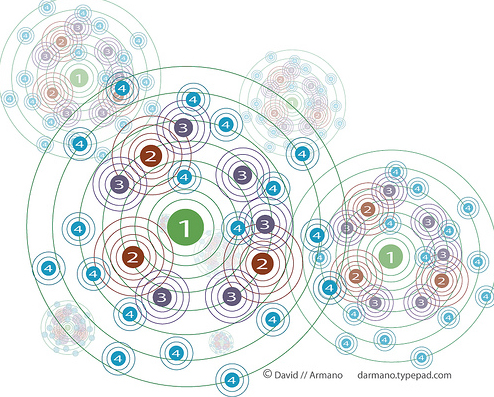
I like differing opinions, thoughts and comments. I think it’s good to have a variety of thought. No one likes a yes man right? Except maybe in the social media world. Then sometimes it resembles a quid pro quo type of environment. I’ll promote your stuff you promote mine. The thinking is well illustrated by David Armano with his depiction of influencer ripples. If your content can be promoted by the right people than it can reach more people. It’s why companies are so hot on the influencer thingright now-find the influencer and get eyeballs and sell product. Look, I’m down with helping my friends out but…

Today’s online influence is overblown, overrated and diluted and can be gamed.

Here’s why. What if the content sucks? Yet because you and I are friends and we read and promote each others stuff we’ll retweet and share content sometimes sight unseen.  That’s kind of jive isn’t it? Yet it’s effective.  That’s not really fair to the reader is it? But it works. What if the reader is someone on the outside and is trying to “get in” to the world of social media? They might share and promote your crappy content too. Add the element of two people with very large networks of followers and subscribers sharing content and you can see how this can all be affected. Crappy content always has a fighting chance with a killer post title and a supposed influencer sharing it.

How about these 2 scenarios? The first one I’ve been sucked into a bunch of times. You see a compelling blog title tweeted, you click on it and it’s end up being something that you might wrap your dead fish in. The second, I will refer to this definition from Wikipedia.

A spam blog, sometimes referred to by the neologism splog,[1] is a blog which the author uses to promote affiliated websites, to increase the search engine rankings of associated sites or to simply sell links/ads.

We’re all suckers for a great blog post title. Why? Because we’re hoping for fresh, we’re hoping for a different POV. We’re tired of repetitive thoughts, posts and comments without any backbone.  A lot of people have ceased writing for their audiences and are writing purely for search, link juice and hollow authority. Unfortunately there’s no end in sight and we’ll continue to be influenced into clicking on and reading. Hoping.

The propensity to Repeat in Social Media

It’s not just social media. Create a killer product, expect knock-offs. I used to say that you truly haven’t made it until you have been knocked off. It happens with consumer products, food products, you name it. Imitation is the best form of flattery right? Monopolies in social media? Facebook has an argument, but that’s about it. Everything else is fair game right now.

We’re a demand society. This is the “Consumers of Content” generation.

Networks, apps, aggregators, blogs, microblogs-copy what works, tweak it a little, or not, and see what market share you can pull. Make it just as good as… and release it. Make it better than…and release it. Because social media is “still” new and still growing, the thinking can be that there is always someone new coming to the party that may or may not be reading content for the first time, seeing a site for the first time and using an app for the first time. So everyone has a chance to succeed; but what seperates the real thing, the solid thing or the big dog from the one who just showed up trying to capitalize or catch the big wave? Sometimes money, sometimes nothing. It might just be an issue of WOM, Buzz or SEO and search.

In some cases the noobie or the one coming to the party late has a better chance to get it right. Take what they did and do it better, or just rip it off and call it something different. The noobie has a chance to appeal to the noobie.

From the standpoint of the blogger. How fresh can or could their content be? In social media, is it possible that what they are saying is fresh? Or is it just a fresh coat of paint, lipstick on a pig. Repeat the obvious and give it a fresh name and claim it as your own.

Why does history repeat itself even in social media? How many times can we read the 10 ways to use Twitter for your business? Because we will always be  suckers for bulleted lists. History shows that we love the compelling headline with the notion that what we might read is new, insightful and helps us leverage what we do in the social media. We’re hoping for fresh.

Who’s doing fresh in social media right now? What makes them fresh? What blogger is still a must read in social media? What are we looking for as readers these days in the world of social media? Is it all just about being sucked into another top 10? Can you resist reading a top ten?

Highlighting the Social-ness in Social Media this Holiday Season

A few weeks ago I was selected as one of the Top Social Media Strategists to Watch in 2011. That was cool in that it’s nice to be recognized, but then a few days later I got the following email.

We’re excited to have you on our list of “Top Social Media Strategists to Watch in 2011.” We admire your work and look forward to seeing what you come up with in 2011! Our partner, Dancing Deer Baking Co., would like to send you a sweet treat to congratulate you on our accomplishments. Please let me know where Dancing Deer should send the gift! Thanks.

I initially thought what a nice gesture and in normal times I would have taken them up on it, but these ain’t normal times. Upon further reflection, it seemed better to give that treat to someone who could really enjoy it this holiday season. Not that I didn’t want it, but isn’t the essence of social media as much about the realtionships and connections as it is about conversation? Sure it is. So here’s how I responded.

Hi Christina, Thank you but there’s no need to. Do me a favor and send my sweet treat to a homeless shelter or a boys and girls club-I’m sure they could, or someone could really enjoy it this week.

And then they responded:

Hi Marc,
 
Dancing Deer is a philanthropic brand at heart and donates to charities year round, especially during the holiday season. We’ll make sure that a donation is made on your behalf.
 
Happy Thanksgiving!
Cristina

So What Happened? I got this email.

Hi Marc,
 
I wanted to let you know that Dancing Deer made a donation on your behalf to the Pine Street Inn. Attached is a picture you can use for your post. We will post this to our social media channels this week. Thanks!
 
Cristina
 
Cristina Lepore, Marketing Coordinator

 451 Marketing, LLC
www.451marketing.com

Not only did Dancing Deer make a donation on my behalf but they brought a little more holiday cheer than just a “cupcake”. Here’s more about what they do from a philanthropic standpoint with a project called the sweet home project.  To me, this is what social media is all about, or at least what it’s capable of being. It went from someone recognizing someone for one thing, to a group of people realizing that there was more that could be done for others with the smallest of small gestures of human kindness. A cupcake. Thank you 451 Marketing and thank you Dancing Deer-You 2 are getting it right!

Makes you wonder what we could really do, doesn’t it?

The Takeaway from Social Media in 2010


Online privacy means a lot to us, but for a majority of us, it’s only important when we know our privacy has been invaded. In social networks and social media, every time we join a new shiny network, or register for something online, we give up a little piece of our privacy, like a sculptor chipping away at a piece of marble. Sometimes knowingly, sometimes not, we’re giving up who we are to marketers and brands.

You see, every time we create a profile we are allowing someone to glimpse a little bit more about us than most might really be comfortable with; but we do it because that’s what’s asked or required of us in order to “play”; and like I said, some of you might not even know it. Some of you might not care, because hey, “we’re living in the age of uber transparency”!

Yes we have a right to know what information is being gathered about us, how it is used and whether it is gathered at all, yet most of us are too busy trying to get on the other side of an app to be bothered with reading a EULA or a TOS agreement. Why is that?

I have a feeling  that the reason is similar to when you are hearing a radio spot and at the very end of the spot you’ll hear a guy talking so fast, you have no idea what he just said, so you ignore it, Because all you really care about is the deal that was mentioned in front of the fast talking man-The carrot, the offer, the opportunity. Privacy be damned. Most marketers and companies assume correctly that making the TOS’s and EULA’s so ridiculously convoluted, that we as consumers will just get tired of reading and will click the agree button. And the devil…is buried in the details.

Facebook did the same thing when it came to compromising our privacy the first time. How many times has it changed it’s privacy policy? Most of  the 500 million users probably don’t care what is happening to their data-and that’s a scary thought; but enough of them care to call Facebook out for assuming that we are ready to alter our perception of what is acceptable in data mining- and thus we’ve able to somewhat keep them in check.  I am still not comfortable about the purported data leaks, or satisfied that Facebook is doing all it can to value my privacy, but then again it’s a 1000 times better than it initially was.

So let me ask you something. As we head into 2011, are you cool with giving up snippets of your personal data for the sake of playing Farmville? Or being part of Groupon? or Foursquare?Are you comfortable with that? Are you truly prepared for radical transparency? I’m not sure I am just yet.

30 Social Media Sites, Tools, Posts and Articles that I Bookmarked from 2010

2010 was a heck of a year in so many ways wasn’t it? I know it was for me. One of the things that I do throughout the year though is, I stockpile sites, blog posts, articles, tools and things that just catch my eye-Oh yea that’s called social bookmarking isn’t it? Well, rather than have you sort through the 14 thousand bookmarks in Delicious, I saved you the trouble and am sharing my favorites of 2010. Let’s get to it.

1) It’s all about networking and sharing isn’t it? But it’s also about learning and growing too. So it starts with this resource: 100+ Upcoming Social Media & Tech Events

2) Turn what people post in social media into compelling stories with Storify

3) I liked the premise of this but always questioned whether it was sustainable beyond the this is cool stage? Groubal

4) A ridiculously long Directory of Social Media Monitoring and Analysis Tools

5) Let’s think in a forward fashion-Greenopolis is doing it, now we need to. And you thought the green thing was just a movement…

6) When I saw this, it reminded me of Blame Drew’s Cancer…sorta.  And I have no problem with it…Hey Cancer…F off!

7) How The Average U.S. Consumer Spends Their Paycheck from Visual Economics would seem to really connect with all of us these days and thus I loved this infographic: How The Average U.S. Consumer Spends Their Paycheck –

8. Sometimes blog posts resonate in different ways. For me, I want to lead in a way that resonates in the space that I play in. This post from Don Bulmer titled 13 Rules of Leadership for Communication, Influence and Social Media Strategy, did just that-it resonated. I apologize for using the word resonate 3, 4 times…

9) The Hierarchy of Digital Distractions just makes sense and probably needs to be revised every 6 months.

10) What The F*!# is my Social Media Strategy is hilarious if not for the fact it’s very very accurate.

11) Along those lines Marta Kagan from Espresso has really found her niche with these decks-this one from 4 months ago oozes the words explosive and growth.

12) From March of 2010, David Armano, from Edelman, rolled out a pretty good deck himself about the need for the uncommon in social media. What is the uncommon? Common sense silly.

13) Not only was the Old Spice social media campaign the big wow for me in 2010, I thought this was pretty fun too. The Old Spice Voicemail Generator.

14) This article in July from Wired really touched on a lot of truths in social media that we all know about and in some cases actually do, but don’t admit. Gaming the System: How Marketers Rig the Social Media Machine

15) One of my favorite posts on Facebook marketing came from my amigo Tamar Weinberg in May-How to Use Facebook for Business and Marketing

16) Stick this QR-Code Generator in your back pocket

17) One of the most important issues to come out of 2010 was about cyber bullying, I thought this June article from the New York Times really brought the issue front and center-How Should Skills Handle Cyber Bullying?

18) This pretty sweet image tagging tool from Tangelo was another one of those “this is cool but will people use it type of applications”.

19) Another Google product Follow Finder analyzes public social graph information (following and follower lists) on Twitter to find people you might want to follow-Did you even know about it?

20) One of the key lessons in 2010 was, watch what you say and where you say it-Need I say more from Openbook?

21) Regretsy was one of my favorite sites of 2010-where DIY meets WTF.

22) In March of 2010, Altimeter came out with a great report that I have referred to more than once, The 18 Use Cases of Social CRM, The New Rules of Relationship Management

23) One of my favorite tools of 2010 came from Flowtown

24) I absolutely loved this post from April, but I’m partial because of my SEO background. So it might not mean much to you but I loved it anyway because it was so dead on accurate. 36 SEO Myths That Won’t Die But Need To

25) I always forget to use this Tagxedo

26) This is another I want to try and use more in 2011 Tinypay.me

27) PPC gone awry at your PPC sucks.

28) 35 great social media infographics was a really cool post. We all love a good infographic and here are 35 of them all in one place!.

29) I love time lapse videos, and this one is no exception. One year walk/beard grow time lapse

30) and lastly one of my favorite articles from 2010, Branding and the ‘Me’ Economy from the New York Times.

As we hurdle into 2011, first, I want to thank those who made the content that I consumed and you consumed in 2010, but now it’s time to start thinking in a more altruistic, giving way. People need our help, and for a lot of us we have the ability to use our knowledge, skills and attributes in social media and technology to make things happen. We can do it, I can do it and you can do it. Let’s make it happen through design, through action and through our words and our vision.

Our Shifting Notion of Search, Social and Mobile.

10 years ago seems so 10 years ago in the world of search, social and mobile.

We’ve definitely evolved and rightly or wrongly so depending on your point of view. Take for example search. In 2000 Google was a 2 year old start-up still trying to create an identity and compete with Yahoo and MSN. We all marveled at the simplicity of their interface and as a starting point for our queries, it simplified and created a less cluttered entry into a sometimes messy and confusing search result. Little did we know what was on the horizon.

How do we use search now? Search is and has been woven into the fabric of our daily lives thanks to Google. It is a utility that drives our online and offline interactions. We use it for online transactions, travel decisions, job searches, purchases, research, and a dozen other activities. We use search the same way we use our lights, drive our cars and brush our teeth. Google has changed and redefined what search is for you, me and all the companies that rely on it for business.

What search will ultimately be, is as much for us to determine as it is for Google to create and beta test. We will define it.

Online social networks are redefining our offline relationships both casual and personal. What drives that redefinition? search? The barriers for connecting with someone are next to none. Social networks are not what they used to be. Looking back at MySpace, it almost looks like pre-Y2k web Dev. doesn’t it? If you think about what made MySpace popular, it wasn’t as much about the conversations as it was about creating your own content, your own page-it struck a nerve. Facebook has taken that aspect of MySpace, and simplified and reduced the ability to create, and amplified the ability to connect and share- and 500 million people have embraced it. Where does it go from here?

Social continues to evolve into something devoid of privacy and chock full of transparency with authenticity caught somewhere in the middle.


In the world of mobile, the evolution has been nothing short of dramatic. 10 years ago we were an evolving world of mobile adoption, the mobile handset was a utility for and an extension of the land lane. Now the mobile device is an extension of our desktop. The ratio of mobile handsets to people is approaching one to one. Search and social have migrated to the mobile device. SMS drives conversation and just as search has become somewhat of a utility for the desktop, the smartphone is now the defacto device for driving purchases, for buying tickets, for research, for email, for being social and oh by the way…making phone calls.

So what does this all mean? The same thing that has happened to all great inventions and milestones in history-Their original intent looks nothing like their eventual outcome.

What’s the bullet in social media right now?

I’m reading the book Life by Keith Richards, the talented, weathered survivor and lead guitarist of the Rolling Stones. I must say it’s an interesting read, but while reading it, the following sentence caught me eye.

The music might be the trigger but the bullet nobody knows what that is…

Apply that statement to all that’s happening in the world of social media and digital communications.  What’s the trigger? What’s the bullet? Do you know the difference? Social media might be the trigger, but what is the bullet? Funny how it takes Keith Richards from the Stones to add some indirect perspective to the world of social media KPI’s, but we could say that in social, a number of things could be the trigger and as well a number of things could be the bullet-but don’t you think if you could identify what the trigger is for you personally or for your company, and what the bullet might be, that you’d be golden? Yep. Go forth young Skywalker…


The Customer Experience Revisited

Recently I had 3 conversations with a cab driver, a plumber and a CEO. Each conversation revolved around the customer experience. I want to share with you the gist of each conversation.

The Cab Driver: I actually had 3 cabbie’s but it was the 3rd one who had really understood the customer experience. Look I get it, if you take enough cabs, you’re going to get the gamut of drivers, but I think it’s interesting to see how some know how to engage the customer and how others could care less. I’m just a fare. It’s those that “get it” who will make more. I actually had the cab driver who explained to me how he reads the customer to see how he should “deal” with the customer. His goal? Not only to engage, but to provide a positive experience that could result in repeat business as well as referrals and a higher tip. Insights from a cab driver.

The Plumber: Let me preface this vignette by saying that “The Plumber” is a very good friend of mine. But the conversation I had with him was as much enlightening as it was a relative fact with all SMB’s. They not only have to do what they are good at but they also have to manage their people and manage their business. However what really opened my eyes was when he told me what was the key to growing his business. Was it more people? More trucks? More resources? Better technology? Nope. He told me it revolves around word-Compassion. Compassion for the customer and walking in their shoes. Good stuff coming from-A Plumber who get’s it.

The CEO-I had about as bad an experience as could be had at a local restaurant. I was so mad that I blogged about it. Of course I used the company name with a map and hyper links because I was so angry but never really expected to hear from anyone within the organization. I even sent an email to the GM of the local franchise but still, I never expected to hear from anyone I just figured it was another FAIL.

About a month or so after the blog post I received an email from the CEO of the entire company expressing regret and essentially saying that I was right, they were wrong and what can he do to make the situation right. He even offered to take me to lunch to prove that his restaurants do get it right when it comes to customer service. He didn’t have to do any of that did he? He’s the CEO-He could have had his area managers handle it, someone in customer service, or basically half a dozen others, but he chose to handle it himself. A CEO.

So what’s the story? It’s not social media. It’s about the customer. It’s always been about the customer. But ironically, it doesn’t matter what your business is, what your job is, if you understand that in whatever you do, the customer experience is priority one. You’re ability to win, to succeed, and to do great work will always be achievable.

Out of the three, who get’s it the most? How would you rank their approaches? I love the cab drivers approach. The Plumber understands what and who is driving the business and the CEO? I’m just one customer but he still took the time to reach out. This doesn’t mean that each will succeed in the end, but it does mean that in some instances, they can impart that wisdom on to others within their respective businesses.